
Why South India's Heritage Rivals the North
When North India’s heritage is basically pushed by one imperial telling , the Mughals building on top of the Delhi Sultanate that was there before them - South India’s story feels more layered and honestly more split by region. Tamil Nadu , Karnataka , Kerala , Andhra Pradesh and Telangana each ended up with their own kind of architectural language, formed by dynasties that did not really trade courts or share one big central capital. So the heritage route kind of works like a chain where every state seems different on purpose : granite shore temples along Tamil Nadu’s Coromandel Coast, a ruined empire capital spread out across Karnataka’s rockier boulder hills, spice-trade driven colonial fusion in Kerala, and Deccan Sultanate forts in Telangana.

Image via unsplash
A Quick History: Pallavas, Cholas, Chalukyas and Vijayanagara

Image via wikipedia
The story begins on the coast. Between the 6th and 9th centuries, the Pallava dynasty ruled from Kanchipuram and used the port town of Mahabalipuram to project naval strength and cultural influence. They left behind rock-cut cave temples and monolithic rathas that pioneered early Dravidian architecture - a foundation that still feels essential.
Then came the Cholas, from the 9th to 13th centuries, who took that architectural grammar and pushed it to a grand scale. They built towering granite vimanas - most notably at the Brihadeeswarar Temple in Thanjavur and the other Great Living Chola Temples. Beyond land, they commanded a maritime empire that stretched to Southeast Asia, as if it were no big deal.
Architecture and Cultural Significance

Image via unsplash
South Indian temple architecture clicks once you understand the vimana - the tiered tower above the sanctum - and later the gopuram, the monumental gateway that came to dominate temple entrances across Tamil Nadu. The Pallavas pioneered rock-cut and monolithic forms at Mahabalipuram, while the Cholas refined the structural stone vimana on a scale unmatched in India, with the Thanjavur tower rising to 66 metres.
The Chalukyas at Pattadakal took a more hybrid approach, blending northern and southern forms in one complex - an intentional architectural experiment. Then the Vijayanagara builders at Hampi layered their own taste, producing tall gopurams and chariot-shaped shrines that stand out in the ruined city today.
Top Heritage Sites in Tamil Nadu

Mahabalipuram (Mamallapuram)
Image via unsplash
Mahabalipuram (Mamallapuram)
Mahabalipuram, a 7th–8th century Pallava port town near Chennai, features the Shore Temple, Five Rathas, and the famous Arjuna's Penance relief. UNESCO-listed since 1984 - visit our Mahabalipuram Travel Guide for history, architecture, and travel tips.

Great Living Chola Temples
Image via unsplash
Great Living Chola Temples
Three Chola-era masterpieces - Brihadeeswarar (Thanjavur), Gangaikondacholapuram, and Airavatesvara (Darasuram) - form this UNESCO site. The 66-metre Thanjavur vimana still houses active worship. Read our complete Great Living Chola Temples Guide.
Top Heritage Sites in Karnataka

Hampi
Image via unsplash
Hampi
Hampi - the ruined Vijayanagara capital spread across 4,187 hectares - holds over 1,600 surviving monuments, including the Vittala Temple's stone chariot, musical pillars, and the living Virupaksha Temple. A UNESCO site since 1986 - read our complete Hampi Travel Guide.
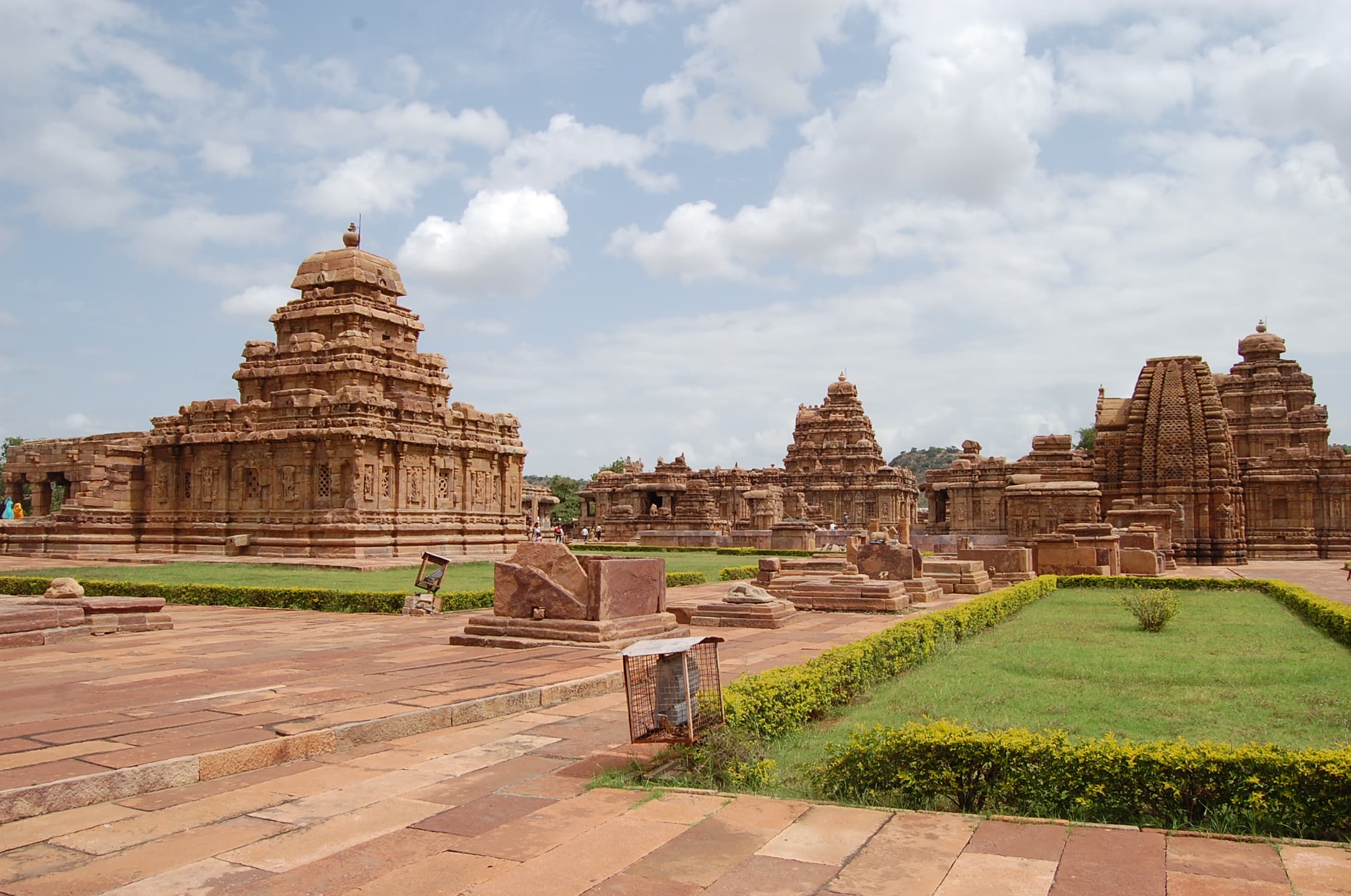
Pattadakal, Badami and Aihole
Image via unsplash
Pattadakal, Badami and Aihole
UNESCO-listed Pattadakal (1987) merges Nagara and Dravidian temple styles at the Chalukya coronation site. Close by, Badami and Aihole's early temples shaped Dravidian design for a millennium. Read our full Badami-Pattadakal-Aihole Travel Guide.
Fatehpur Sikri
Image via unsplash
Fatehpur Sikri
The Wodeyar dynasty's Mysore Palace (1897–1912) dazzles with its Indo-Saracenic blend of styles. Its evening illumination - with nearly 100,000 lights - makes it one of Karnataka's signature experiences. Read our full Mysore Palace Guide.
Top Heritage Sites in Kerala

Fort Kochi and Mattancherry Palace
Image via unsplash
Fort Kochi and Mattancherry Palace
Fort Kochi's streets weave Portuguese, Dutch, and Chinese influences together. Mattancherry Palace, also known as the Dutch Palace, features beautiful Kerala mural paintings depicting Hindu epics. Read our full Fort Kochi & Mattancherry Guide.

Padmanabhapuram Palace
Image via unsplash
Padmanabhapuram Palace
Fort Kochi offers a rare mix of Portuguese, Dutch, and Chinese influences in one view. Mattancherry Palace - originally Portuguese, later called the Dutch Palace - features exquisite Kerala murals and royal collections. Read our full Fort Kochi & Mattancherry Guide.
Top Heritage Sites in Andhra Pradesh and Telangana

Golconda Fort and Charminar
Image via unsplash
Golconda Fort and Charminar
Golconda Fort's acoustic engineering lets a clap carry almost a kilometre. The 1591 Charminar is Hyderabad's iconic landmark. Together with the Qutb Shahi Tombs, they're on UNESCO's tentative list - explore our full Hyderabad Heritage Travel Guide.

Ramappa Temple
Image via unsplash
Ramappa Temple
Ramappa Temple - the 13th-century Kakatiya Rudreshwara Temple - became a UNESCO site in 2021. Its engineering marvels include floating bricks, while its carvings showcase Kakatiya craftsmanship at its peak. Explore our full Ramappa Temple Guide.
Hidden Gems and Underrated Heritage Sites

Gangaikondacholapuram, Tamil Nadu
Image via wikipedia
Gangaikondacholapuram, Tamil Nadu
kind of the lesser visited sibling place of Thanjavur’s Big Temple, it was put in place to remember Rajendra Chola I’s northern march , not the most crowded, you feel the calm quicker there.

Aihole, Karnataka
Image via wikipedia
Aihole, Karnataka
more than 125 early Chalukyan temples tucked in a quiet village kind of setting , people often skip it just to rush to the better known Pattadakal nearby, though it’s worth it.

Bekal Fort, Kerala
Image via wikipedia
Bekal Fort, Kerala
a pretty intact 17th century coastal fort, with wide sweeping views over the Arabian Sea, and honestly it feels much less busy than Kerala’s usual backwater loop.
Best Heritage Experiences Across South India

Image via unsplash
Sunrise there over Hampi’s boulder landscape from Matanga Hill , with the Virupaksha Temple’s gopuram rising right down below.
A guided stroll through Mahabalipuram’s rock-cut mandapas, kinda tracing the earlier trial runs in Dravidian temple design .
Mysore Palace glowing at dusk, definitely one of Karnataka’s most photographed heritage moments, honestly.
A houseboat evening on Kerala’s backwaters, mixing heritage sightseeing with the region’s other great travel experience too.
Ticket Prices at a Glance
Approximate entry fees across the region's major heritage sites, current as of 2026. Rates change periodically, so always confirm on the official ASI or state tourism booking portal before you travel.
| Heritage Site | Indian Nationals | Foreign Nationals |
|---|---|---|
| Hampi Group of Monuments, Karnataka | ₹40 | ₹600 |
| Pattadakal Group of Monuments, Karnataka | ₹40 | ₹600 |
| Mahabalipuram Group of Monuments, Tamil Nadu | ₹40 | ₹600 |
| Brihadeeswarar Temple, Thanjavur | free | free |
| Mysore Palace, Karnataka | ₹70–100 | ₹200–250 |
| Golconda Fort, Hyderabad | ₹25–30 | ₹300 |
| Charminar, Hyderabad | ₹25 | ₹300 |
| Ramappa Temple, Telangana | ₹25–35 | ₹300–350 |
| Mattancherry Palace, Kochi | ₹₹5–35 | ₹300 |
Best Time to Visit South India's Heritage Sites
October – March
Best time - cool, pleasant weather perfect for exploring temples and ruins across Tamil Nadu, Karnataka, and the Deccan
April – June
Intense heat - especially harsh in exposed areas like Hampi; avoid midday outdoor activities
July – September
Southwest monsoon - heavy rain in Kerala; coastal areas remain milder but better skipped during peak monsoon
Budget Estimates
₹2,500–3,500
per day (trains, guesthouses, street food, entry tickets).
₹5,500–9,000
per person (private car, boutique hotels, sit-down dining).
₹16,000+ per day
chauffeur-driven vehicle, five-star and heritage-palace stays, private historian guides.
Solo Traveler Tips

Image via unsplash
South India’s temple towns and heritage sites are usually pretty manageable for solo travelers, like there’s this steady visitor flow through the day and overall it feels calmer than some of North India’s more hectic cities. For solo female travelers in particular, having pre arranged private transport between towns, plus vetted local guides, and staying somewhere with solid solo traveler reviews really changes things. It matters even more around Hampi where the ruins are more spread out, so moving from place to place can feel less spontaneous and more smooth, if you plan it a bit.
Frequently Asked Questions
The top heritage sites in South India include Hampi and Pattadakal in Karnataka, Mahabalipuram and the Great Living Chola Temples in Tamil Nadu, Fort Kochi and Mattancherry Palace in Kerala, and Golconda Fort, Charminar and Ramappa Temple in Andhra Pradesh and Telangana.
South India is home to several UNESCO World Heritage Sites, including the Group of Monuments at Hampi, the Group of Monuments at Pattadakal, the Group of Monuments at Mahabalipuram, the Great Living Chola Temples, and Telangana's Ramappa Temple, inscribed in 2021.
A focused Tamil Nadu circuit covering Mahabalipuram, Thanjavur and Madurai takes 5 to 7 days. Adding Hampi and Mysore in Karnataka typically extends a South India heritage trip to 10 to 12 days.
October through March offers the most comfortable weather across Tamil Nadu, Karnataka and the Deccan interior. Kerala's coastal heritage sites remain pleasant slightly later into the year, though the southwest monsoon (June–September) is best avoided everywhere.
Hampi is the essential first stop for most travelers interested in South India's ancient history, while Mahabalipuram is the easiest to combine with a Chennai visit. Together they showcase two entirely different chapters of South Indian architecture.
Many are, since several remain active places of worship rather than ticketed monuments - the Brihadeeswarar Temple in Thanjavur charges no entry fee, for example. ASI-protected archaeological sites like Hampi and Mahabalipuram, however, do charge standard entry tickets.
Planning a South India Heritage Journey?
India Heritage Travel creates private chauffeur-driven itineraries that combine Tamil Nadu's Great Living Chola Temples, Hampi's Vijayanagara ruins, Mahabalipuram's Shore Temple, Mysore Palace, and Kerala's cultural heritage into seamless South India heritage journeys guided by local experts.
Plan My South India Heritage Tour