Overview of Humayun's Tomb
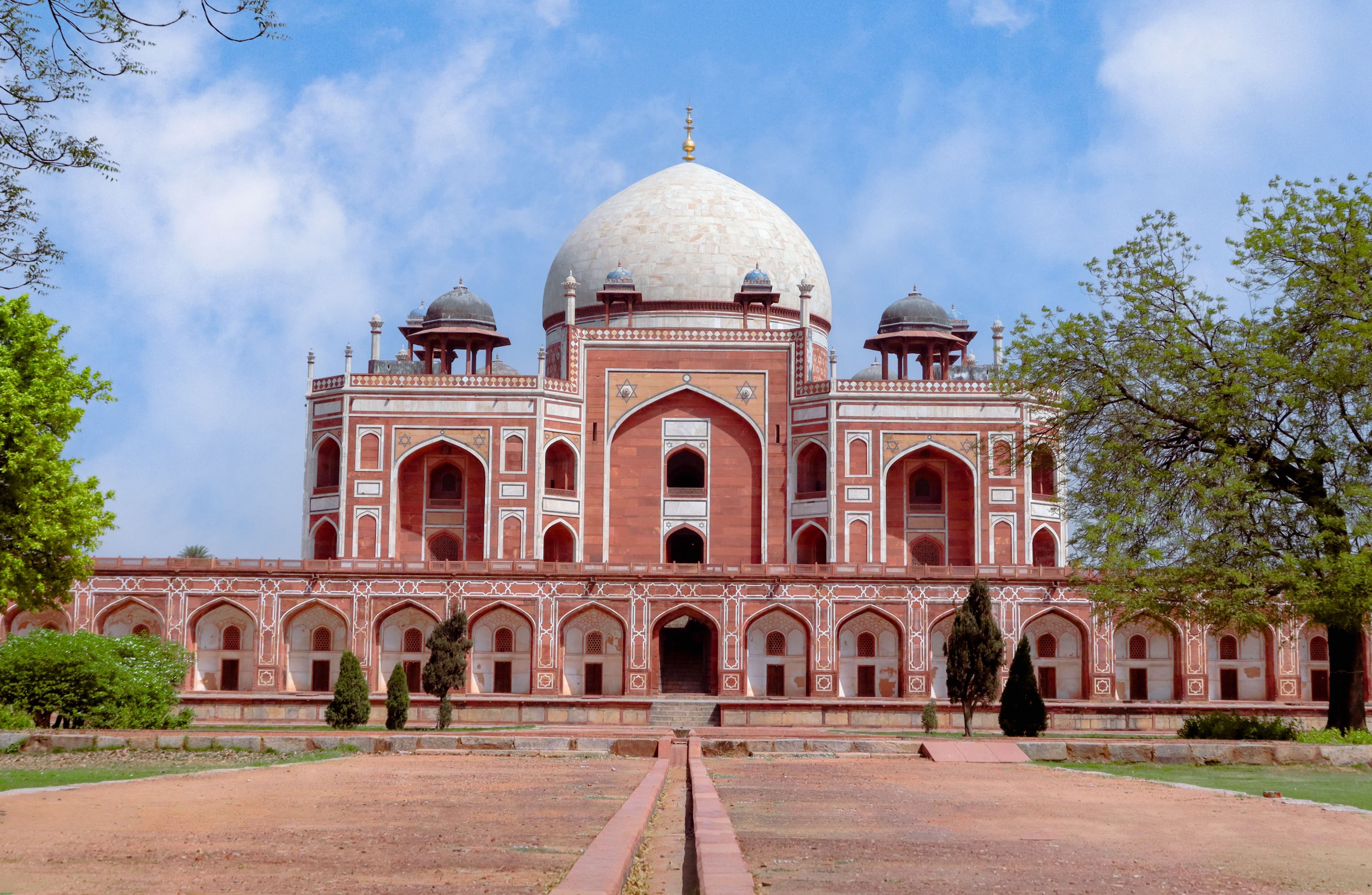
Humayun's Humayun's Tomb is at Nizamuddin East, pretty close to the Dargah of Nizamuddin Auliya, that Sufi saint, and not all that far from Purana Qila, the fort Humayun himself set up. It was built for the most part with red sandstone, but there’s also white marble inlay, like small bright lines inside the stone. The tomb rises about 47 metres from a raised plinth , and the double dome reaches near 42.5 metres , so it feels tall even when you’re at a distance. It also sits dead centre of a symmetrical Charbagh garden, carved up by stone walkways, and little water channels that guide your eyes as you move along. Compared to the busier monuments of Old Delhi, Humayun's Tomb gives you something more like a hush , a contemplative stretch of space, with broad lawns, long sightlines, and a monument meant to be approached slowly, the way the 16th-century designers, kind of hoped.
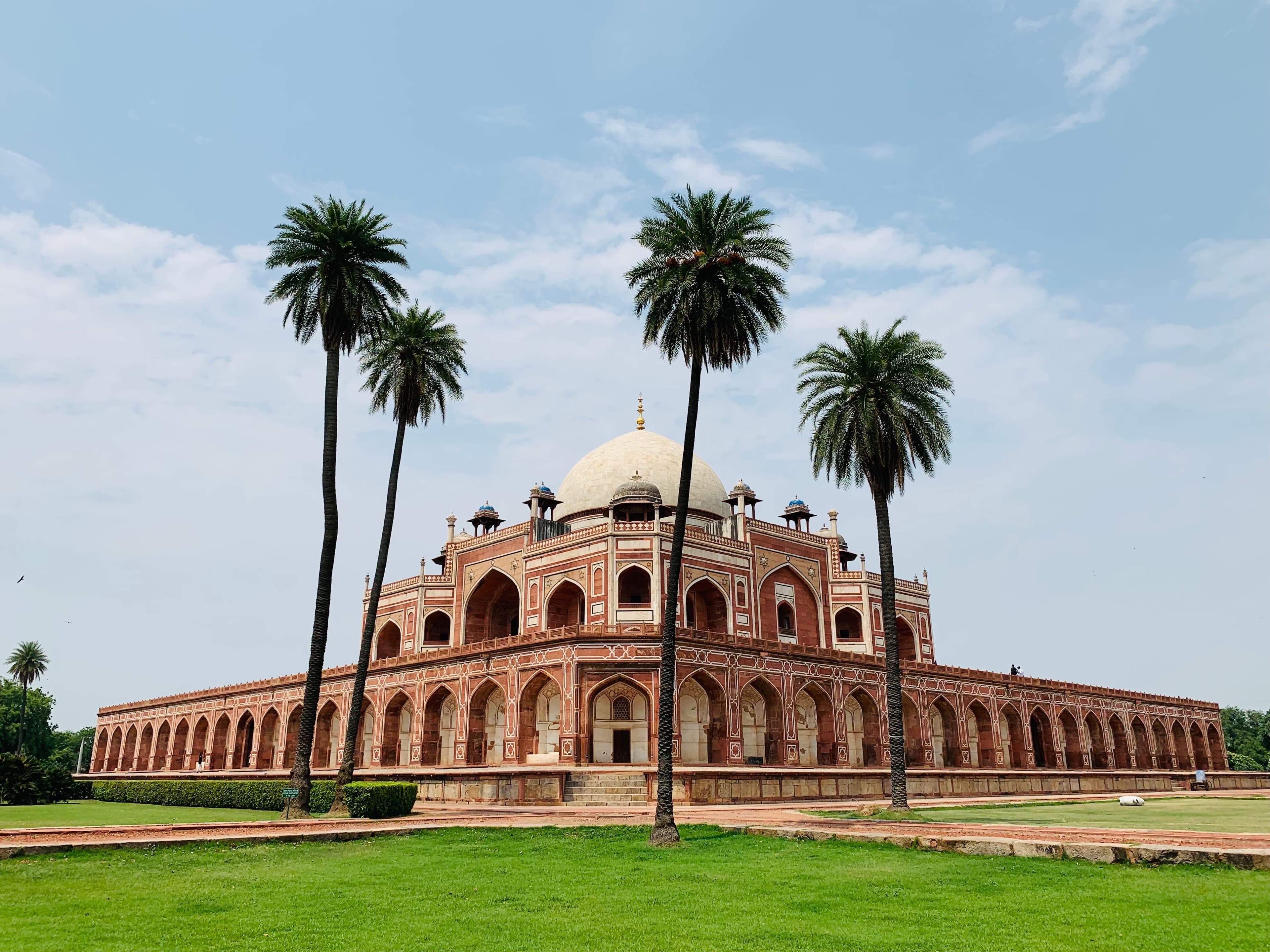
Image via pexels
History of Humayun's Tomb: Bega Begum and the Mughal Empire
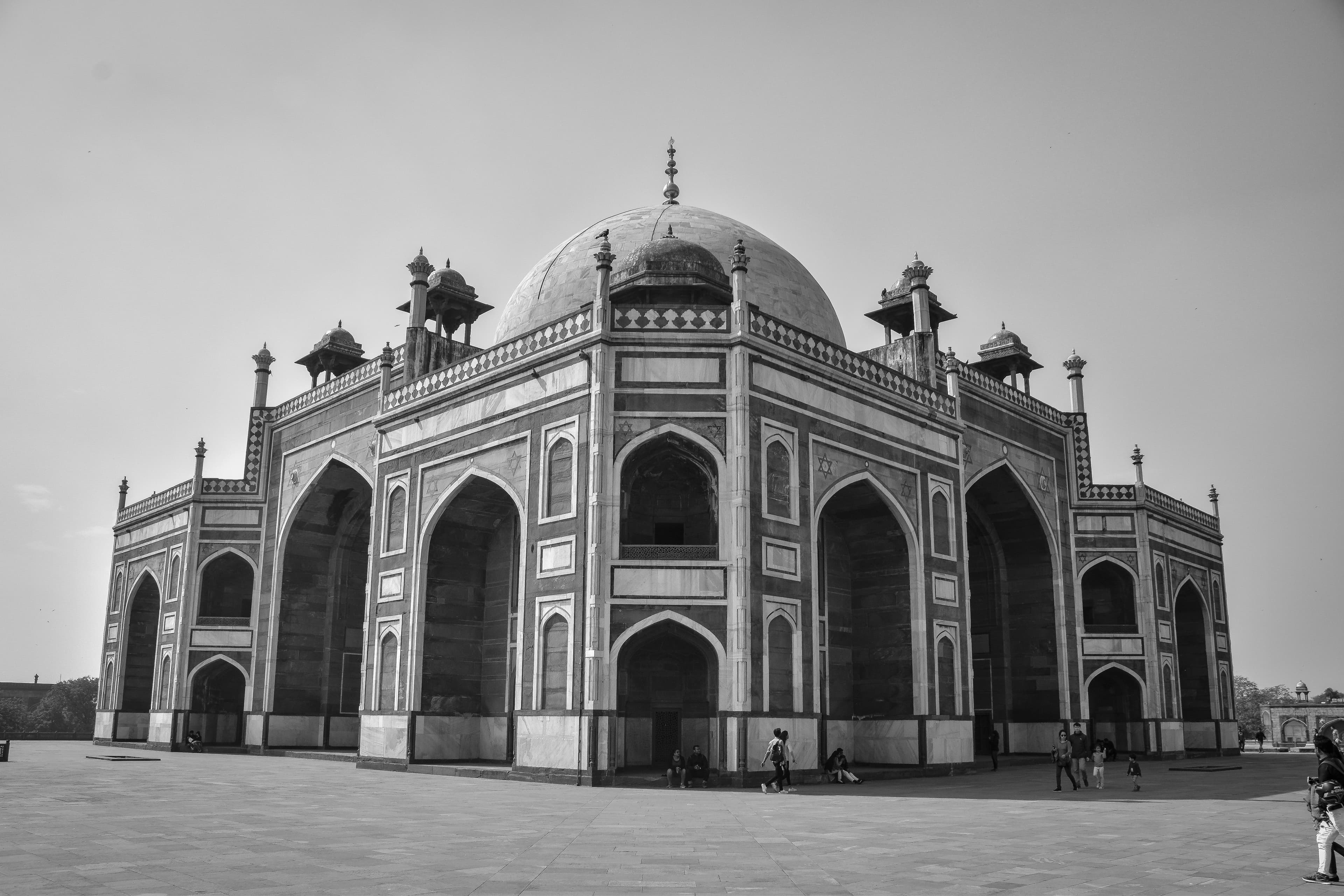
Image via pexels
Every Every careful Humayun's Tomb guide seems to have to start with Bega Begum, also called Haji Begum, the first wife and chief consort of the second Mughal emperor, Humayun. After Humayun died in 1556 - he famously slipped down the stairs of his library at Purana Qila and well… that was it - Bega Begum basically took over the idea of building a mausoleum, something very different from what anyone had done in India before.
She also chose the Persian architect Mirak Mirza Ghiyas to make the design, and the work officially got moving when Emperor Akbar, Humayun’s son, supported it in the 1560s. Mirak Mirza Ghiyas did not live to see the end of it, and then his son, Sayyid Muhammad, stepped in and finished the construction. The tomb was ready by 1572. What made it truly noticeable was not only the size, it was the plan itself: a garden-tomb organized around the Charbagh, that four-part Persian garden layout, which had never before been used at this scale on the Indian subcontinent. Mughal historians and architects paid attention right away.
Mughal Architecture at Humayun's Tomb
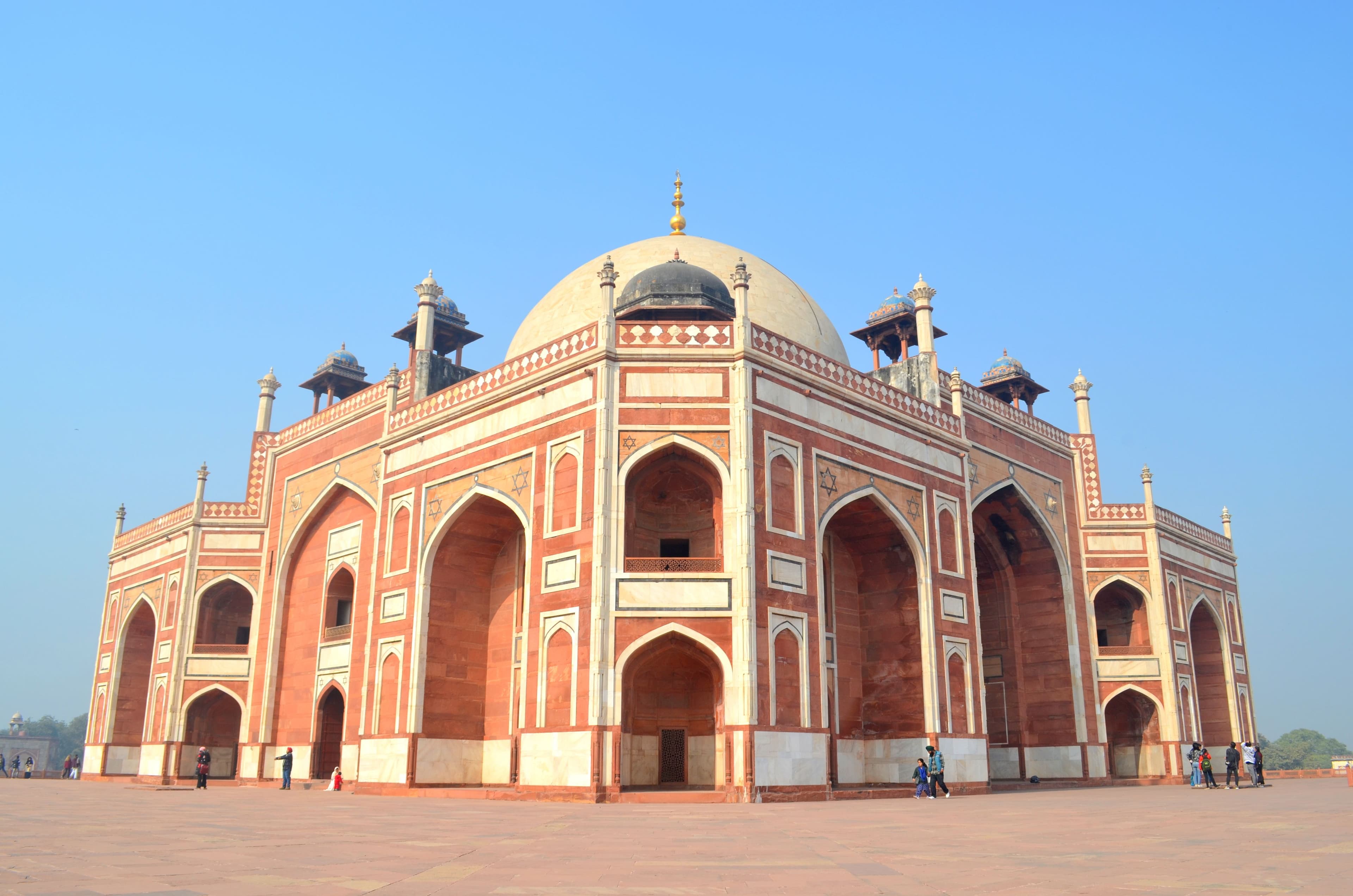
Image via pexels
Architecturally, Architecturally, Humayun's Tomb is often seen as that formative thing in Mughal funerary architecture-the place where Persian design traditions kind of meet Indian workmanship, and it really happens at a massive scale. In fact UNESCO’s own wording basically frames it as the earliest of those grand dynastic mausoleums that later becomes Mughal architecture , and it even says the style hits its peak a few decades afterward with the Taj Mahal.
Also, the tomb was one of the first in India where red sandstone gets used in such an extensive way , and that is then balanced with white marble accents, especially around the double dome, the lattice (jali) screens, and the decorative margins. The front view is set out with tall arched niches (iwans) on each side, so from pretty much every approach you get a strong geometric symmetry that just feels deliberate. Inside, the octagonal main hall holds Humayun’s cenotaph right in the centre, and it is ringed by smaller chambers for other family members, while the actual burial chamber sits below in a plainer space, following Islamic tradition , meaning unadorned graves.
UNESCO World Heritage Significance
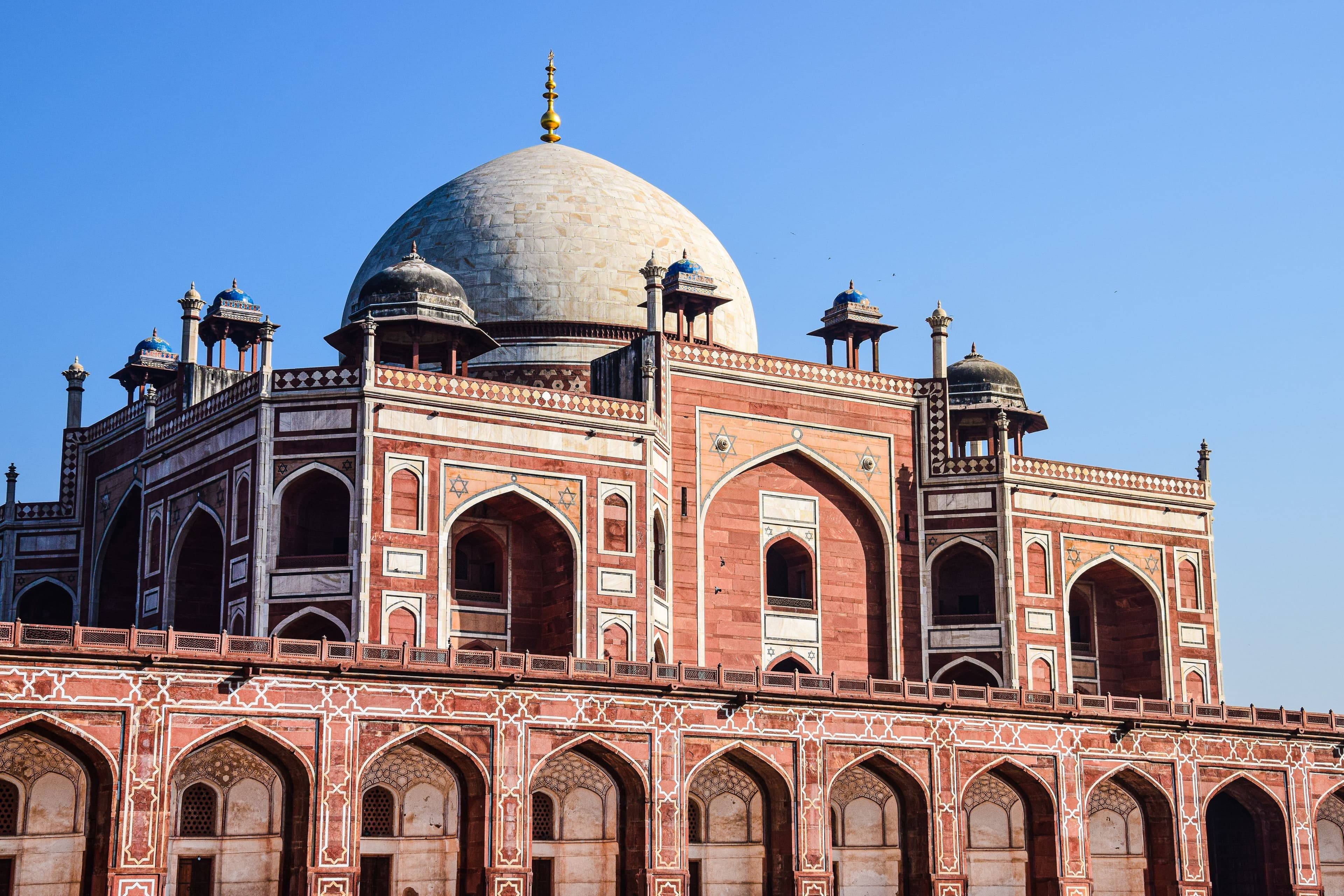
Image via pexels
Humayun's Tomb was listed as a UNESCO World Heritage Site in 1993. It is the first grand example of the Charbagh garden-tomb style, shaping Mughal architecture for the next century. The inscribed 27-hectare complex includes Isa Khan's Tomb, Nila Gumbad, Bu Halima's Tomb, Afsarwala, and Arab Sarai - once home to the craftsmen who built the mausoleum. Now cared for by the ASI, recent restoration work, including the original water channels, has revived its Mughal-era splendour.
Attractions Inside the Tomb Complex
The Main Tomb and Cenotaph Chamber
Image via wikipedia
The Main Tomb and Cenotaph Chamber
The main tomb rises from its plinth with a striking double dome - an innovation that made the exterior look taller while keeping the inner chamber proportional. Humayun's cenotaph sits at the centre, surrounded by other Mughal family burials, including his wife Bega Begum.
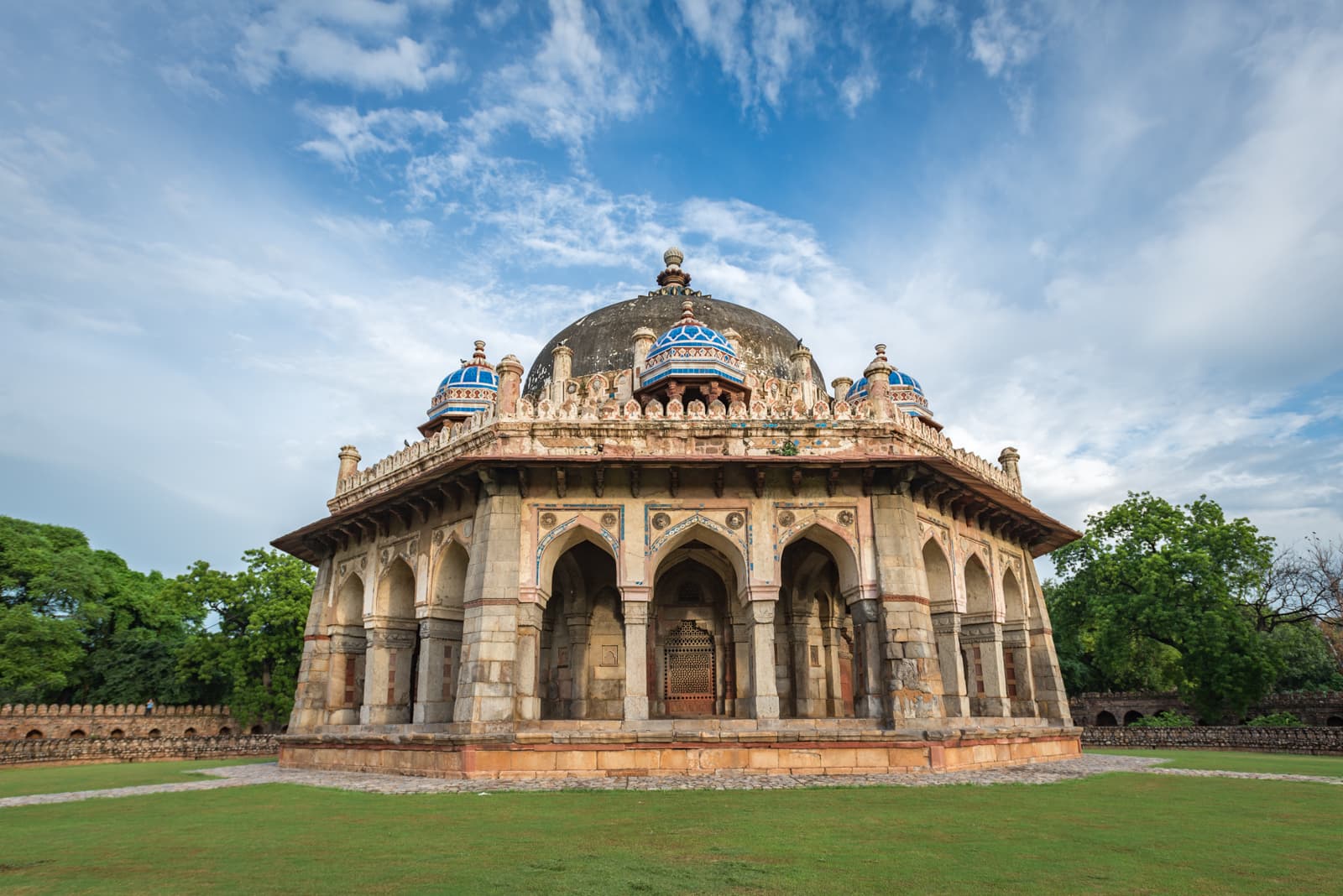
Isa Khan's Tomb
Image via wikipedia
Isa Khan's Tomb
Near the main entrance stands Isa Khan Niazi's octagonal tomb - built about 20 years before Humayun's Tomb. Its sunken garden and colourful glazed tiles create a sharp contrast with the more austere main mausoleum.
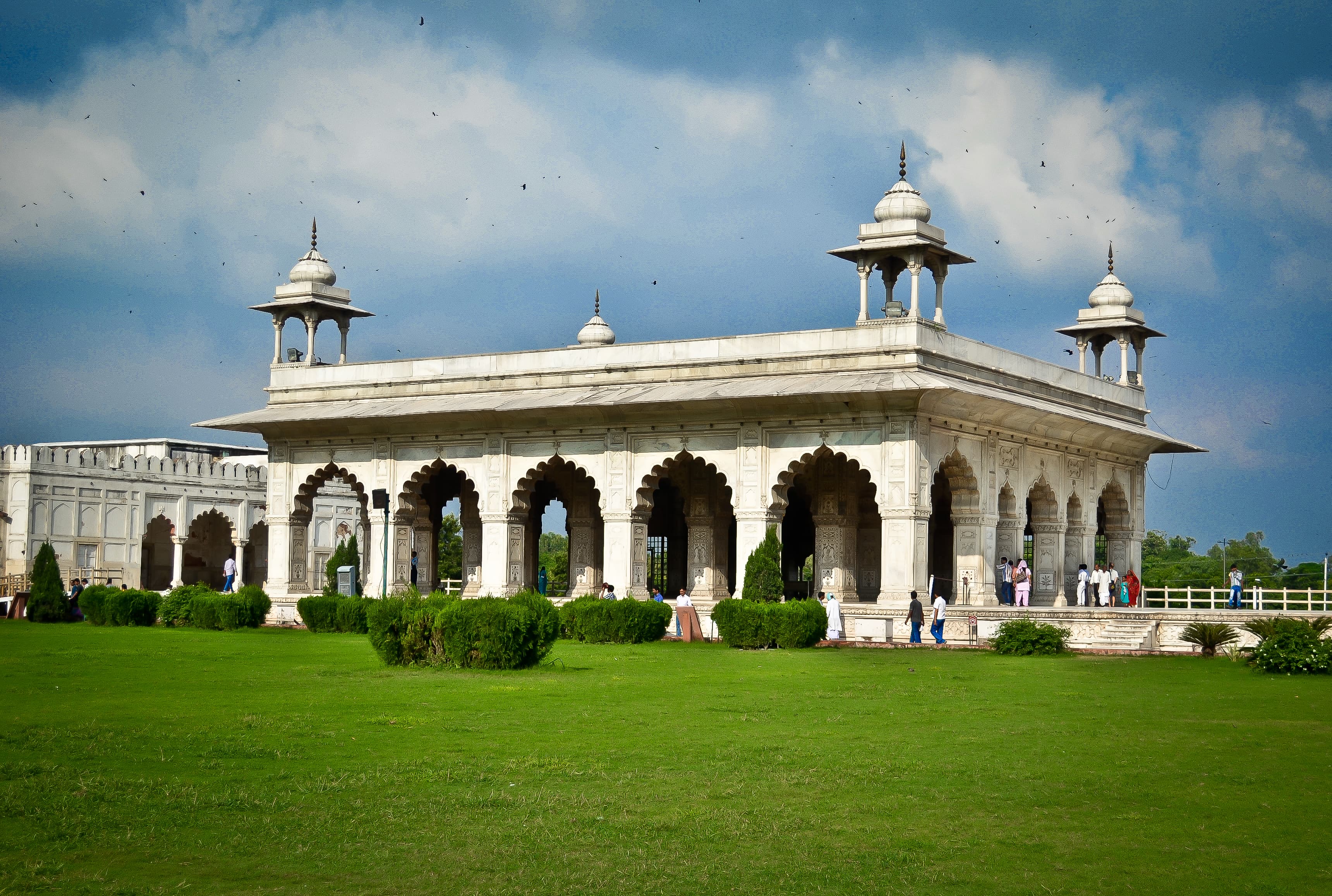
Diwan-i-Khas (Hall of Private Audience)
Image via wikipedia
Diwan-i-Khas (Hall of Private Audience)
The Diwan-i-Khas once housed the legendary Peacock Throne, with a Persian couplet inscribed: "If there is a paradise on earth, it is this, it is this, it is this." Its marble pavilion, floral inlay, and silver ceiling made it the fort's most opulent corner.
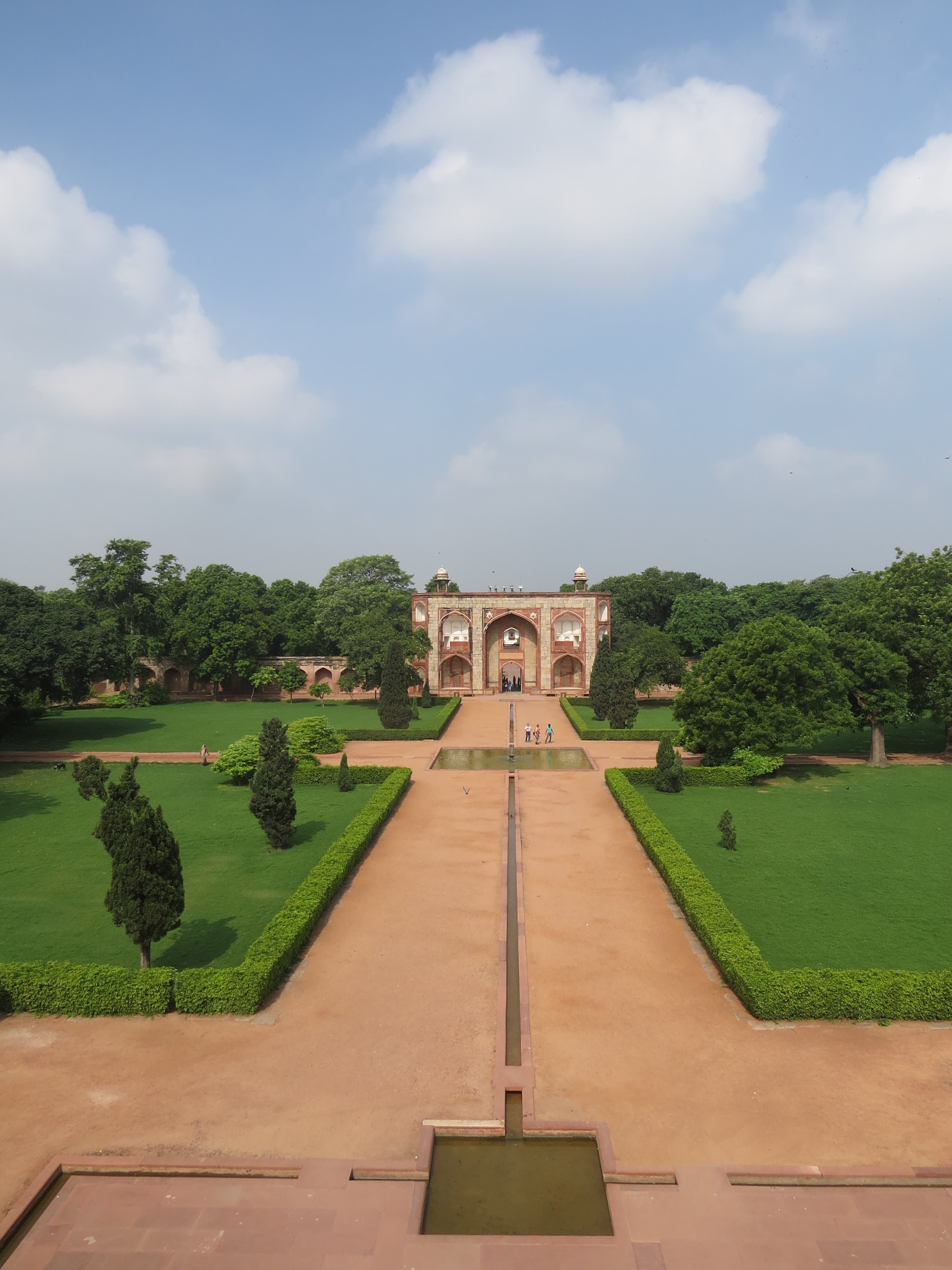
Charbagh Garden and Water Channels
Image via wikipedia
Charbagh Garden and Water Channels
The restored Charbagh, with its geometric water channels and raised walkways, feels like a destination in itself. In the early morning, light slides along the channels, perfectly mirroring the tomb - one of the complex's most satisfying views.
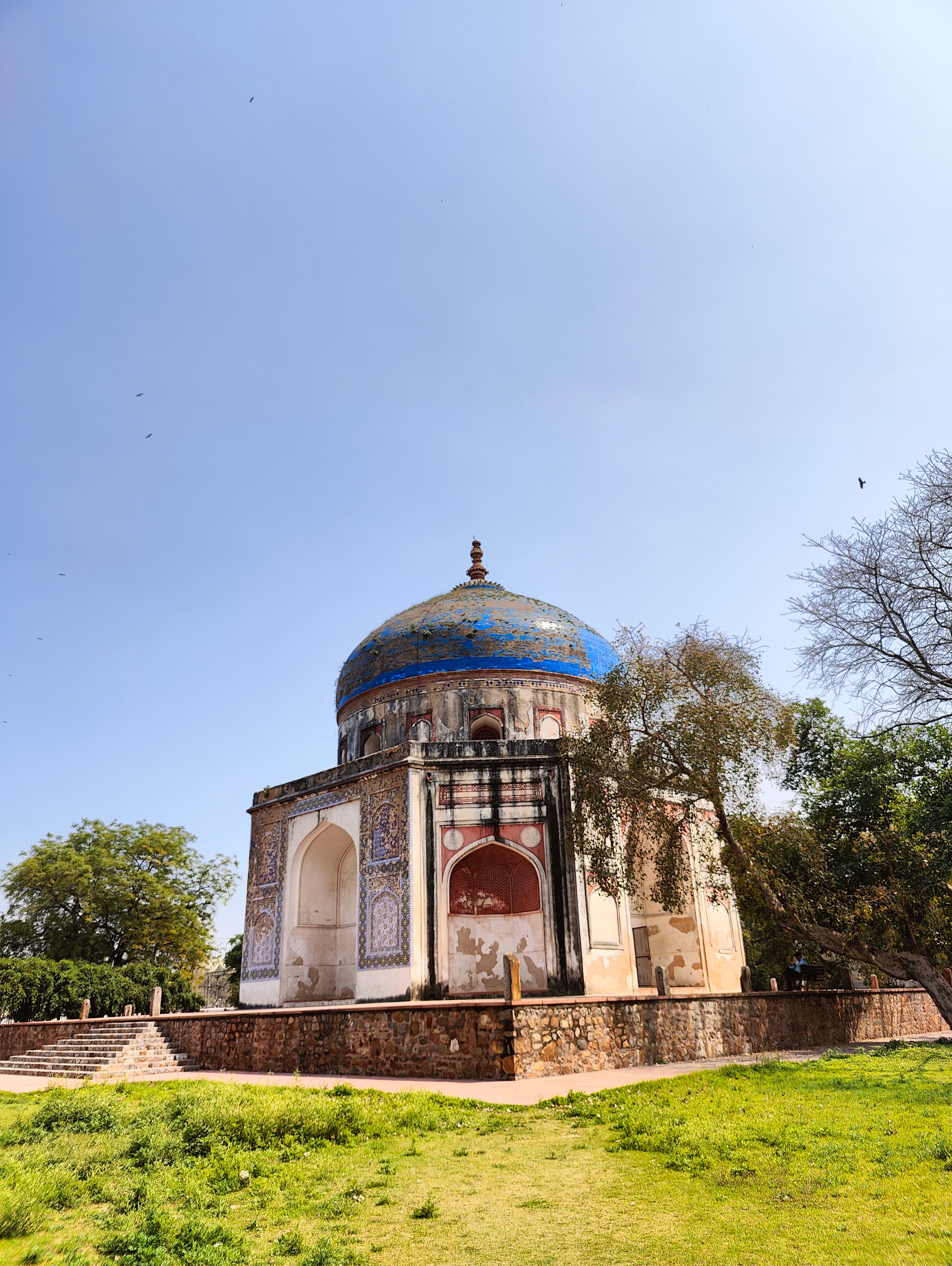
Nila Gumbad and Bu Halima's Tomb
Image via wikipedia
Nila Gumbad and Bu Halima's Tomb
The Nila Gumbad ("Blue Dome"), just outside the complex, features striking blue glazed tilework - a rare decorative example in Delhi. Nearby, Bu Halima's Tomb and garden offer a calmer, less-visited pause from the main mausoleum.
Arab Sarai and Afsarwala Complex
Image via wikipedia
Arab Sarai and Afsarwala Complex
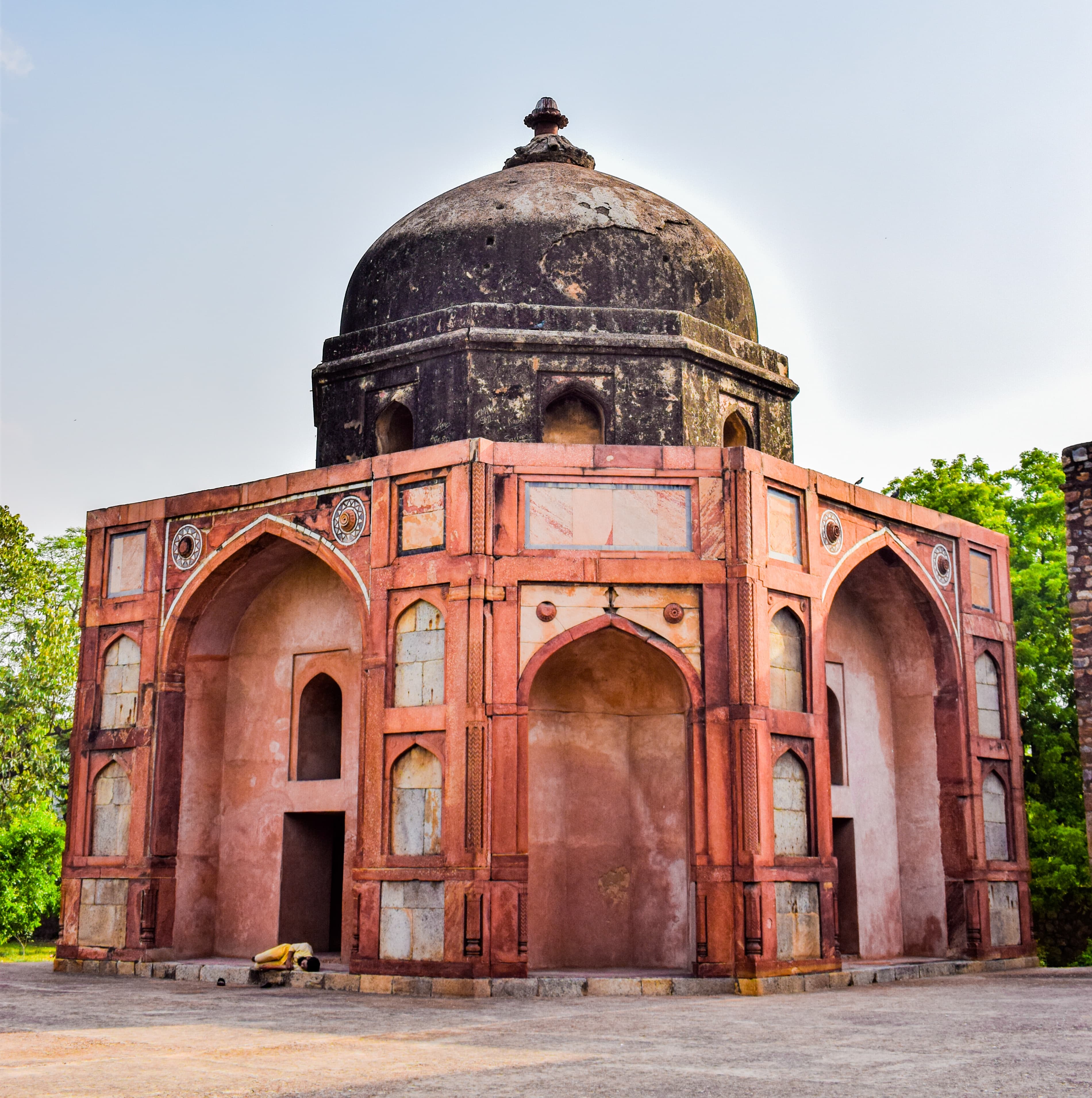
Arab Arab Sarai was put in place to house the Persian and Central Asian craftsmen who worked on the tomb, and the gateway still looks quietly impressive, even if it does not shout.
Best Cultural and Heritage Experiences
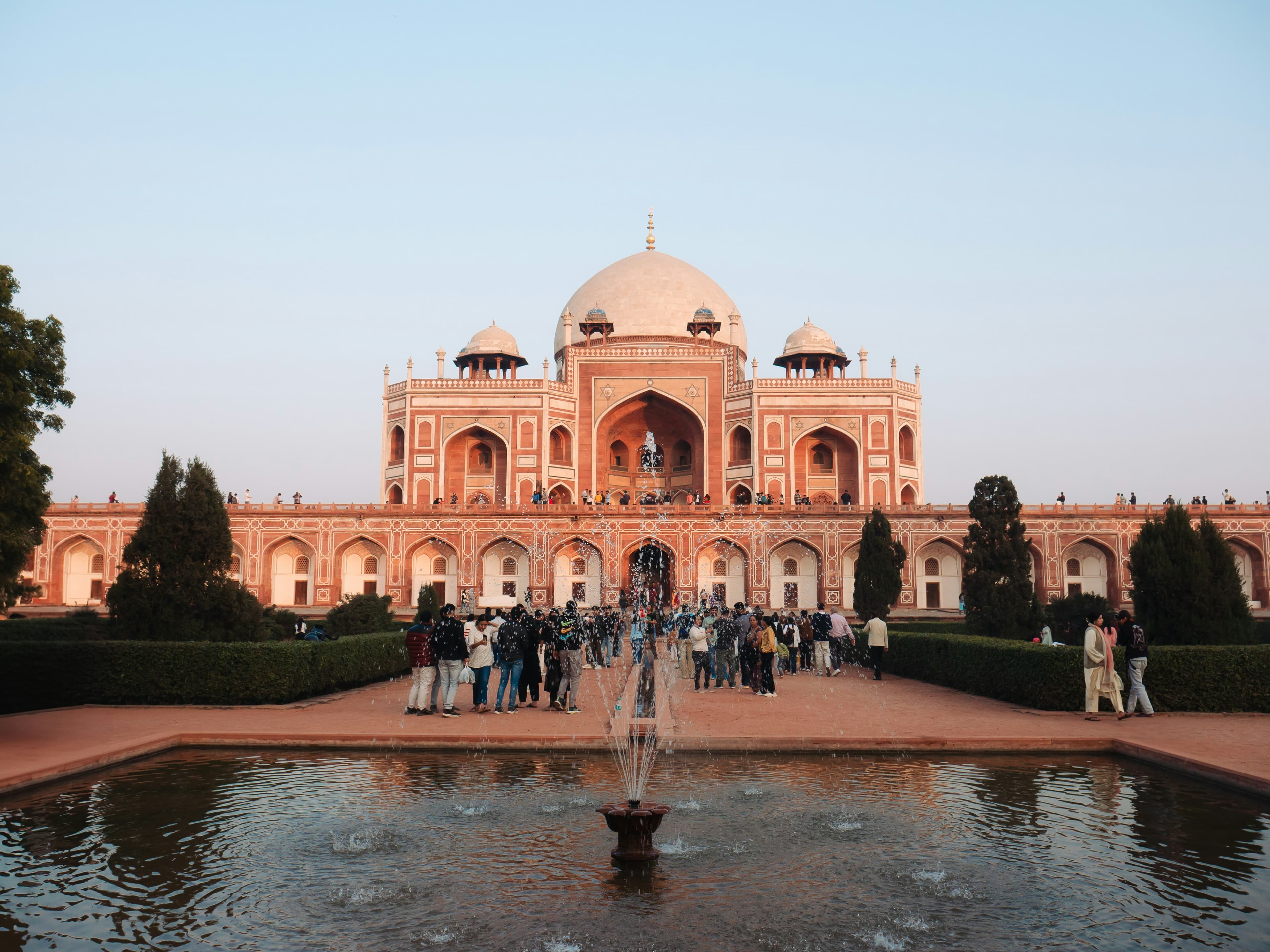
Image via unsplash
Watch the sunrise as light slowly slides across the tomb's red sandstone from the Charbagh's central water channel. Take a guided walk linking Humayun's Tomb to the Taj Mahal, tracing the evolution of Mughal garden-tomb design over eight decades. End your evening with centuries-old qawwali at the nearby Nizamuddin Dargah, then take a quiet stroll through the adjoining Sunder Nursery gardens - a perfect blend of architecture, landscape, and living tradition.
Nearby Attractions
Sunder Nursery
Image via wikipedia
Sunder Nursery
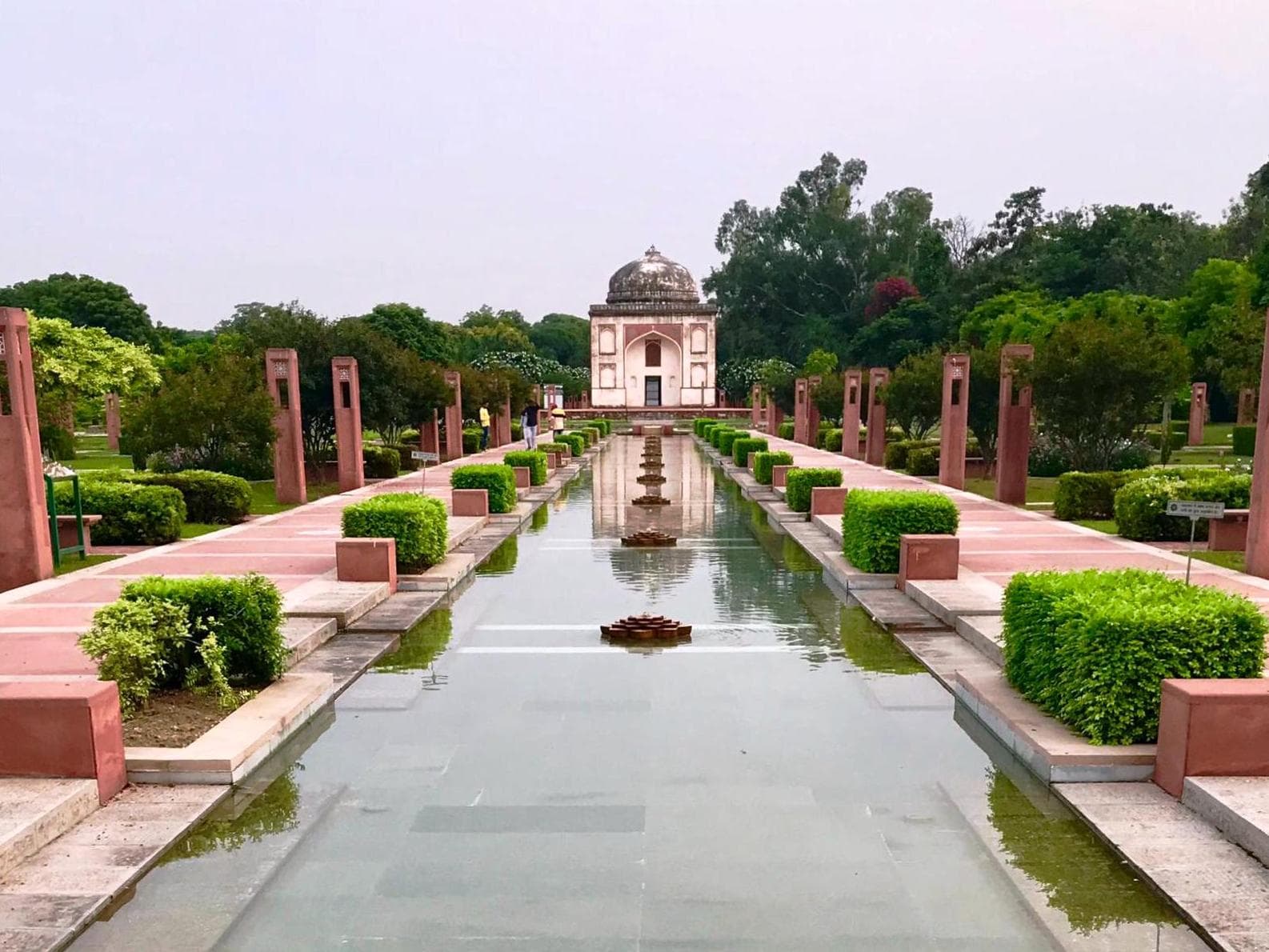
kind of like a heritage park that is landscaped and sits right next to the complex, with its own Mughal era monuments, about five minutes on foot, give or take
Nizamuddin Dargah
Image via wikipedia
Nizamuddin Dargah
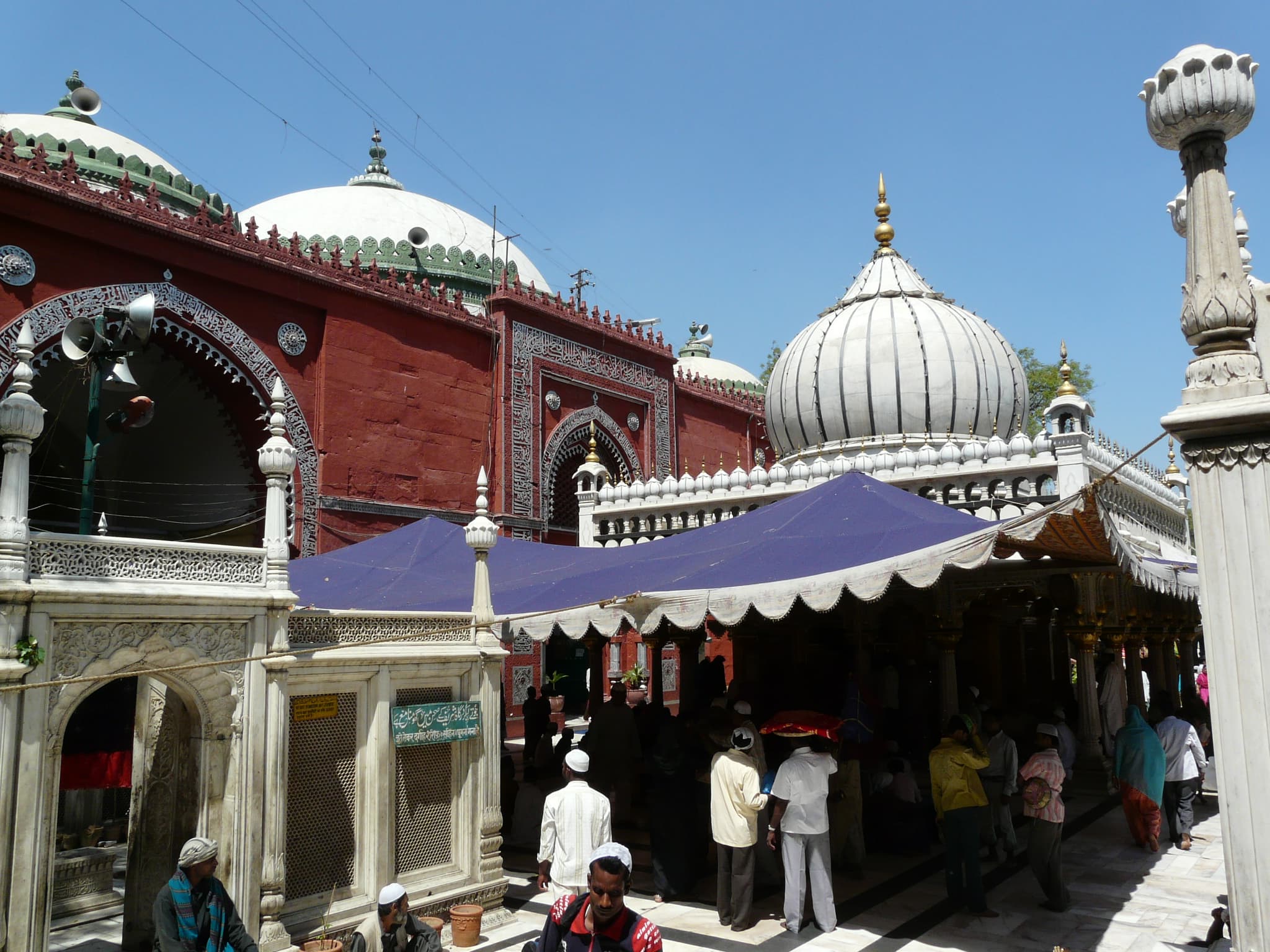
the shrine of the Sufi saint Nizamuddin Auliya , it’s only a short walk away and one of Delhi’s most atmospheric spiritual locations , plus there are well known Mughlai eateries around in those nearby lanes
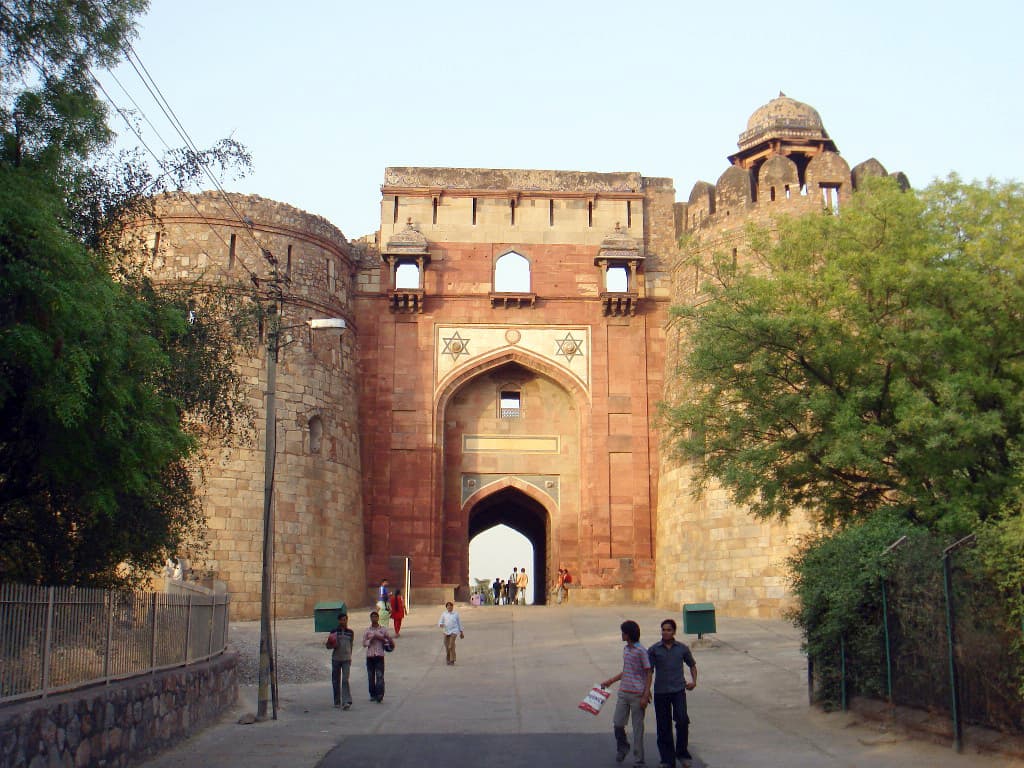
Purana Qila, (Old Fort):
Image via wikipedia
Purana Qila, (Old Fort):
founded by Humayun himself, a short drive, and it’s one of Delhi’s oldest fortified places
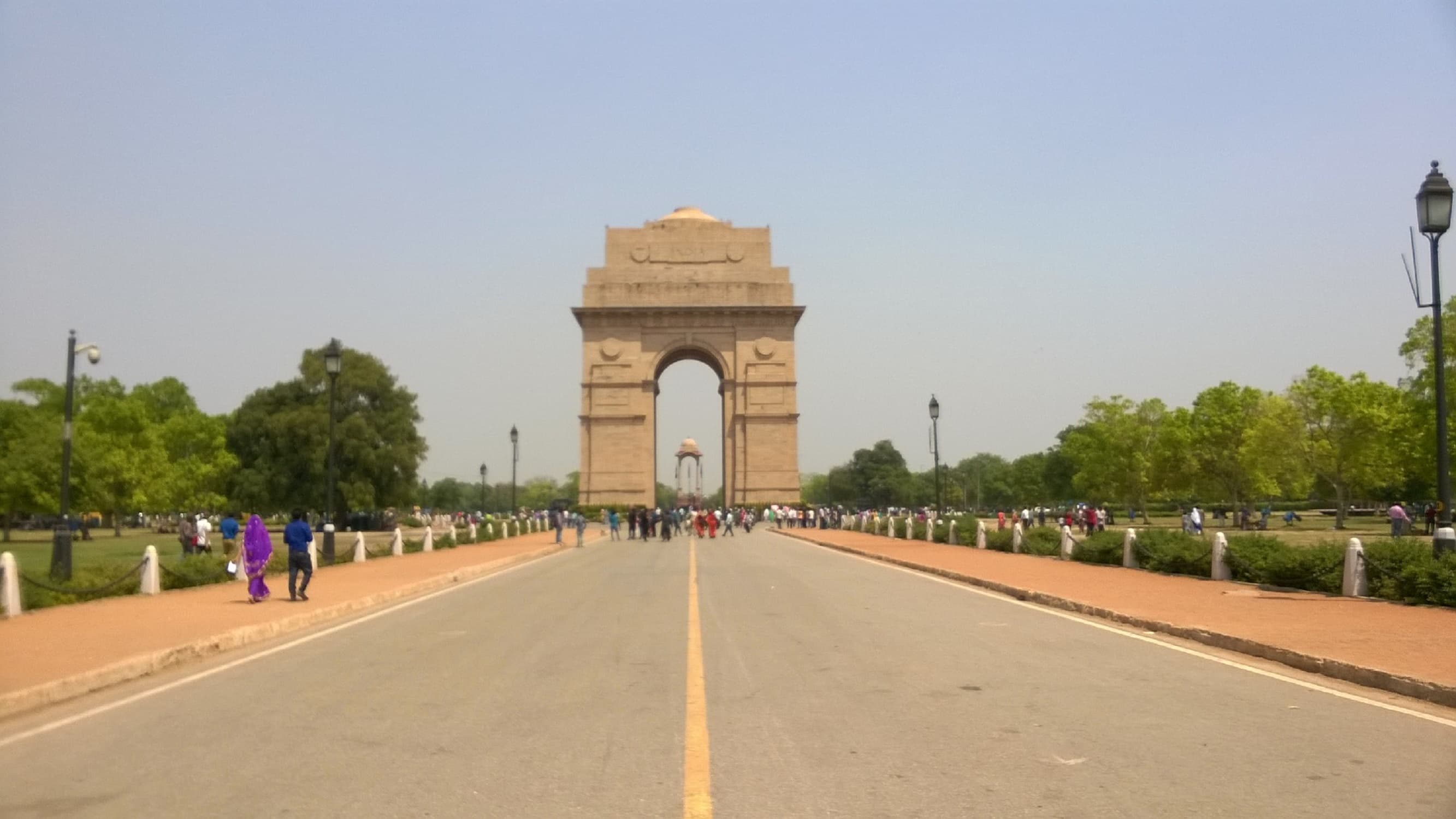
India Gate and Rashtrapati Bhavan
Image via wikipedia
India Gate and Rashtrapati Bhavan
roughly 15 to 20 minutes by car, they can be folded into one longer Delhi heritage day pretty easily
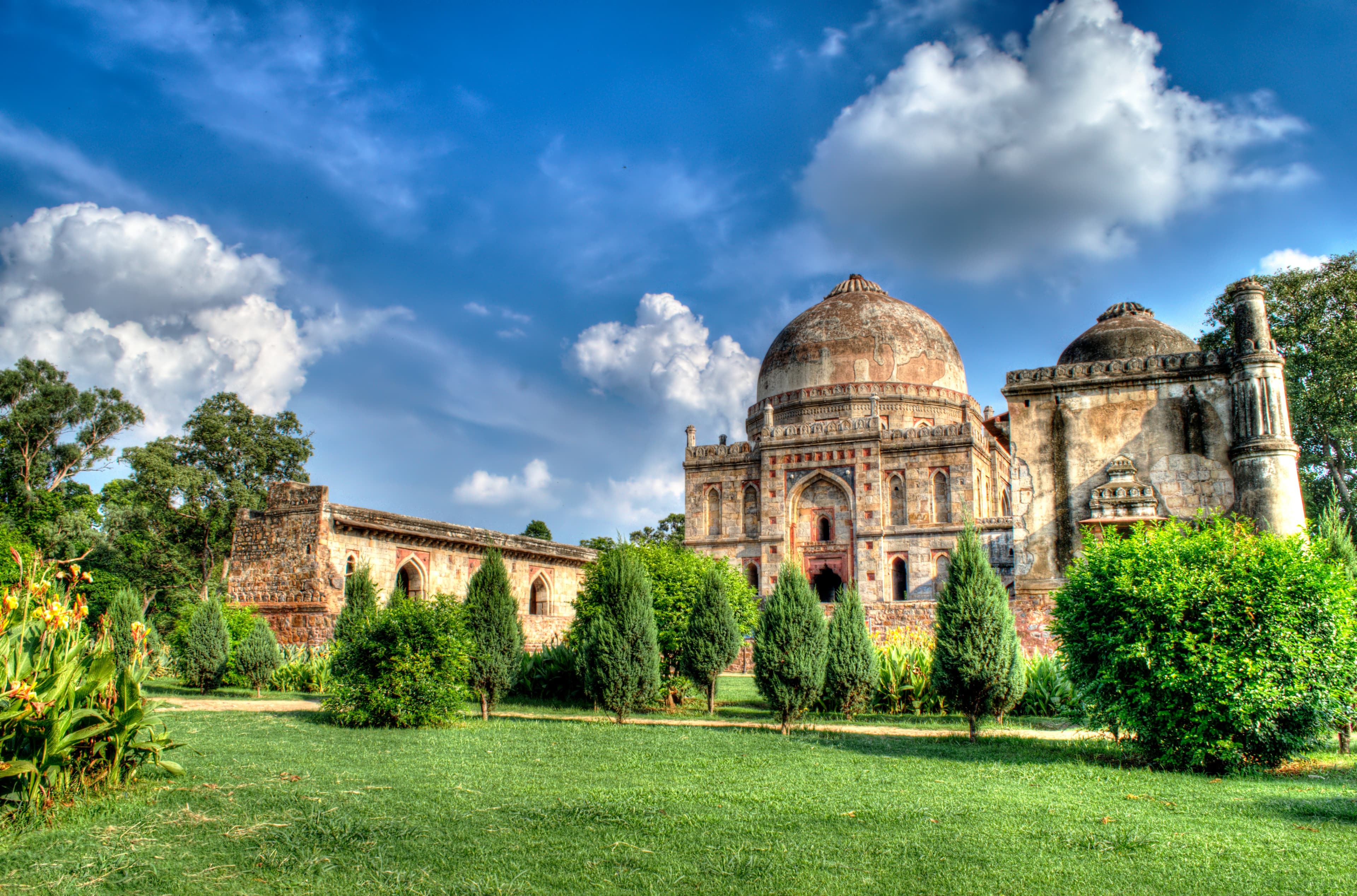
Lodi Garden
Image via wikipedia
Lodi Garden
a landscaped park with 15th century tombs, a short drive from the complex, and calm pause for a slower afternoon
Entry & Ticket Details
| Indian Nationals | ₹35 per person |
| Foreign Nationals | ₹550 per person |
| Children (Under 15) | Free |
| Timings | 6:00 AM – 6:00 PM (Daily) |
Best Time to Visit Humayun's Tomb
November – February
Best for photography and unhurried strolls; ideal season
March – June
Severe heat (40°C+) - visit very early or late afternoon; carry water
July – September
Monsoon - high humidity; fewer crowds but slippery paths
October
Pleasant post-monsoon weather - good alternative to peak season
Budget Estimates
₹2,000 – ₹3,500
per day (metro/local transport, street food, entry tickets).
₹5,000–₹9,000
per day (private car, boutique hotel, sit-down dining).
₹15,000+ per day
Usually that’s a chauffeur driven vehicle, a five star Delhi stay, a private historian guide.
Frequently Asked Questions
Humayun's Tomb is famous as the first grand garden-tomb built in India, commissioned by Empress Bega Begum for her husband, Emperor Humayun. Its Charbagh garden design and red sandstone-and-marble architecture are widely regarded as the direct architectural precursor to the Taj Mahal.
Entry costs approximately ₹35 for Indian, SAARC and BIMSTEC nationals and around ₹550 for foreign nationals, with children under 15 typically admitted free. Rates are periodically revised, so it's worth checking the official ASI booking portal before visiting.
Humayun's Tomb is open daily from 6 AM to 6 PM, seven days a week, with no weekly closure.
The nearest metro station is JLN Stadium on the Violet Line, about 2 km away, followed by a short auto-rickshaw or taxi ride. Jorbagh station on the Yellow Line is a further alternative. Private chauffeur transfers can drop off directly at the entrance on Mathura Road.
Yes. Humayun's Tomb was inscribed as a UNESCO World Heritage Site in 1993, recognised as the first monument to introduce the Charbagh garden-tomb style that later reached its architectural peak at the Taj Mahal.
One and a half to two hours covers the main tomb, garden and immediate surroundings comfortably. Add another hour if you plan to explore Isa Khan's Tomb, Sunder Nursery or the wider complex in detail.
Planning a Humayun's Tomb Heritage Journey?
India Heritage Travel creates private chauffeur-driven itineraries that combine Humayun's Tomb, Isa Khan's Tomb, Nila Gumbad, and Charbagh Gardens with Qutub Minar, Red Fort, and Lodhi Garden into seamless Delhi heritage journeys guided by local experts.
Plan My Delhi Heritage Tour