Ajanta and Ellora Caves: Two UNESCO Sites, One Extraordinary Journey
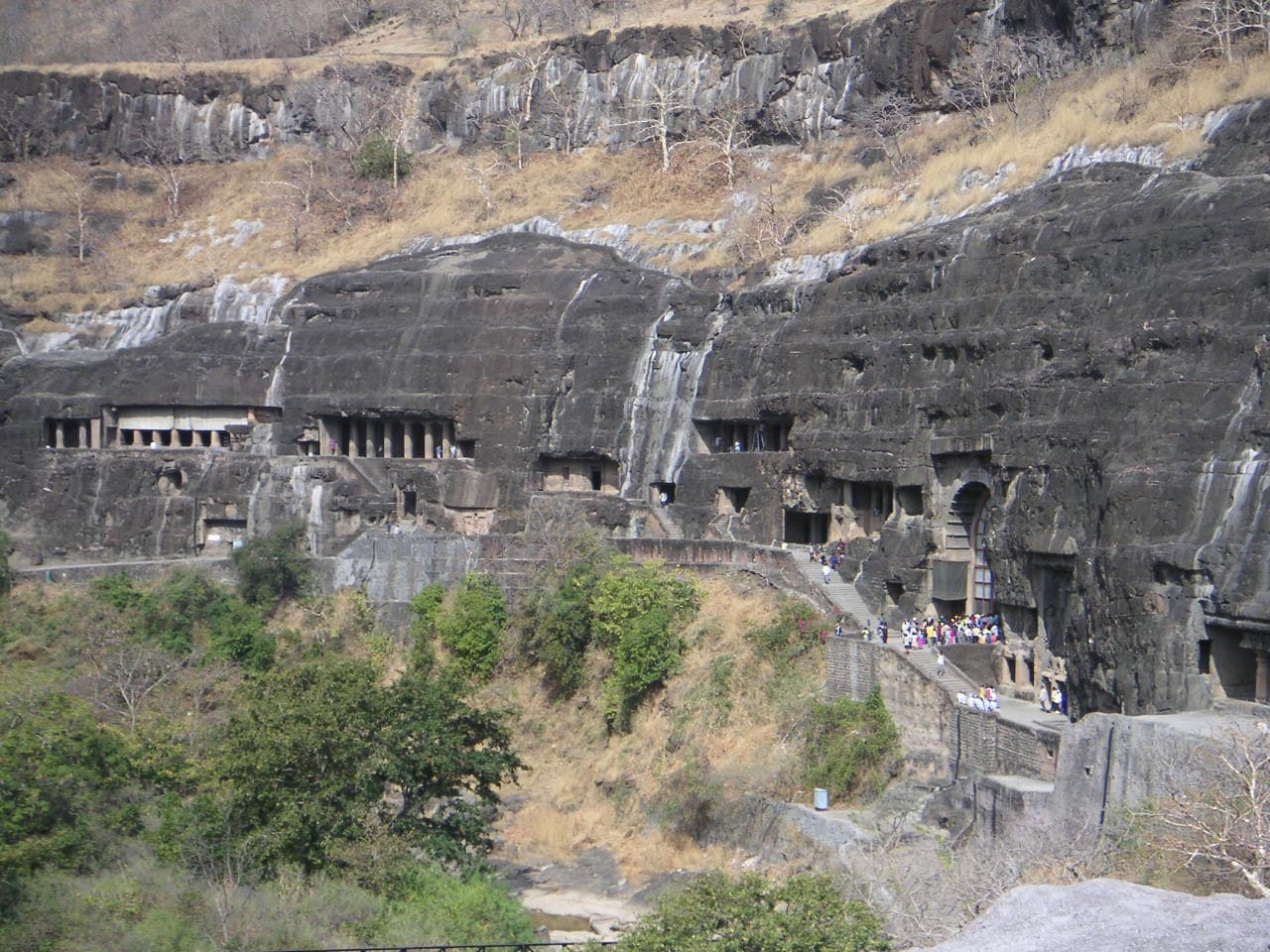
There There are places in India where history just does not feel historical. The Ajanta and Ellora Caves are two of them. Carved not built, these are monuments, hewn straight out of the living basalt of the Deccan Plateau not stone structures laid upon the land, but the ground itself, hollowed into temples, monasteries, and galleries of art so refined that some 19th-century Western art historians, meeting Ajanta’s murals for the first time, refused to believe they were truly ancient.
via wikipedia
This full Ajanta and Ellora Caves guide, covers everything you might want the story of both locations, cave-by-cave highlights you cannot really skip, the staggering Kailasa Temple at Ellora, practical ticket details, and travel logistics . You also get a nicely structured 2-day plan from Aurangabad. Both sites are UNESCO World Heritage Sites together they form one of the most tightly packed, accumulations of creative genius anywhere on earth.
Ajanta Caves: History & Origins
via pexels
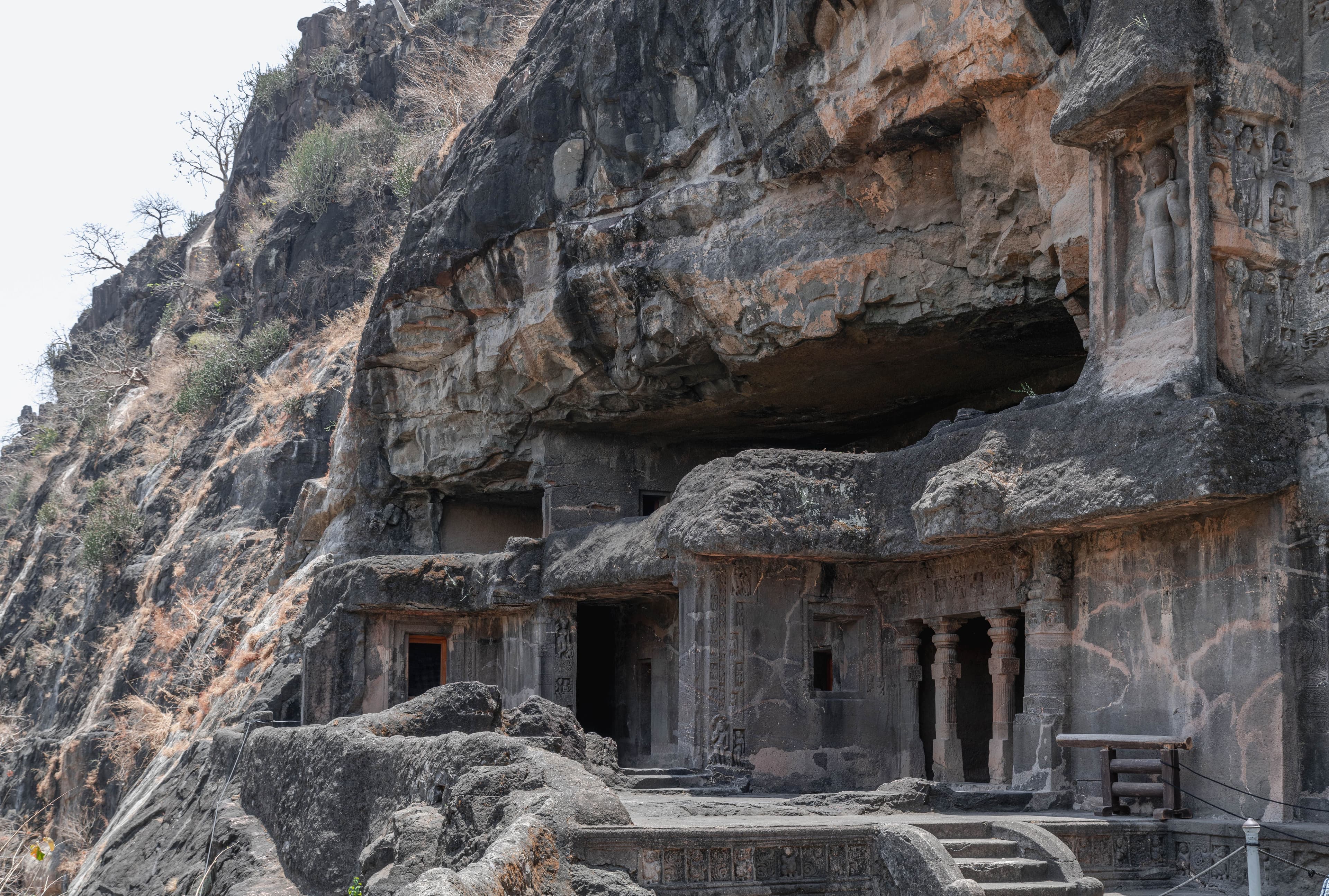
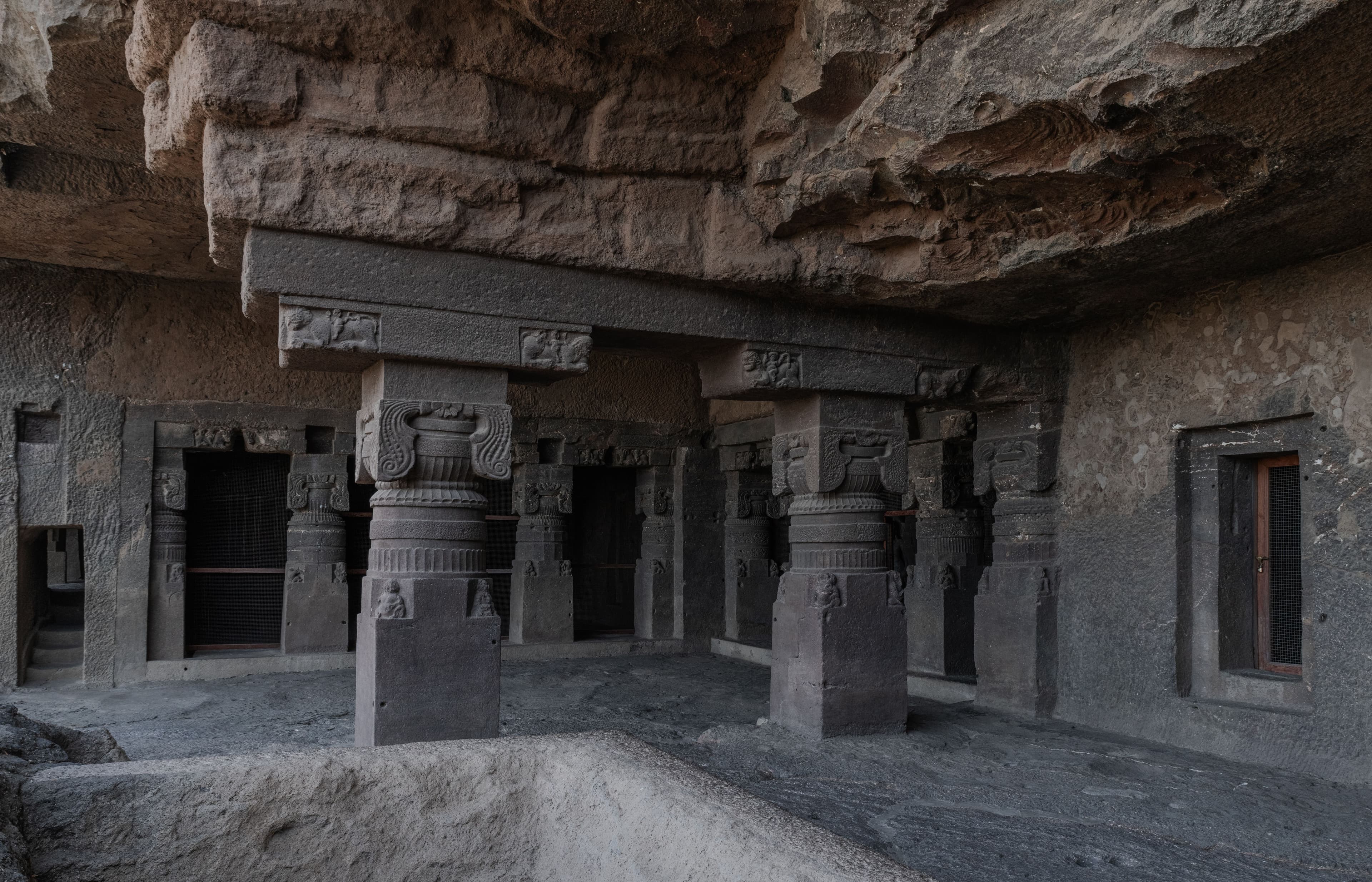
The 30 caves at Ajanta were carved in two distinct phases. The earliest - five Hinayana Buddhist prayer halls and monasteries - date from the 2nd century BC to 1st century AD under the Satavahanas. After a gap, a second, more prolific phase under Vakataka king Harishena (c.460-480 AD) produced the remaining 25 caves, housing almost all of Ajanta's celebrated paintings.
By the 7th century, when Buddhism began its long, slow retreat from the Deccan, Ajanta was left behind. The jungle closed in, completely. The caves stayed forgotten for over a millennium, until April 1819, when a British officer named John Smith, hunting tiger in the Indhyadri hills, looked down from the cliff edge of a horseshoe-shaped gorge above the Waghora River.
Ajanta Caves: Architecture & Cave-by-Cave Highlights
via wikipedia
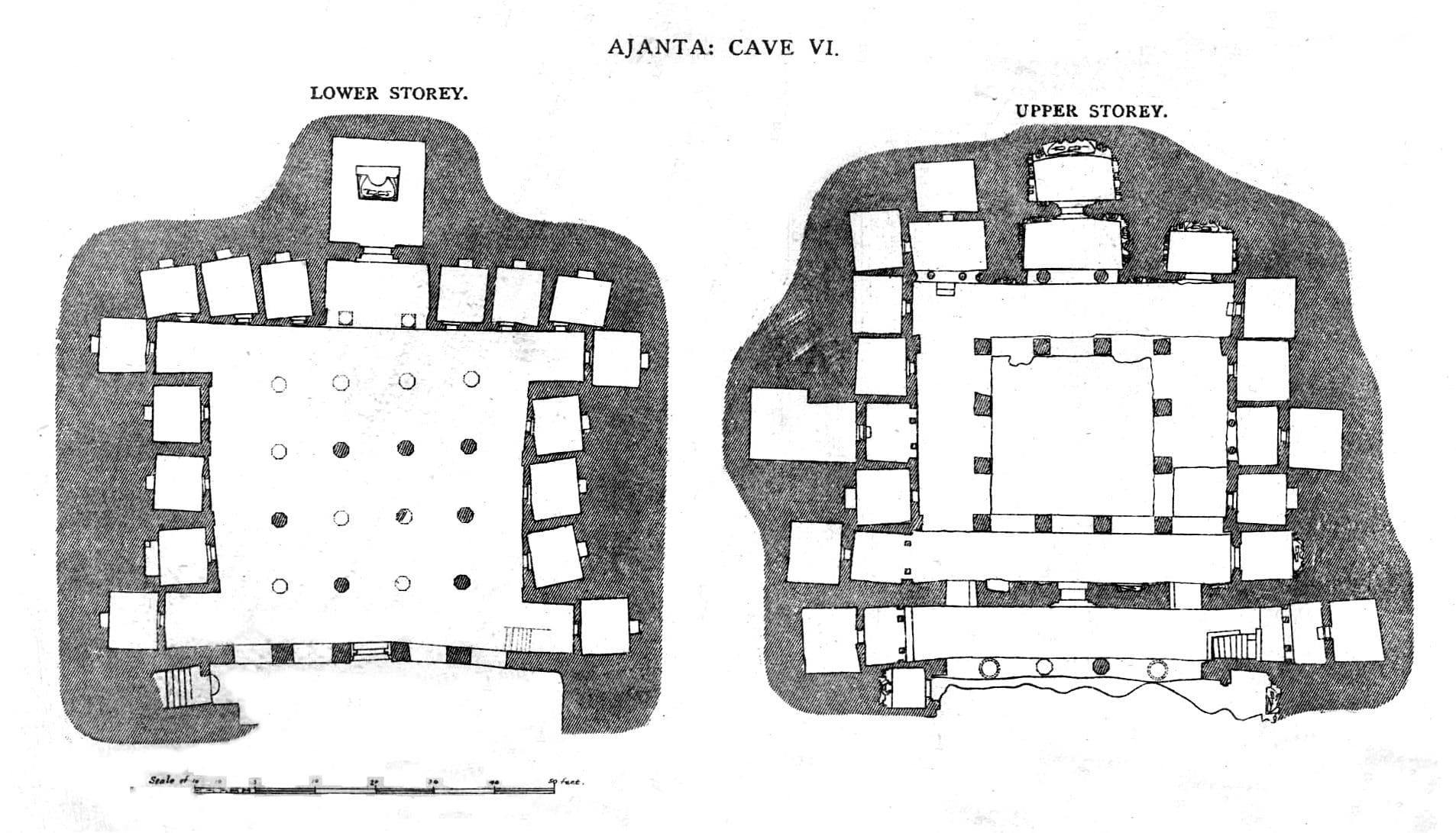
So the 30 Ajanta caves sort of divide into two main structural types, chaitya-grihas, basically prayer halls with a stupa on the far end , and viharas, meaning residential monasteries, with little cells that open off a central hall or so. The oldest chaityas caves 9, 10, 19, and 26 - are the most architecturally dramatic, with those ribbed vaulted ceilings that were first in wood and then later copied in stone in the subsequent caves, and also a tall nave, plus a carved stupa that ends up acting as the focal point for worship
Must-See Caves at Ajanta
Cave 1: The jewel of Ajanta
Ajanta's jewel, features two iconic paintings Bodhisattva Padmapani with a lotus and Bodhisattva Vajrapani. Their flowing lines and emotional depth match any Renaissance fresco.
Cave 2: An elaborately painted ceiling and walls
showing Jataka stories, (as in tales from the Buddha’s earlier lives) and also some of the best preserved colour you’ll find across any Ajanta cave.
Cave 3: Dying Princess panel
It shows a figure collapsing after she hears about the Buddha’s renunciation, it’s one of the more gut feeling moving single images in ancient art overall.
Cave 4: A magnificent chaitya-griha
with a richly carved facade, and then a dramatic Buddha figure taking the center spot, and you feel it right away, dominating the interior stupa.
Ellora Caves: History & Three-Religion Heritage
via wikipedia
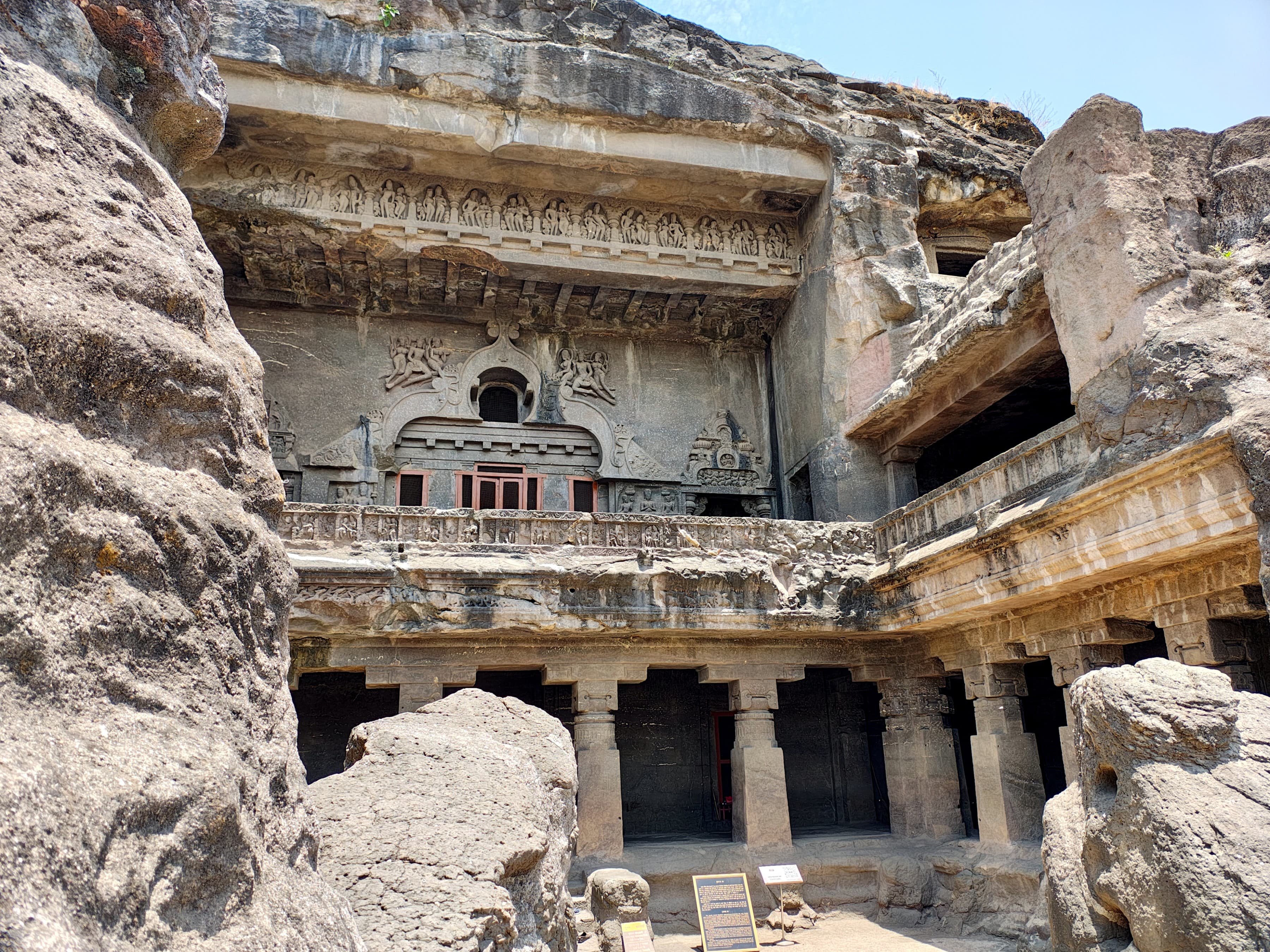
Located 30 km northwest of Aurangabad and 100 km south of Ajanta, Ellora's 34 caves are a different proposition altogether not even the same vibe. While Ajanta was a single-religion Buddhist site, Ellora is a multi-faith showcase: 12 Buddhist caves (6th-8th century), 17 Hindu caves (6th-9th century), and 5 Jain caves (9th-11th century) all sitting side by side in an extraordinary display of religious pluralism.
Ellora Architecture: From Chaityas to the Kailasa Temple
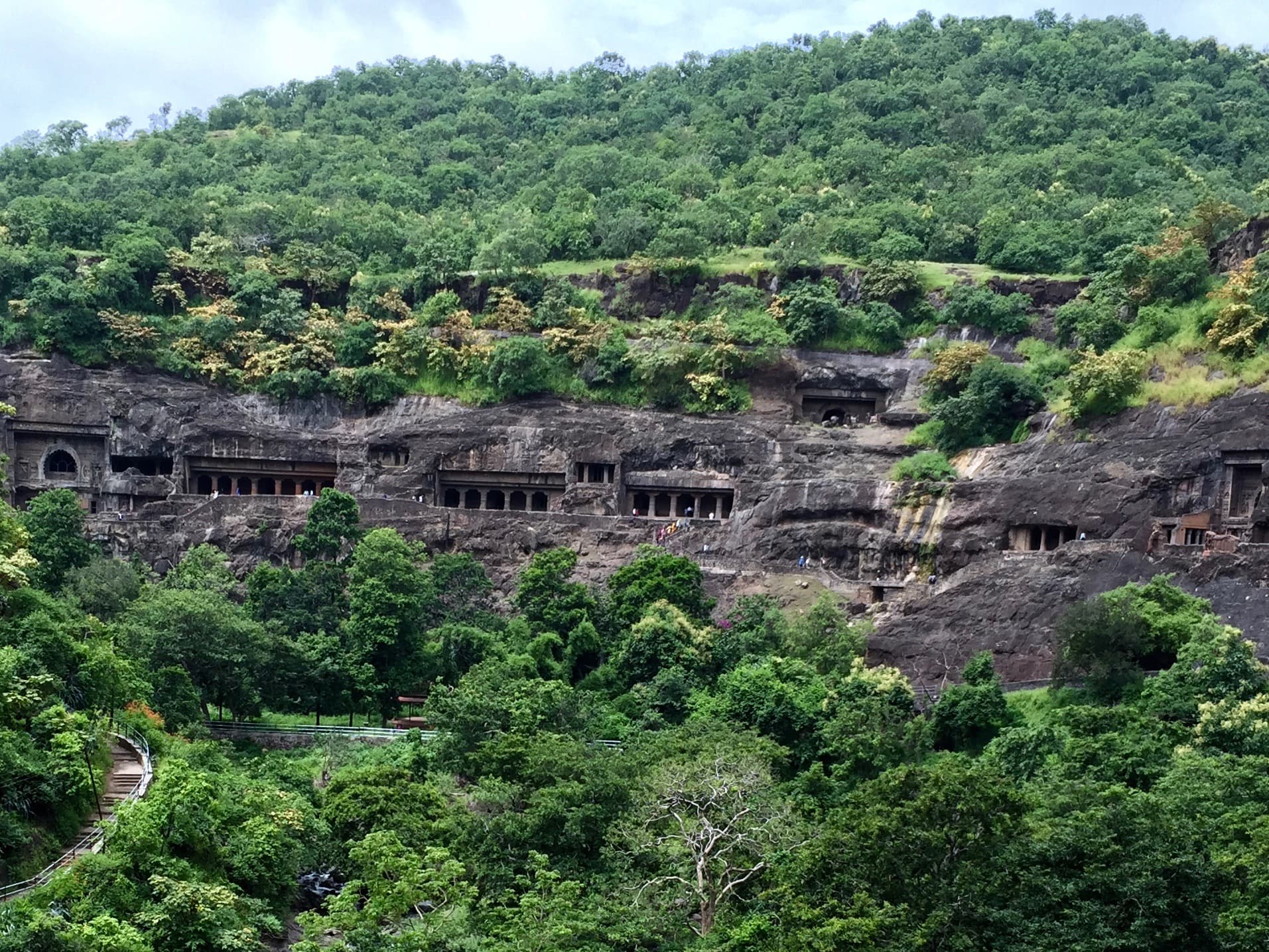
via wikipedia
Ellora's Buddhist bit includes, kind of, some of the most sophisticated multi level viharas from the rock-cut tradition. Cave 5, aka the Maharwada, is this huge communal hall, with carved benches along its sides and it feels plausibly like a dining space or a lecture area, even if the logic is a little soft. Cave 10, the Vishvakarma Cave, is the only chaitya at Ellora, and it’s a three storey setup with a magnificent vaulted nave. There are also carved stone railings and, up above, a massive teaching Buddha above the stupa so the outstretched teaching hand, is kind of silhouetted against the light from the facade window, in the most photographed view people make of Ellora’s Buddhist section.
The Kailasa Temple (Cave 16): The Greatest Rock-Cut Monument on Earth
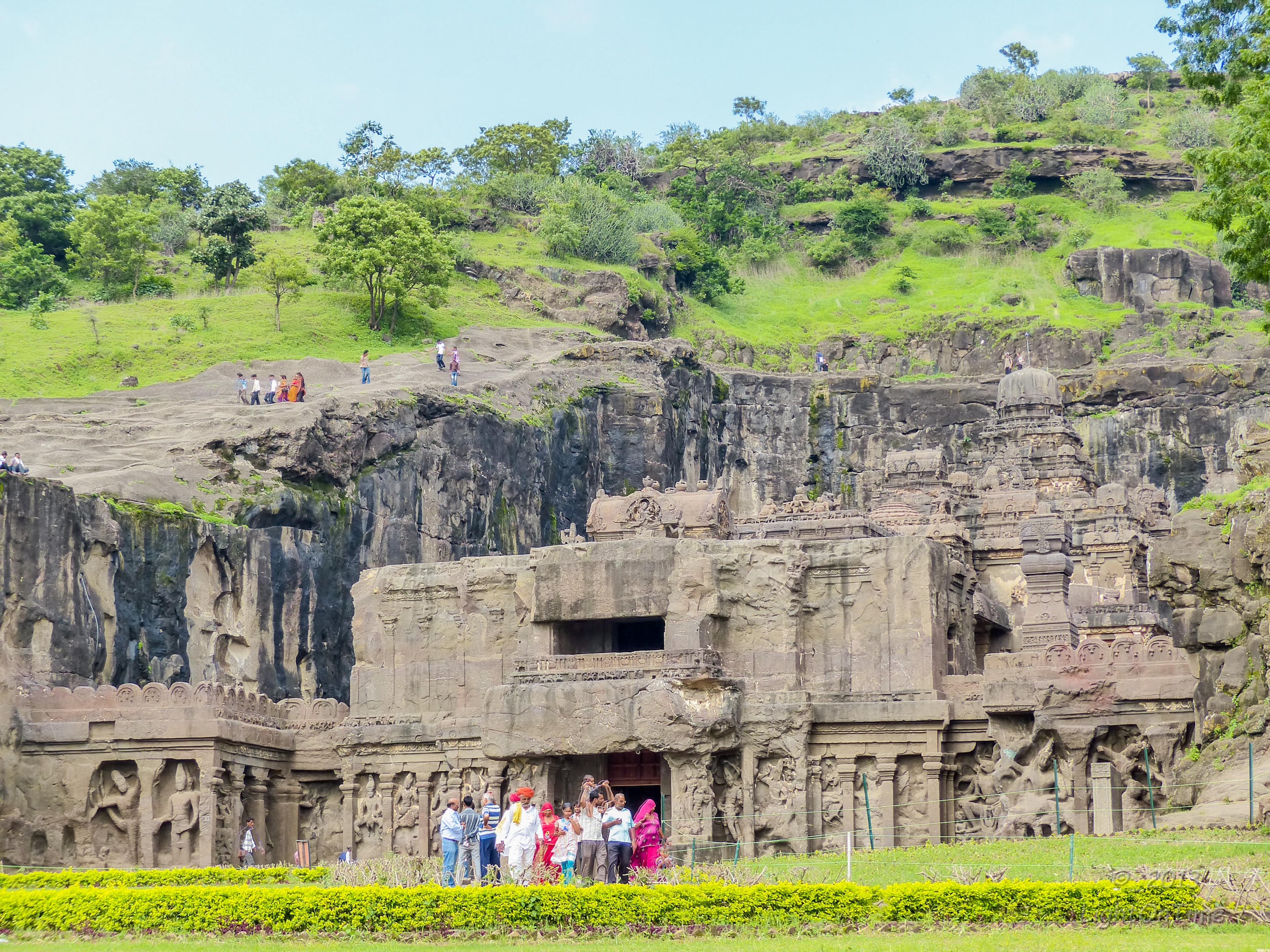
via wikipedia
No No superlative does justice to the Kailasa Temple, really. It was commissioned by the Rashtrakuta king Krishna I , in the 8th century, and it’s the world’s largest monolithic rock-cut structure - basically a free standing temple complex carved top down from a single basalt cliff. The numbers are kind of hard to take in: the excavation removed about 200,000 tonnes of rock (that’s around three times the volume of the Great Pyramid) to bring forth a temple complex measuring 84 metres long, 47 metres wide, and 33 metres tall.
Nearby Attractions in Aurangabad
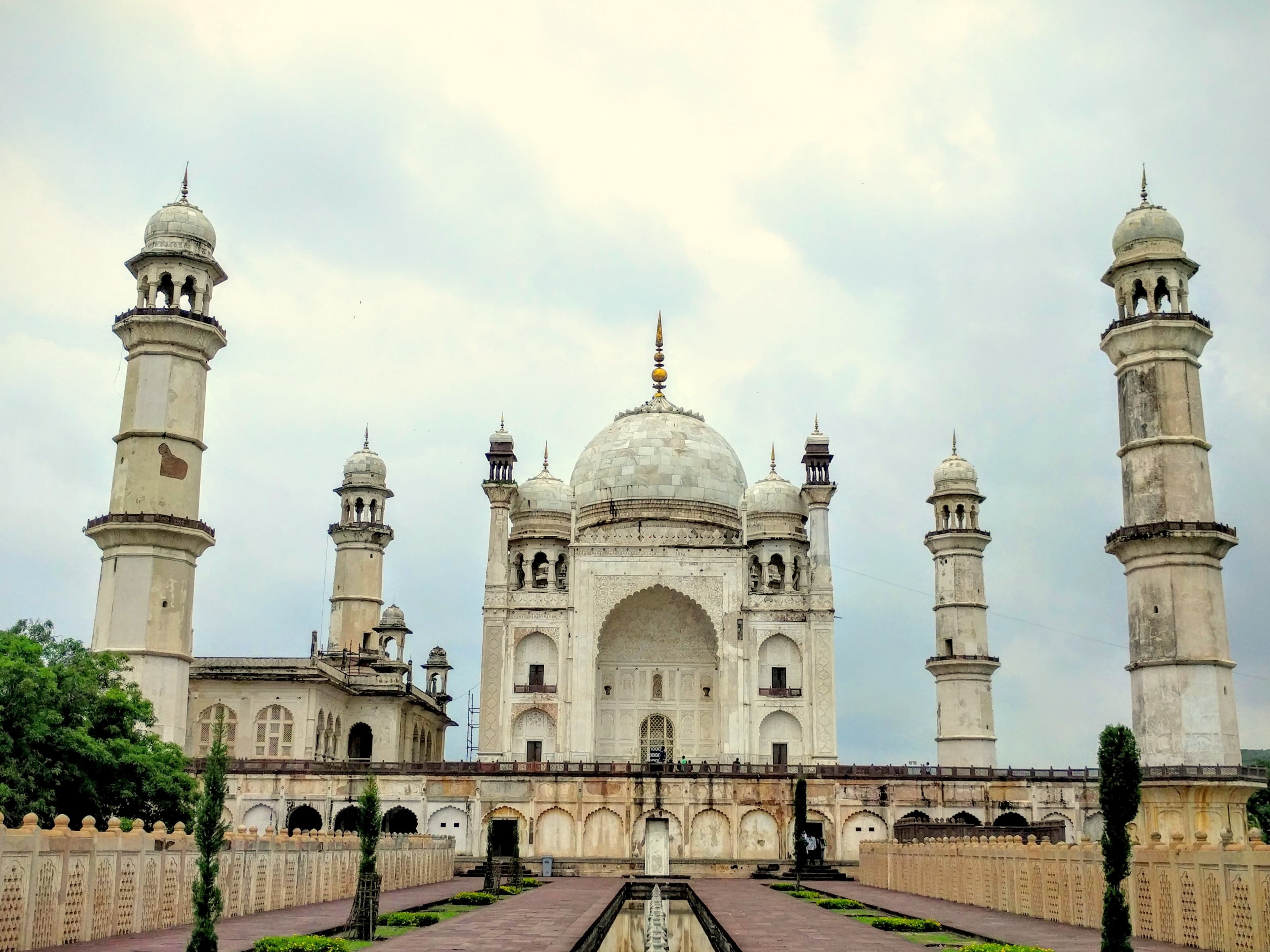
Bibi ka Maqbara
via wikipedia
Bibi ka Maqbara
Built in 1660 by Azam Shah for his mother, Bibi ka Maqbara is dubbed the 'Taj of the Deccan.' The white marble and reflecting pool reward early morning visitors with a quiet, golden glow.
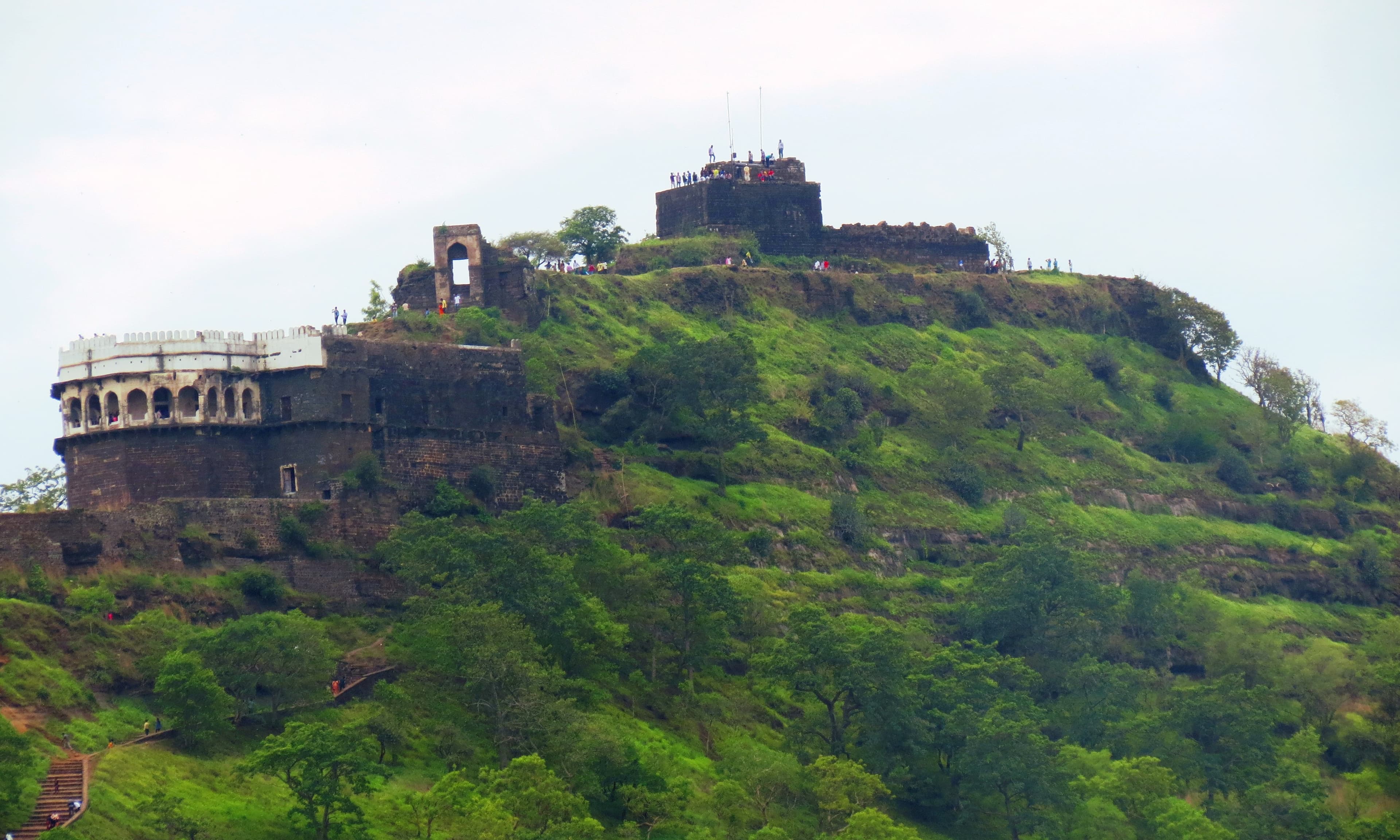
Daulatabad Fort
via wikipedia
Daulatabad Fort
Daulatabad Fort, 13 km from Aurangabad, rises on a 200-metre basalt cone - never breached by direct assault. The 30-minute climb reveals a crocodile moat, dark passages, and concentric walls. The Deccan views from the top are extraordinary.
Panchakki Water Mill
via wikipedia
Panchakki Water Mill
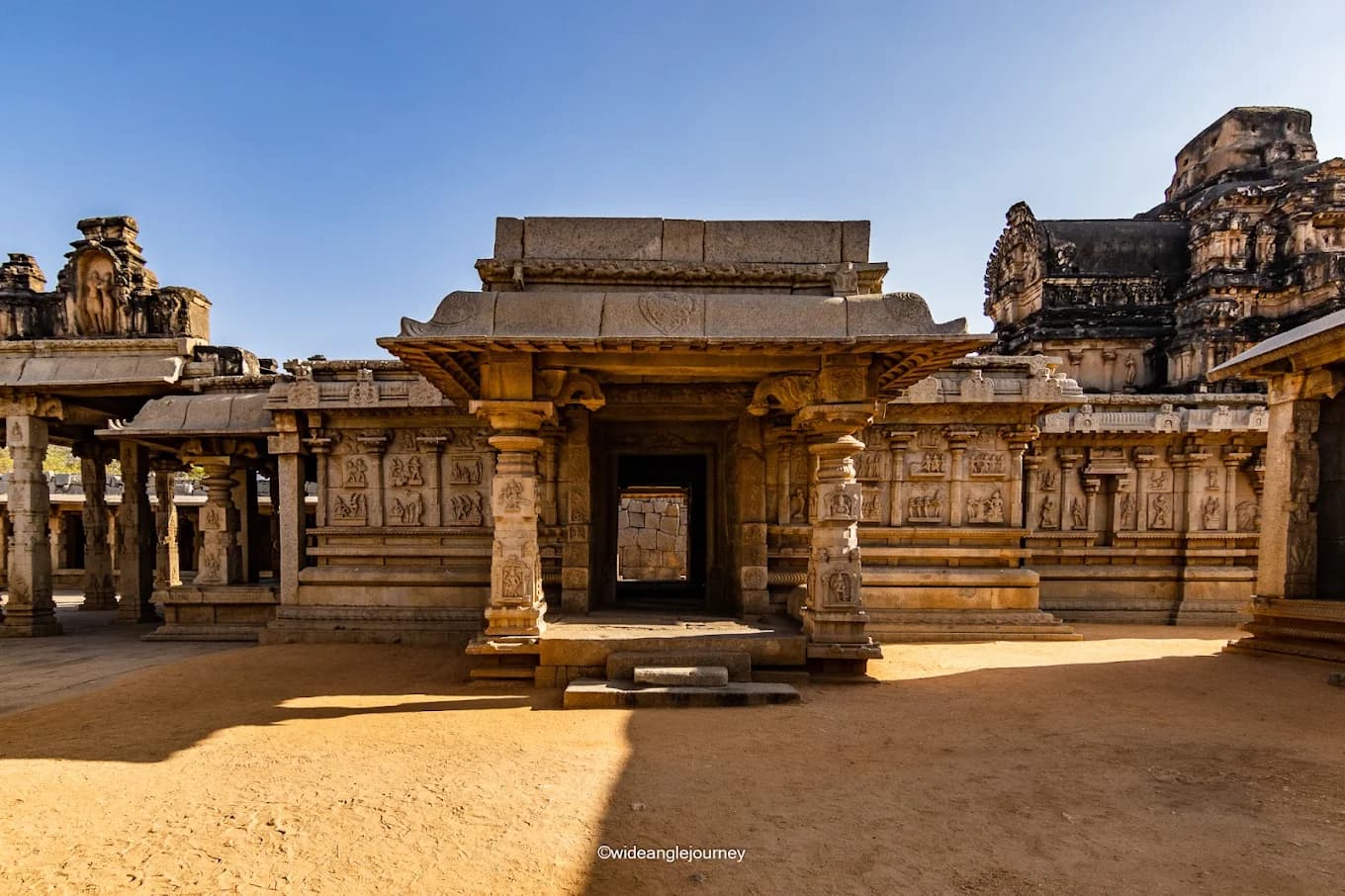
The 17th-century Sufi shrine complex houses the Panchakki water mill, which ground grain for pilgrims using water from an 8 km underground channel. The tranquil gardens and tank make it a refreshing hour-long break from the nearby cave sites."
Food & Culinary Experiences in Aurangabad
via amlanthetramp.com
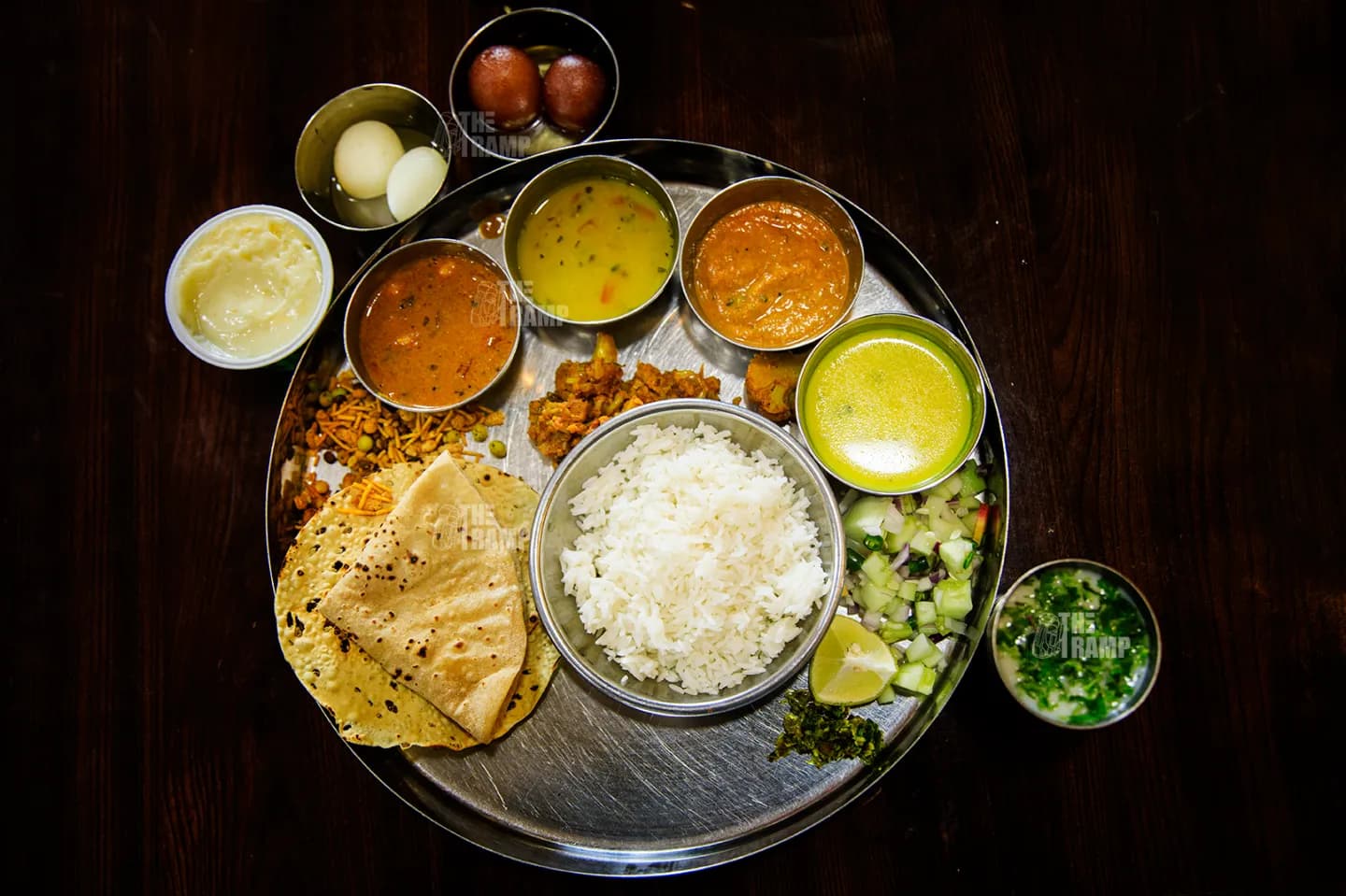
Aurangabad food culture kind of sits where Deccan royal cooking meets Mughal culinary ways, like there’s this long chain of tradition behind it, and yes it’s also about the city being a capital spot during Aurangzeb’s Mughal presence in the south. Most of the best eating happens in the Muslim majority old-town area , that’s where you go to feel it properly. • Naan Khaliya: this is Aurangabad’s signature thing thin stacked , kind of lacy bread, served with slow-cooked mutton or chicken korma. You’re supposed to hunt for it in old-town restaurants that usually open only after evening prayer.
Ticket & Entry Information
Ajanta Caves
- Foreign tourists: ₹600 per person
- Indian nationals: ₹40 per person
- Timings: Tuesday to Sunday, 9:00 AM – 5:30 PM
- Camera Fee: ₹25 (No flash photography inside caves)
- Vehicle Access: Private vehicles must park at the MTDC complex. Visitors use the mandatory shuttle bus service (₹25 per person) to reach the cave entrance.
Ellora Caves
- Foreign tourists: ₹600 per person
- Indian nationals: ₹40 per person
- Timings: Wednesday to Monday, Sunrise – Sunset
- Camera Fee: ₹25 (Still Camera)
- Important Note: Ajanta remains closed on Mondays while Ellora remains closed on Tuesdays. Plan your two-day circuit accordingly.
Best Time to Visit Ajanta and Ellora
October–November
Post-monsoon clarity; landscape still green; excellent photography light
December–February
Peak season; ideal temperatures; manageable crowds on weekdays
March
Heat beginning to build; still comfortable; last viable month
April–June
Extreme Deccan heat (40°C+); not recommended
Why Choose India Heritage Travel for Your Ajanta & Ellora Journey?
We design private, immersive Maharashtra journeys for discerning international travellers.
Private air-conditioned vehicle transfers - Aurangabad to Ajanta to Ellora and back
Dedicated ASI-certified art historians for Ajanta's murals - transformative depth of understanding
Early-morning Kailasa Temple access before tour buses arrive
Curated heritage hotels and premium boutique stays in Aurangabad
Women-only tour options with female guides and hand-picked accommodation
Fully bespoke itineraries - from a focused 2-day Ajanta-Ellora circuit to 10-day Maharashtra deep dives
Ajanta & Ellora Caves FAQ
Essential information for planning a visit to Maharashtra's most extraordinary UNESCO World Heritage Sites.
Ajanta Caves, dating from the 2nd century BC to the 6th century AD, are exclusively Buddhist and are renowned for their exceptional murals depicting the life of the Buddha and Jataka tales. Ellora Caves, constructed between the 6th and 11th centuries AD, represent Buddhism, Hinduism, and Jainism. The most famous monument at Ellora is the Kailasa Temple, the world's largest monolithic rock-cut structure.
No. Ajanta Caves and Ellora Caves are separate UNESCO World Heritage Sites located in Maharashtra. Ajanta lies approximately 100 kilometres northeast of Aurangabad, while Ellora is around 30 kilometres northwest of the city. Most travellers use Aurangabad as the base for visiting both sites.
Foreign visitors pay approximately ₹600 per site, while Indian nationals pay ₹40 per site. Children under 15 years of age enter free. A separate camera fee of ₹25 applies, and flash photography is prohibited inside Ajanta's painted caves.
No. Ajanta Caves remain closed every Monday. Ellora Caves are closed every Tuesday. Visitors planning to explore both sites should arrange their itinerary carefully to avoid closure days.
The best period to visit is from November to February when temperatures remain comfortable and sightseeing conditions are ideal. December and January are the busiest months. Summer temperatures from April to June can exceed 40°C, while the monsoon season from July to September brings lush landscapes but occasional slippery paths.
Planning an Ajanta & Ellora Heritage Journey?
India Heritage Travel creates private chauffeur-driven itineraries that combine Ajanta's Buddhist murals, Ellora's Kailasa Temple, Daulatabad Fort, and Aurangabad's heritage into seamless cultural journeys guided by local experts.
Plan My Ajanta & Ellora Tour