Introduction - The Hill That Changed the World
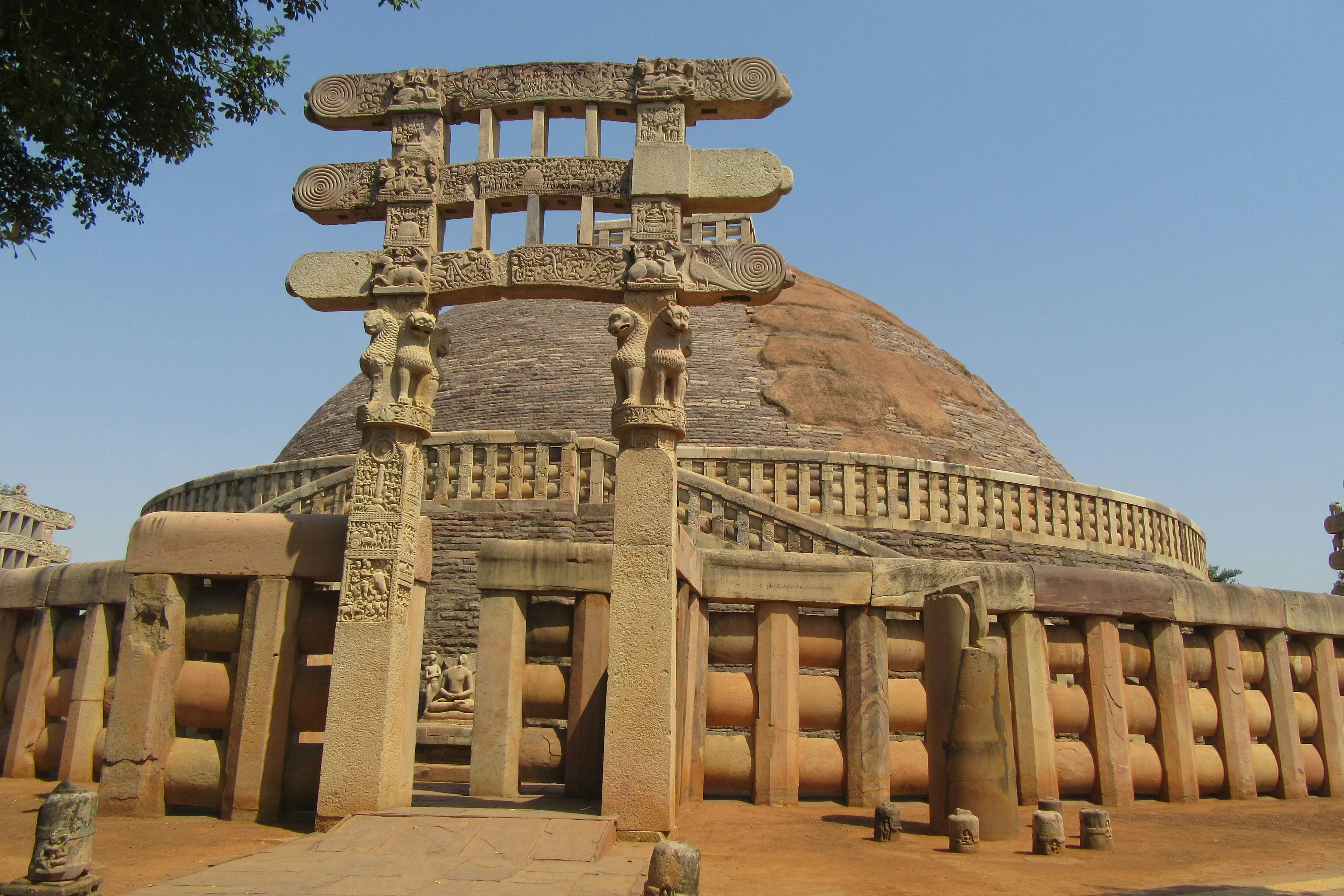
This Sanchi Stupa travel guide sort of explains why Sanchi is more than a Bhopal daytrip , you know. It was commissioned by Emperor Ashoka in the 3rd century BCE and the Great Stupa (Stupa No. 1) stands as one of India’s oldest surviving stone monuments. The four richly carved toranas , which were added in the Satavahana period (1st century BCE–1st century CE) , feel like true masterpieces of ancient stone craftsmanship. And the whole complex somehow holds and continues to guard over 1,300 years of Buddhist art and architectural tradition, all together in one place.
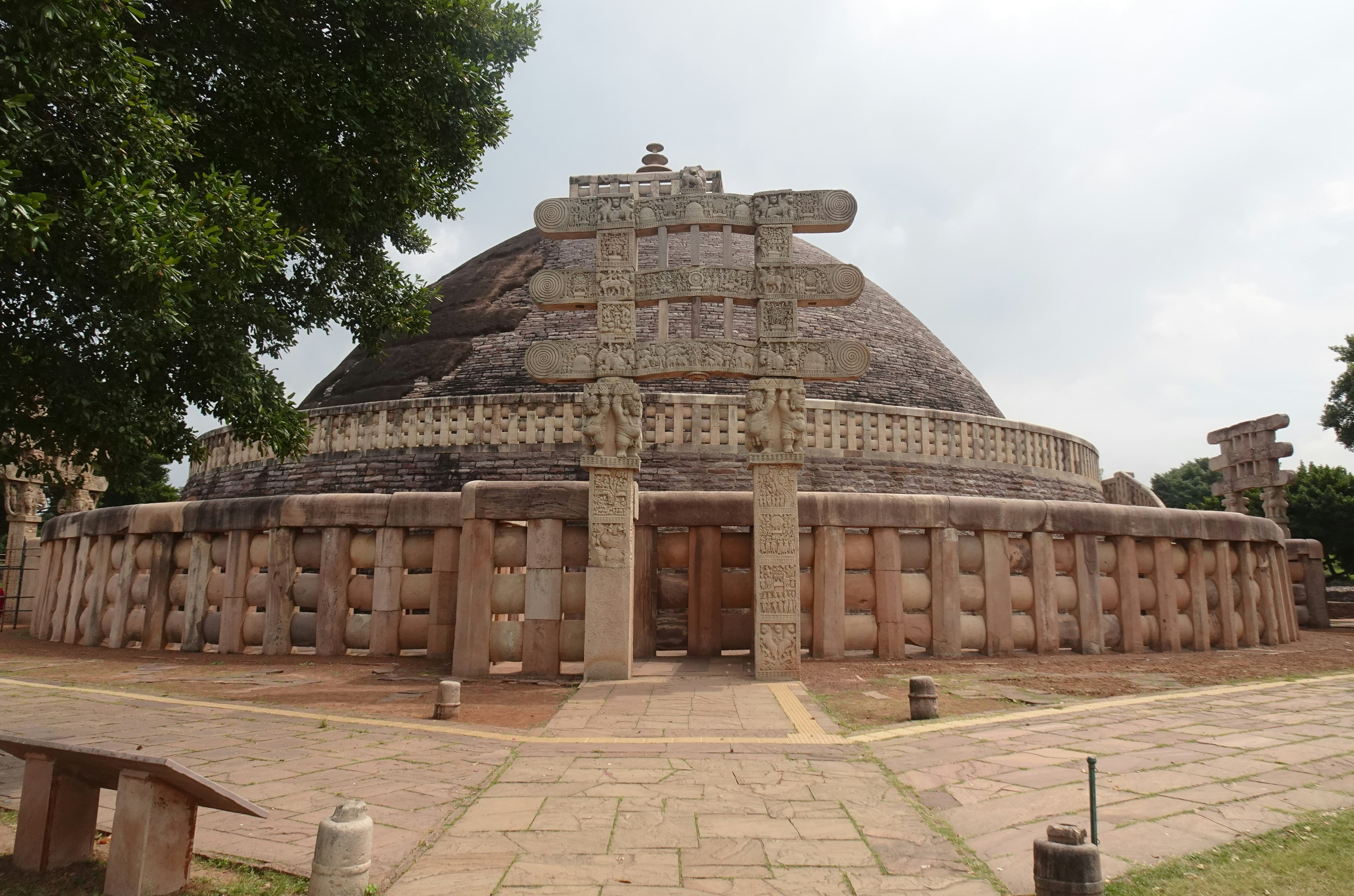
Image via unsplash
History & Origins - From Emperor Ashoka to Modern Rediscovery
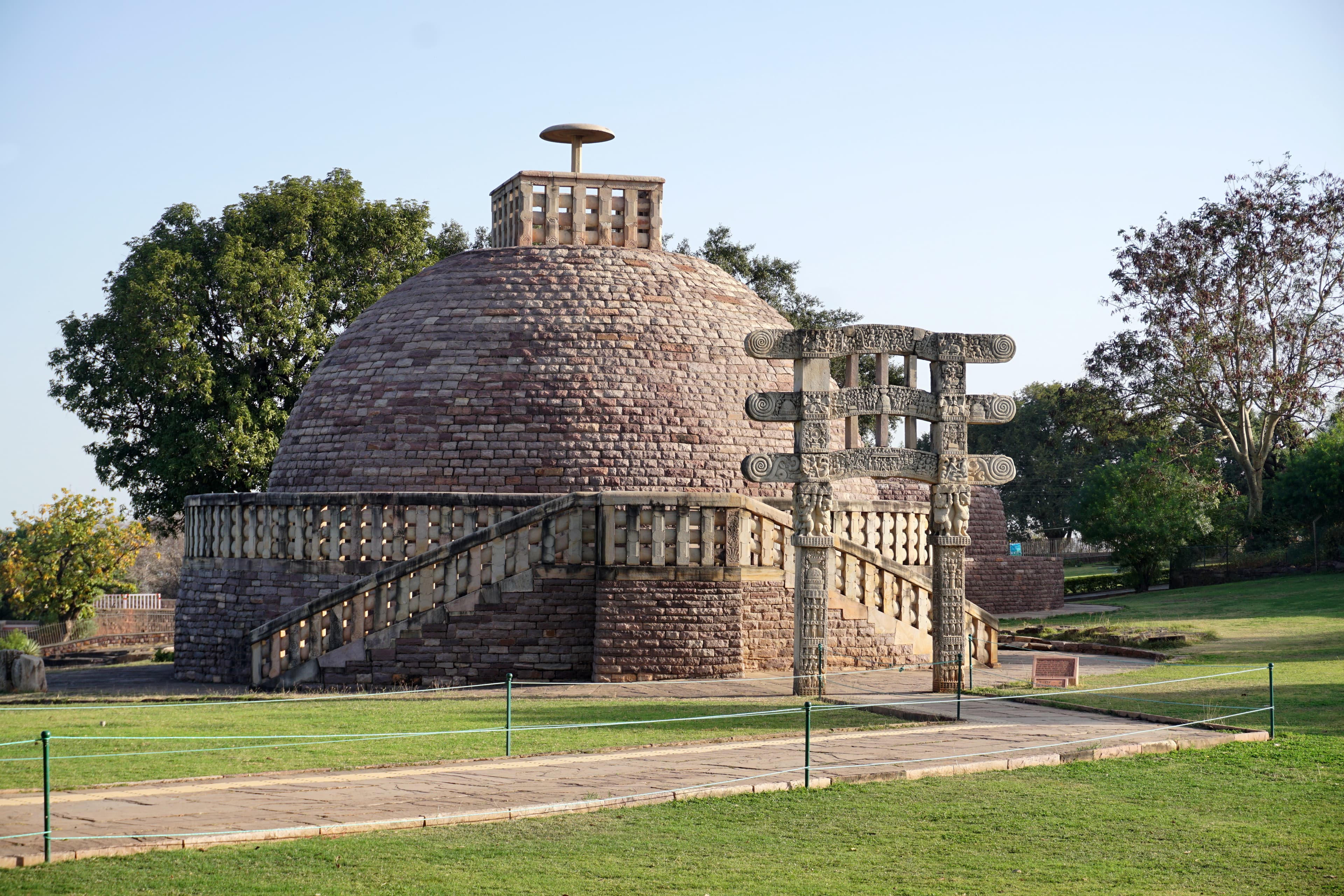
Image via wikipedia
Sanchi's story starts with Ashoka, who turned to Buddhism after the Kalinga War. He built a brick stupa on the hill possibly influenced by his wife from nearby Vidisha. The Shungas later enlarged it in stone, and the Satavahanas added four ornate toranas, making it a masterpiece of Buddhist art.
After Buddhism declined in India around the 12th century, Sanchi was abandoned and lay hidden under vegetation for nearly six centuries. In 1818, British officer General H.H. Taylor rediscovered it, but sculptures were removed by collectors. Later, between 1912–1919, the ASI under John Marshall carried out major conservation work. UNESCO declared it a World Heritage Site in 1989.
The Architecture of the Great Stupa - Reading the Stone
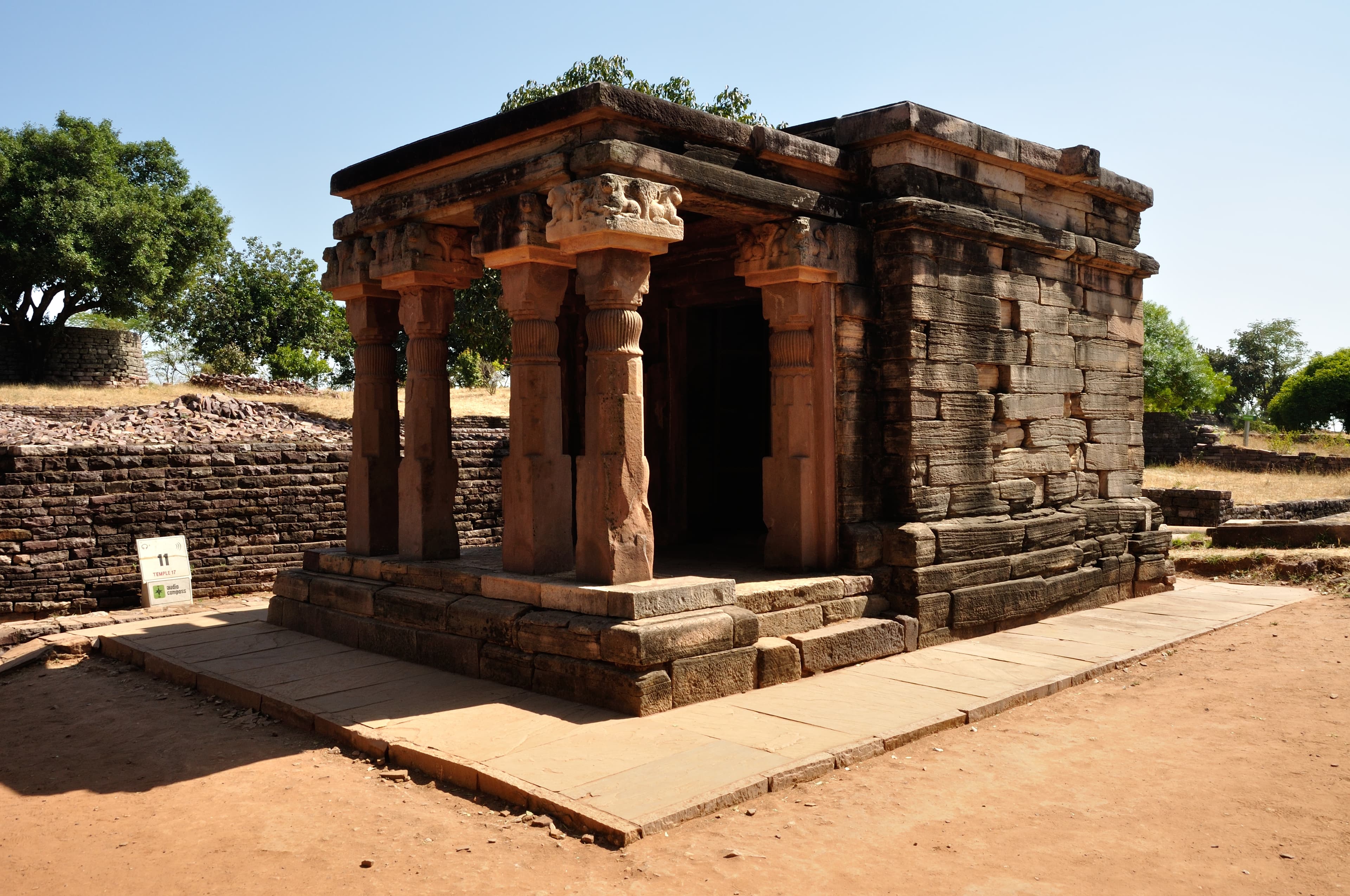
Image via wikipedia
The Great Stupa ( Stupa No. 1 ) is about 54 feet, roughly 16.5 metres, tall and it spans 120 feet, around 36.5 metres, across in diameter. In raw terms of presence, it is not necessarily the biggest thing you’ll run into across India. But it carries this particular completeness, like every element was weighed, considered, and set with very clear intention, which bigger and more monumental buildings can sometimes miss.
Must-See Caves at Ajanta
Anda (the dome)
The Anda a huge hemispherical mound - represents the cosmic egg and holds the relic chamber with the Buddha's remains. It gives the stupa its sanctity.
Medhi (the drum)
The Medhi is the circular base drum with an upper walkway for pilgrims to circumambulate the stupa tracing its sacred boundary in quiet meditation.
Vedika (the railings)
The Vedika a stone railing at ground level defines the sacred space and offers a second circumambulatory path. Pilgrims have walked this clockwise ritual in devotion for over 2,000 years.
Harmika (the square railing)
The Harmika is a small square railing atop the stupa, marking the transition from the earthly to the divine a subtle yet sacred boundary.
The Four Toranas The Most Extraordinary Gateways in Ancient India
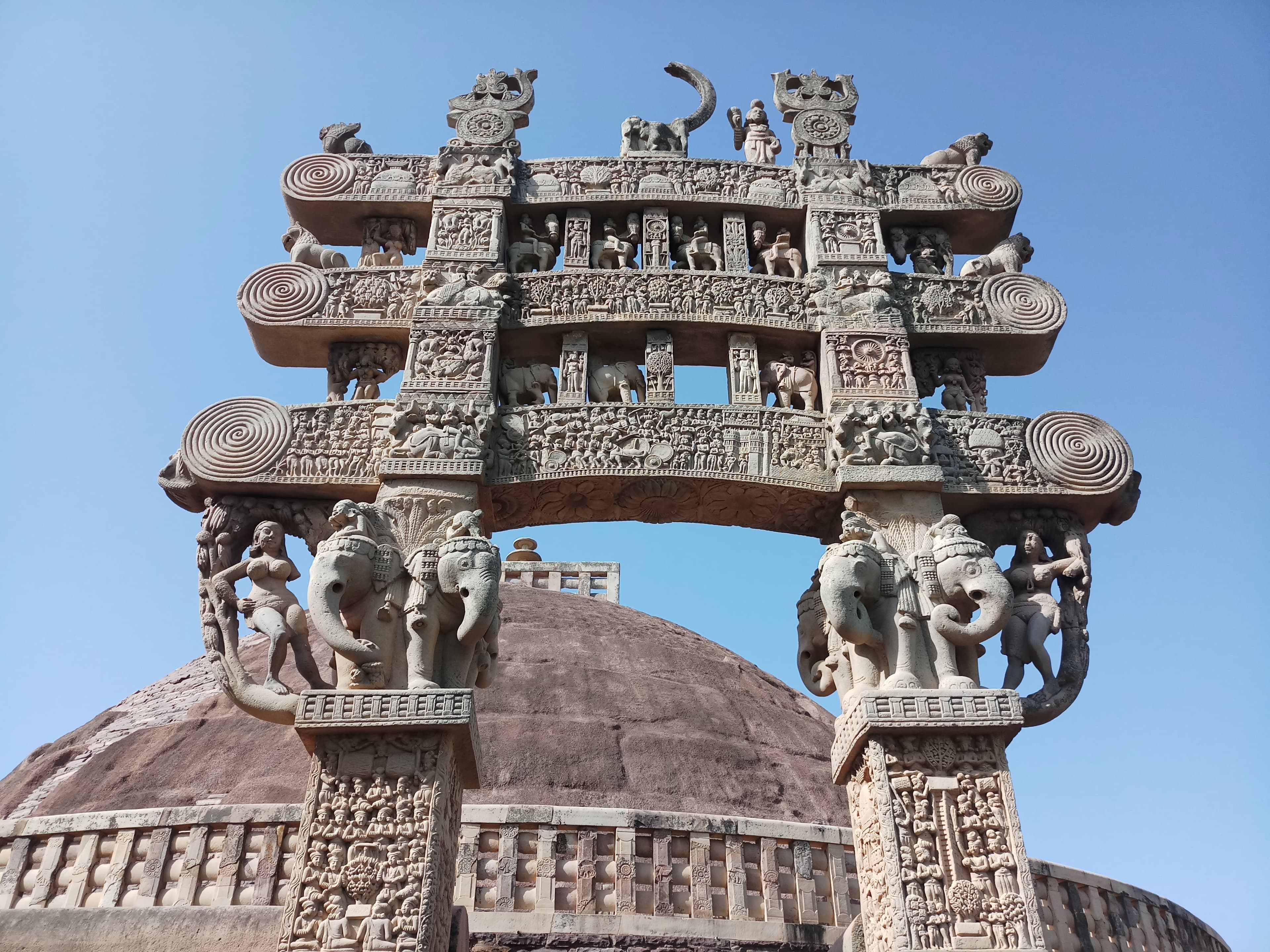
Image via wikipedia
The four toranas (ceremonial gateways) of the Great Stupa were added during the Satavahana period (1st century BCE–1st century CE) - among the finest stone carvings of the era. Each stands about 10 metres high, with intricate details from Jataka tales, Buddha's life, and Buddhist beliefs. More than ornament, they serve as visual storytelling bringing Buddhist teachings into everyday sight.
The Four Gateways - A Quick Guide
North Gateway (Uttara Torana
The North Gateway, the finest of the four, shows the Great Departure, Mara's temptation, and Jataka tales. Its lintel carvings the 'Wheel of the Law' and celestial figures are exceptional.
North Gateway (Uttara Torana)
The North Gateway finest of the four shows the Great Departure and Mara's temptation. The East Gateway features the Buddha's Mahaparinirvana and Queen Maya's white elephant dream.
South Gateway (Dakshina Torana)
The North Gateway finest of the four shows the Great Departure and Mara's temptation. The East Gateway features the Buddha's Mahaparinirvana and Queen Maya's white elephant dream.
West Gateway (Pashchima Torana)
The West Gateway has the "Seven Incarnations" Buddha's past life episodes with expressive, sensual yakshini bracket figures.
The Full Sanchi Complex - Beyond the Great Stupa
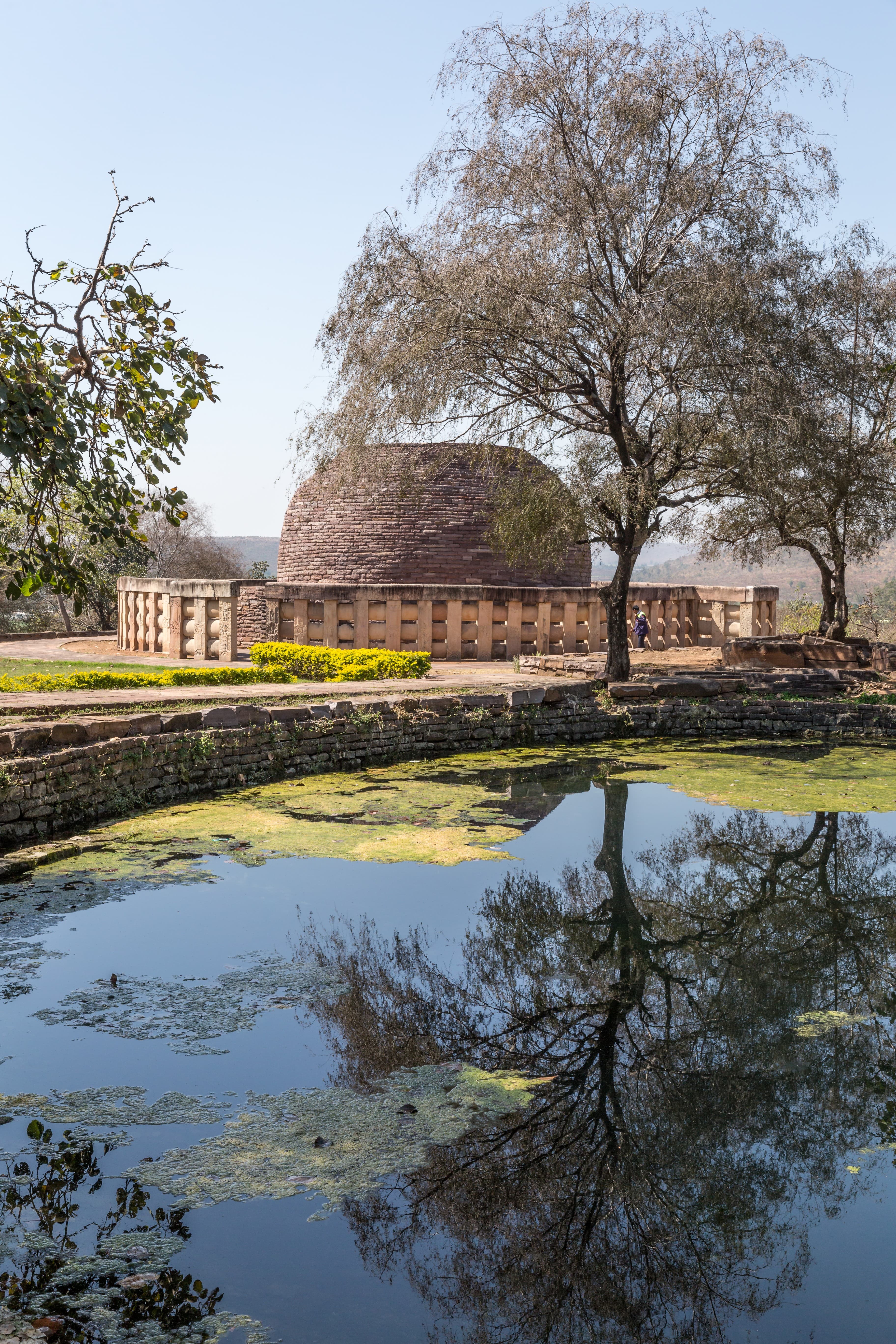
Stupa No. 2 - The Hillside Repository
Image via wikipedia
Stupa No. 2 - The Hillside Repository
Stupa No. 2, on the western slope, dates to the Shunga period (2nd century BCE). It contains relics of ten Buddha disciples in ornate boxes. Its Shunga-style railings are among the earliest Buddhist stone carvings clearly different from the Satavahana gateways.
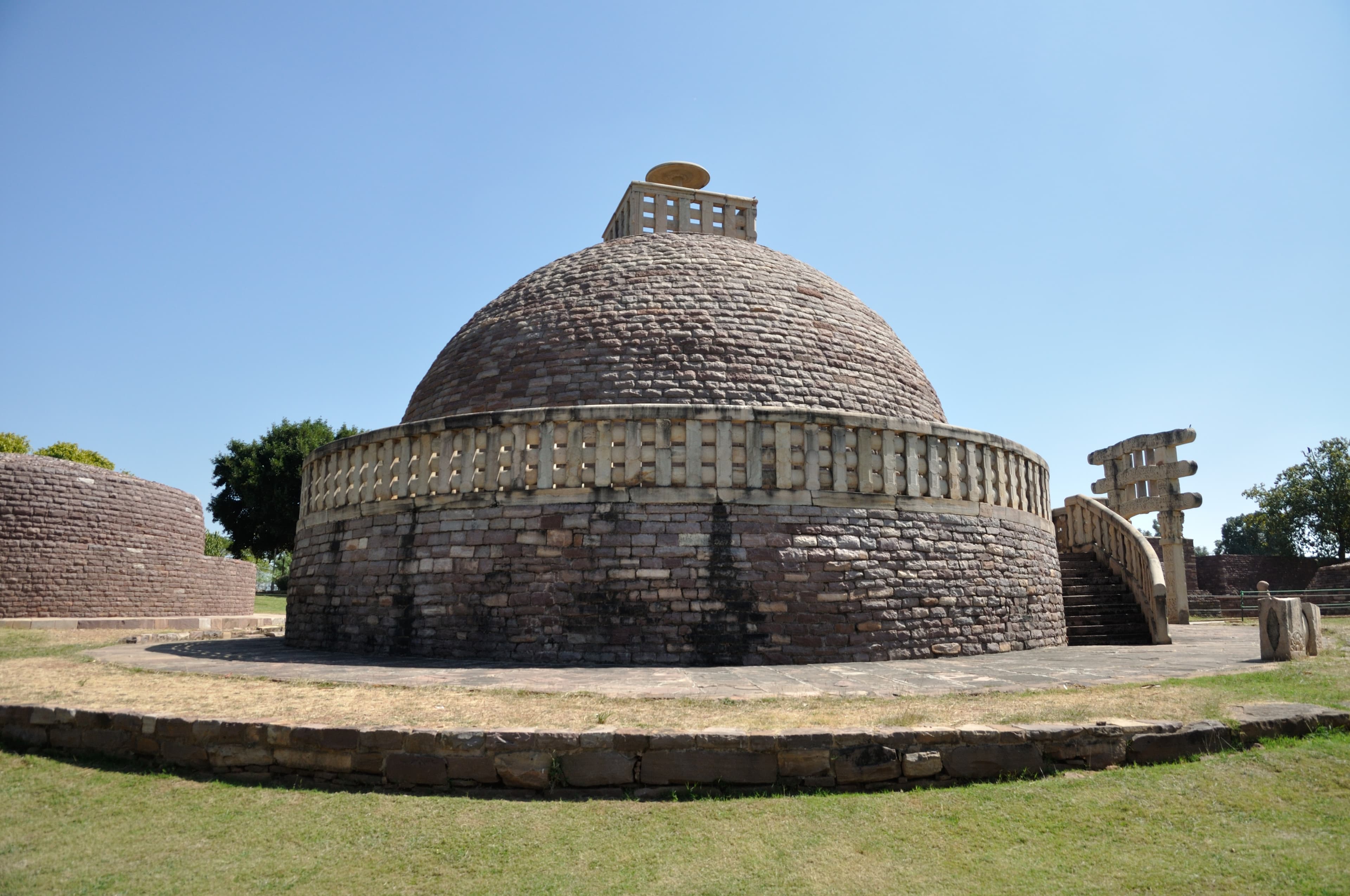
Stupa No. 3 - Sariputra and Maudgalyayana
Image via wikipedia
Stupa No. 3 - Sariputra and Maudgalyayana
Stupa No. 3 contains the relics of Sariputra and Maudgalyayana key disciples of the Buddha. Removed in 1851 to London, they were returned in 1952 and re-enshrined with ceremony. Though smaller, its single torana echoes the Great Stupa's craftsmanship.
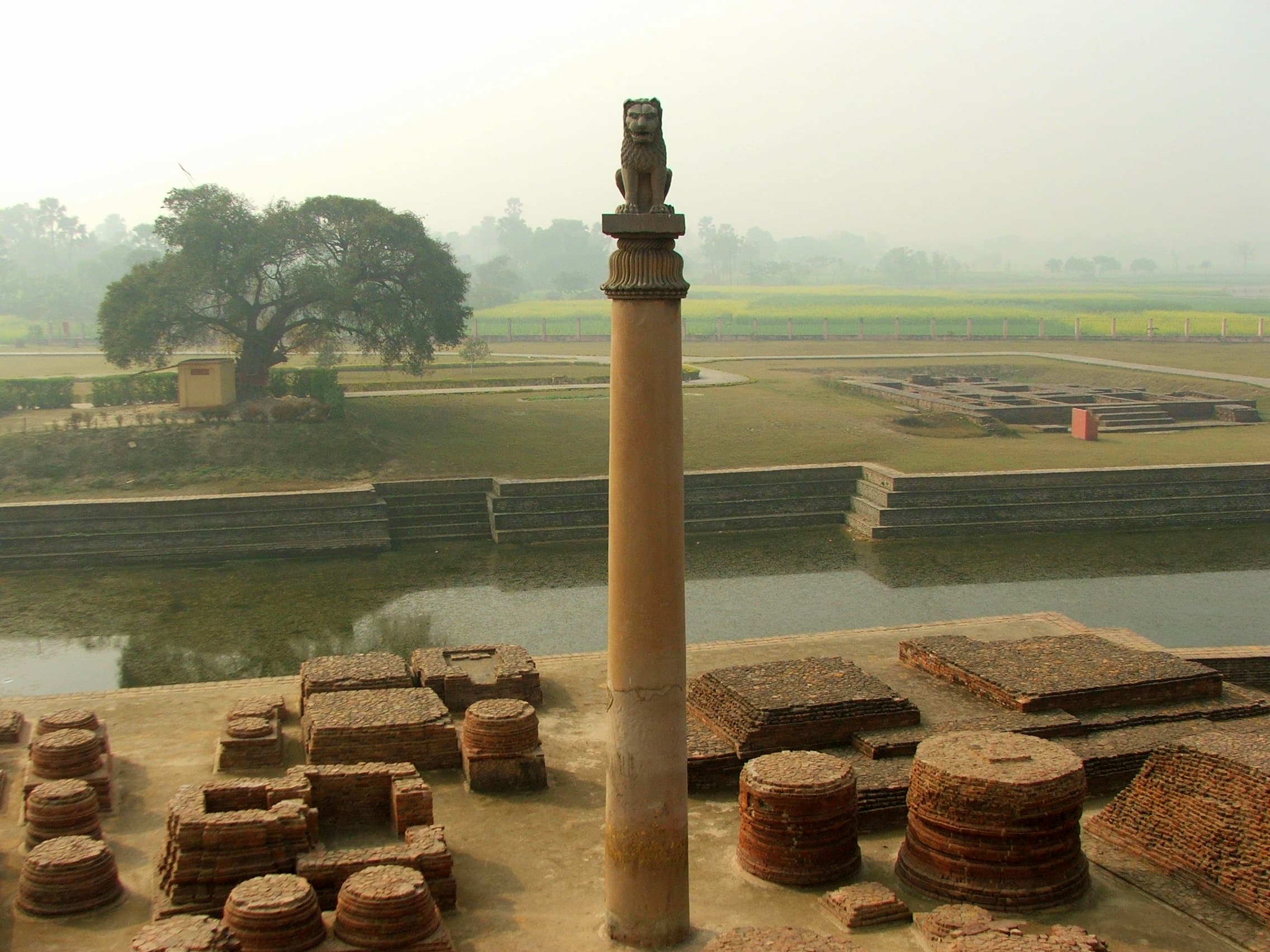
The Ashoka Pillar - Mauryan Engineering at Its Finest
Image via wikipedia
The Ashoka Pillar - Mauryan Engineering at Its Finest
A broken Ashoka Pillar south of the Great Stupa - with four lions in Mauryan style - mirrors the Sarnath Lion Capital, later India's national emblem. Its craftsmanship is extraordinary."
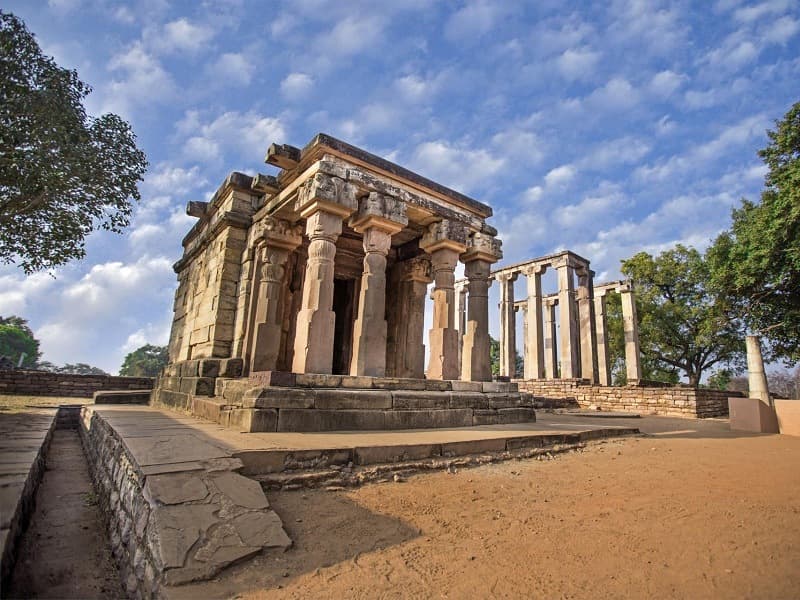
Temple 17 - The Proto-Classical Hindu Temple
Image via wikipedia
Temple 17 - The Proto-Classical Hindu Temple
Temple 17 (5th century CE) is one of India's earliest structural temples - a precursor to medieval towers. Its plain columns and architrave show Greek influence, reflecting Gupta exposure to Hellenistic traditions."
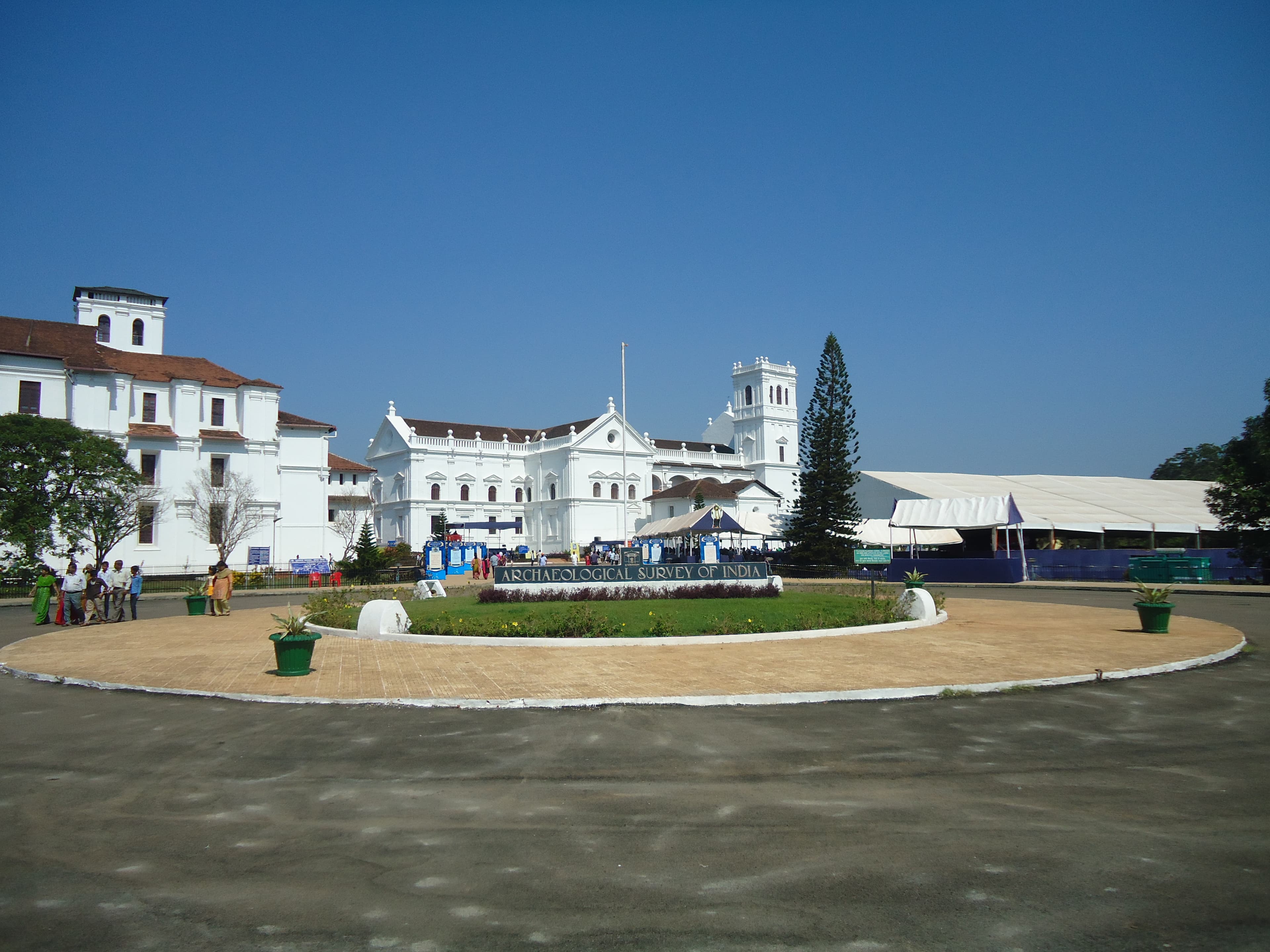
The ASI Archaeological Museum
Image via wikipedia
The ASI Archaeological Museum
The Sanchi ASI Museum, at the hill's foot, displays exceptional Mauryan and Shunga sculptures including the notable carved pillars from Stupa No. 2. Entry: ₹5 / ₹100. Closed Fridays."
Nearby Attractions - Building a Madhya Pradesh Heritage Circuit
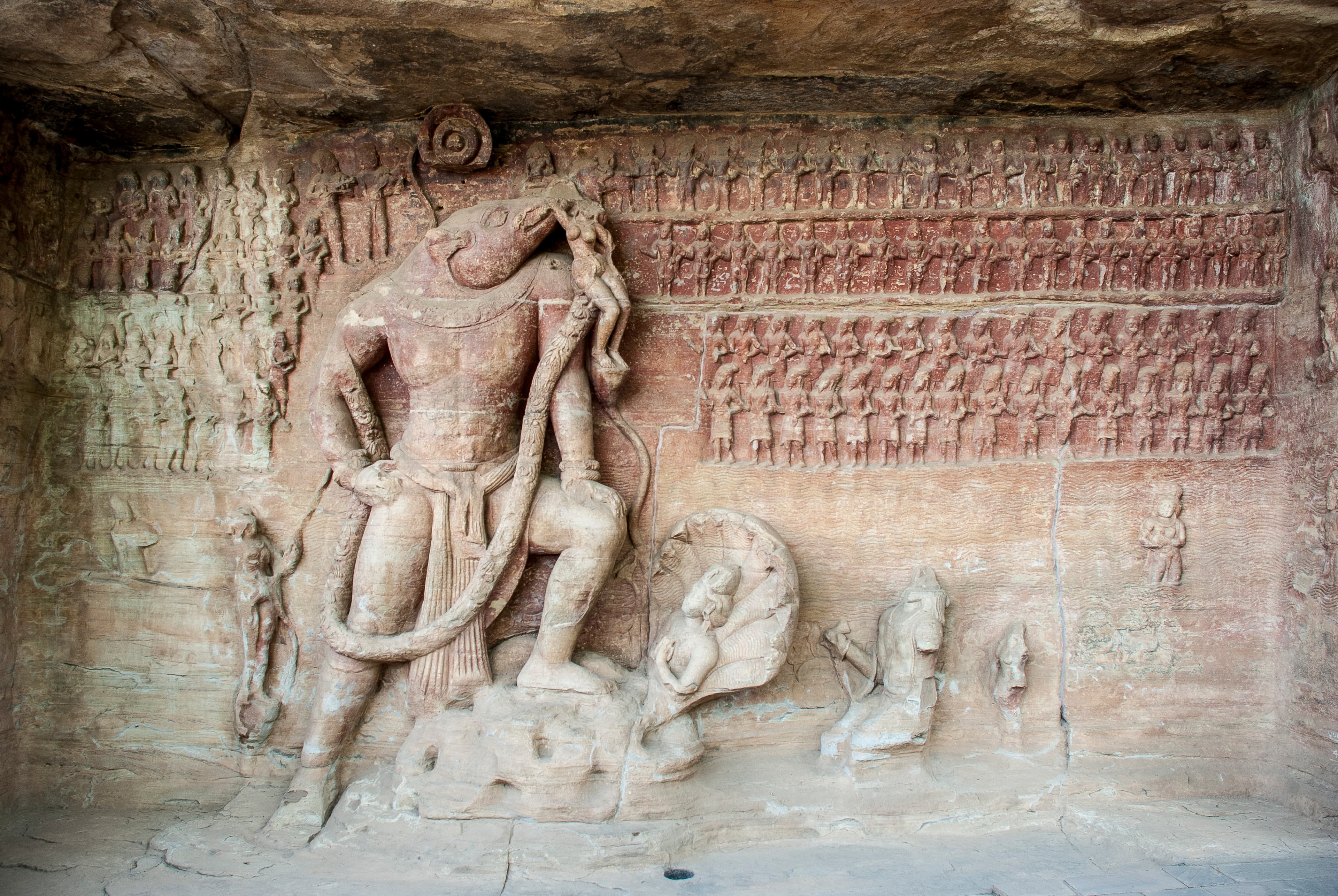
Udayagiri Caves (13 km from Sanchi)
Image via wikipedia
Udayagiri Caves (13 km from Sanchi)
Udayagiri Caves (13 km from Sanchi) hold some of India's finest Gupta-era rock-cut sculpture, including the famous Varaha panel. Despite its archaeological significance, it receives far fewer visitors than it deserves.
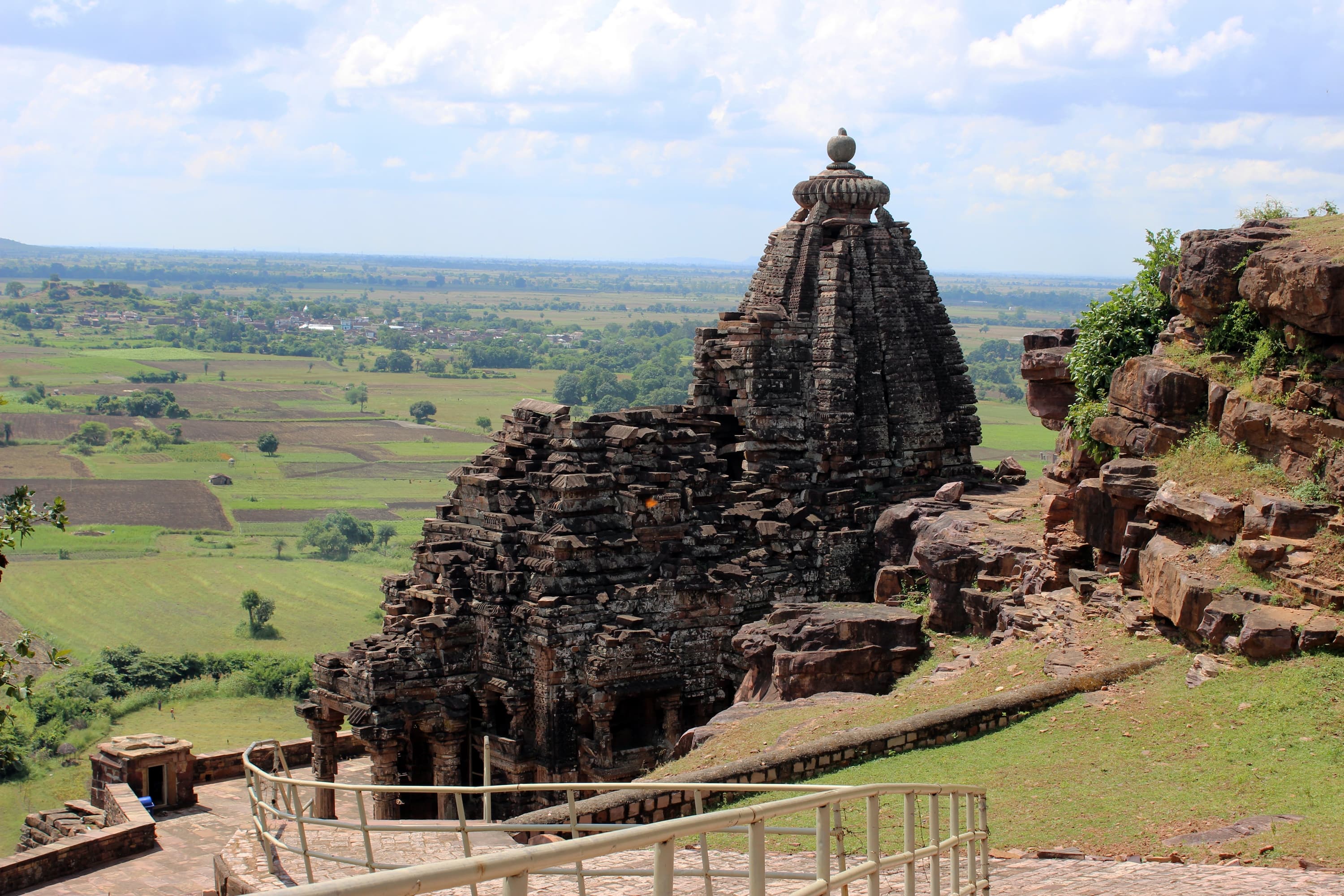
Vidisha (10 km from Sanchi)
Image via wikipedia
Vidisha (10 km from Sanchi)
Ancient Vidisha, Devi's hometown, was the commercial backbone behind Sanchi. The Heliodorus Pillar, raised by a Greek ambassador in 110 BCE, marks one of the earliest Sanskrit inscriptions and testifies to India's cross-cultural dialogue."
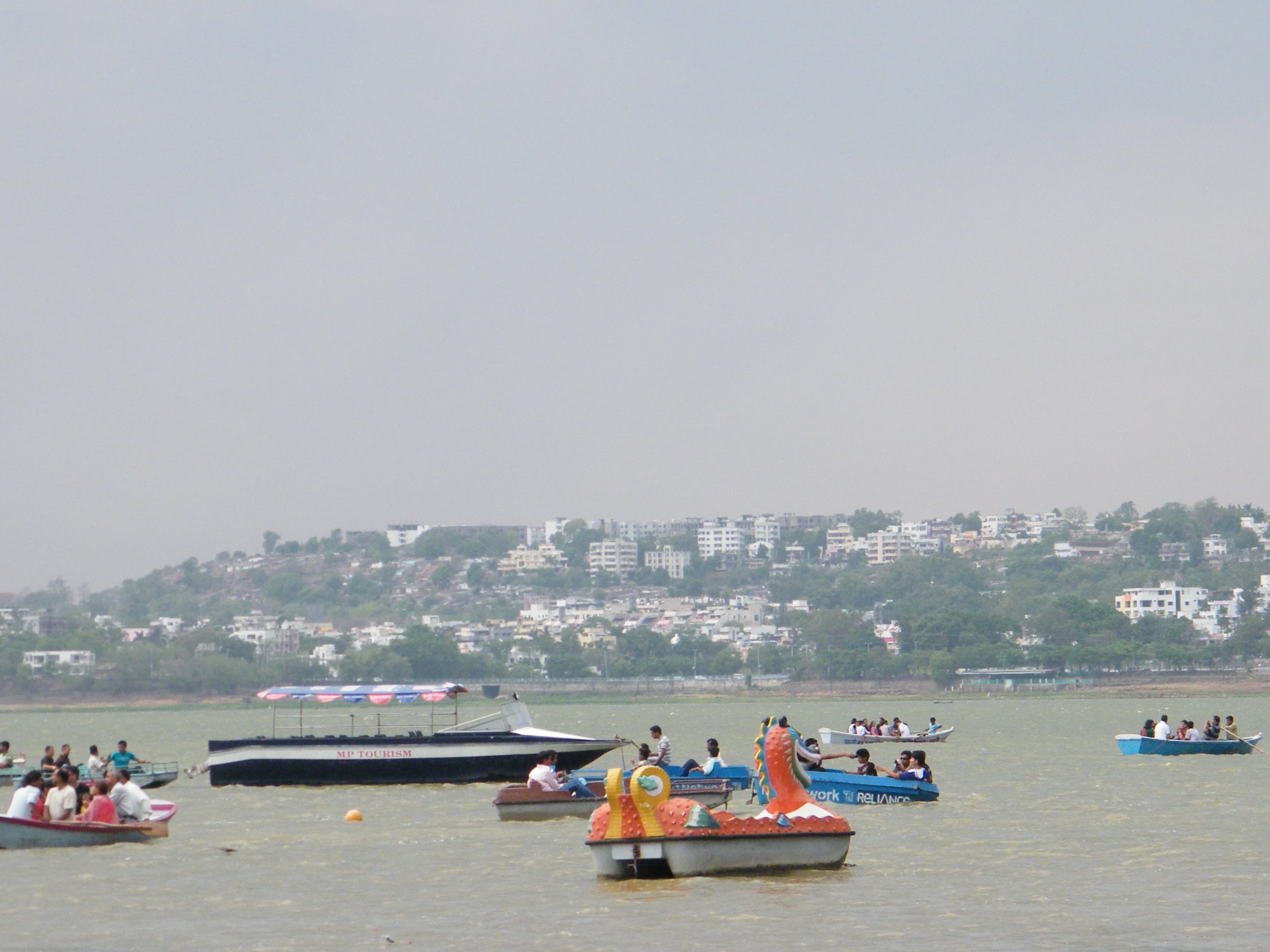
Bhopal - The City of Lakes (46 km)
Image via wikipedia
Bhopal - The City of Lakes (46 km)
Bhopal, with its Upper and Lower Lakes, feels unexpectedly elegant. The Taj-ul-Masajid dominates the old city, while the Tribal Museum and Bharat Bhavan offer cultural depth. Stay at the Jehan Numa Palace - a Palladian mansion turned luxury hotel."
Entry Fees & Ticket Information
| Indian Nationals | ₹30 per person |
| Foreign Visitors | ₹500 per person |
| Children (Under 15) | Free |
| ASI Archaeological Museum | ₹5 (Indian) / ₹100 (foreign) |
| Sound and Light Show | Check current MP Tourism schedule on arrival |
Online booking: www.asiagracircle.in or purchase at site entrance
Best Time to Visit
October to March
The prime season cool and clear (10°C–25°C), ideal for extended outdoor exploration and photography.
January and February
Excellent weather; an important pilgrimage season for Buddhist visitors from Japan, Sri Lanka, Thailand, and Myanmar, who add a layer of living devotional life to the complex
April to June
Summer temperatures reach 40°C+ - the site is very exposed and the heat makes extended exploration exhausting. Early morning visits only
July to September
Monsoon season. The surrounding landscape becomes green and beautiful, but heat and humidity are intense and the hill pathways can be slippery after rain
Budget Estimates
₹600 – ₹1,500
per person (entry fee, bus transport, local dhaba lunch)
₹2,500–₹5,000
per person (private taxi from Bhopal, licensed guide, café lunch)
₹8,000–₹20,000+
per person (private chauffeured vehicle, expert specialist guide, fine dining in Bhopal, included in a curated MP heritage day tour)
Why Choose India Heritage Travel
Deep Specialist Knowledge of Buddhist Heritage
Private Chauffeured Transfers Throughout
Expertly Curated Multi-Site Circuits
Luxury Heritage Accommodation
Safe and Thoughtful Tours for Women Travelers
Designed for International Luxury Travelers
Frequently Asked Questions
The entry fee for Sanchi Stupa in 2025 is ₹30 for Indian nationals and ₹500 for foreign visitors. Children under 15 years of age enter free of charge. The ASI Archaeological Museum at the entrance charges ₹5 (Indian) / ₹100 (foreign) and is closed on Fridays.
The Sanchi Stupa complex is open daily from 6:30 AM to 6:30 PM. Timings may vary slightly on public holidays confirm with the ASI in advance if visiting on a national holiday. The ASI Archaeological Museum is open from 9:00 AM to 5:00 PM, closed on Fridays.
The best time to visit Sanchi Stupa is between October and March, when temperatures are cool and comfortable (10°C–25°C) and skies are clear. The morning light in November and December on the honey-coloured sandstone is particularly beautiful for photography.
Sanchi Stupa is approximately 46 kilometres from Bhopal, Madhya Pradesh. By private car or taxi, the journey takes approximately 1 to 1.5 hours on NH 46. India Heritage Travel arranges private chauffeured transfers from all Bhopal hotels. Regular government buses also run from Bhopal's Hamidia Road Bus Stand (journey approximately 1.5–2 hours).
The Sanchi Stupa (Great Stupa, or Stupa No. 1) is one of the oldest surviving stone structures in India, built by Emperor Ashoka in the 3rd century BCE to enshrine relics of the Buddha. The full complex preserves over 1,300 years of Buddhist art and architecture from Ashoka's original brick mound to Gupta-period temples to medieval monasteries.
A minimum of 2.5 to 3 hours is needed to cover the Great Stupa (all four gateways, both pradakshina paths), the Ashoka Pillar, Stupa No. 3, and the ASI Museum. With a private guide covering the iconographic and historical detail of the toranas and including Stupa No. 2 on the hillside path, allow 4 to 5 hours.
Planning a Sanchi Stupa Heritage Journey?
India Heritage Travel creates private chauffeur-driven itineraries that combine Sanchi's Great Stupa, Ashoka Pillar, Udayagiri Caves, with Bhopal's Nawabi heritage, Bhimbetka's prehistoric art, and Vidisha's ancient history into seamless cultural journeys guided by local experts.
Plan My Sanchi Heritage Tour