Orchha Heritage Hotels: Sleeping in the Shadow of a Forgotten Kingdom
The majority of visitors come to Orchha in order to travel through time, exactly as it was meant to be lost. The city is near Khajuraho and Jhansi, which made it a small footnote and a destination that could take only a couple of hours during the visit to other more significant attractions.
However, spend one night in Orchha in any of the numerous Orchha hotels facing the Betwa River and the sandstone palaces built by the former Bundela kings and it will be your own story. The guide is aimed at people who are going to visit Orchha in order to learn its history, its architecture, accommodation, eating places and other useful information about visiting this part of India.
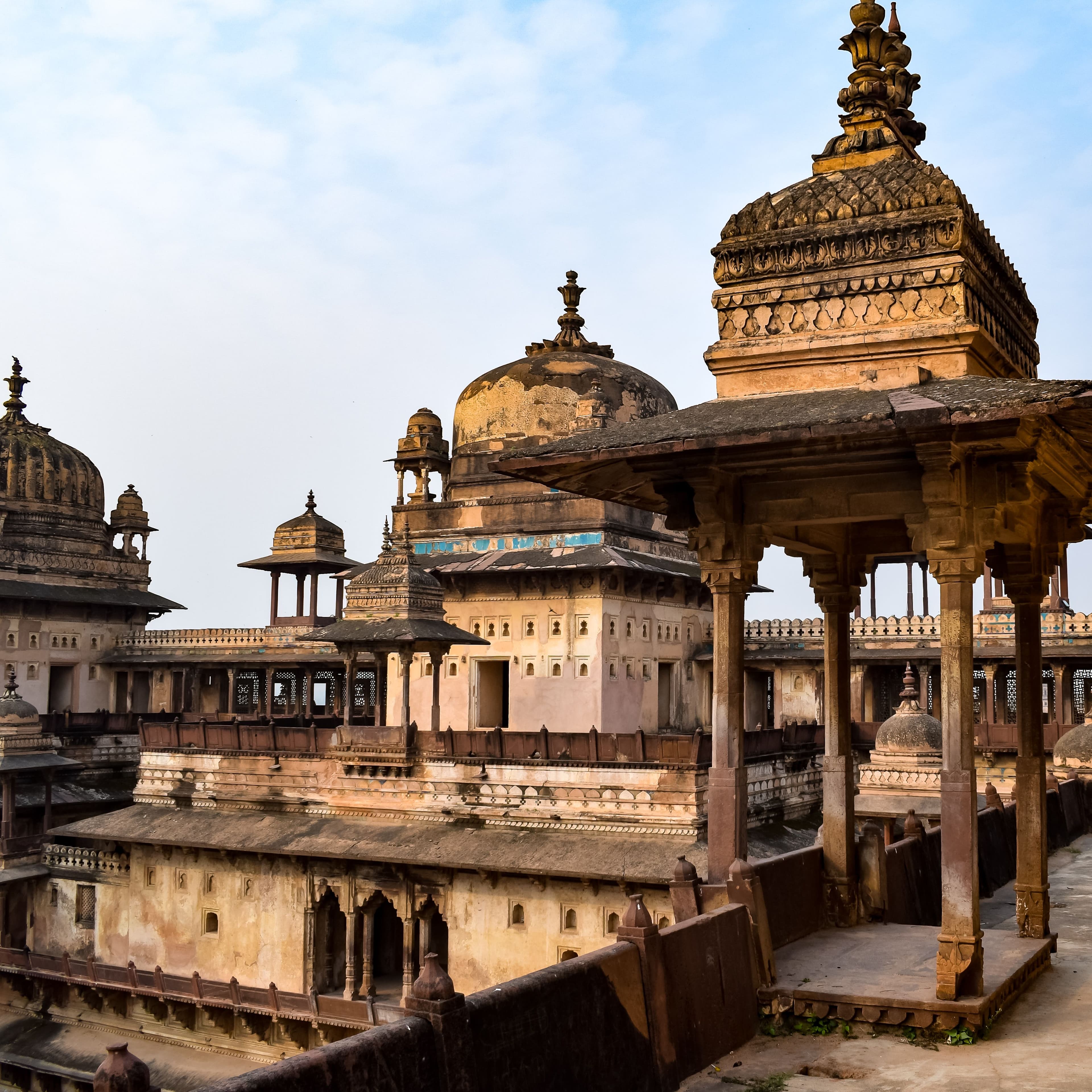
via pexels
A Hidden Kingdom on the Betwa River
Orchha lies in the Niwari district of Madhya Pradesh, at a distance of 16 km from Jhansi. The two states of Uttar Pradesh and Madhya Pradesh contain Jhansi and Orchha respectively. Orchha occupies an island which Betwa and Jamni rivers create through their river junction and the term Orchha represents something which remains hidden. The thick forest vegetation creates a natural barrier which blocks all views of this area.
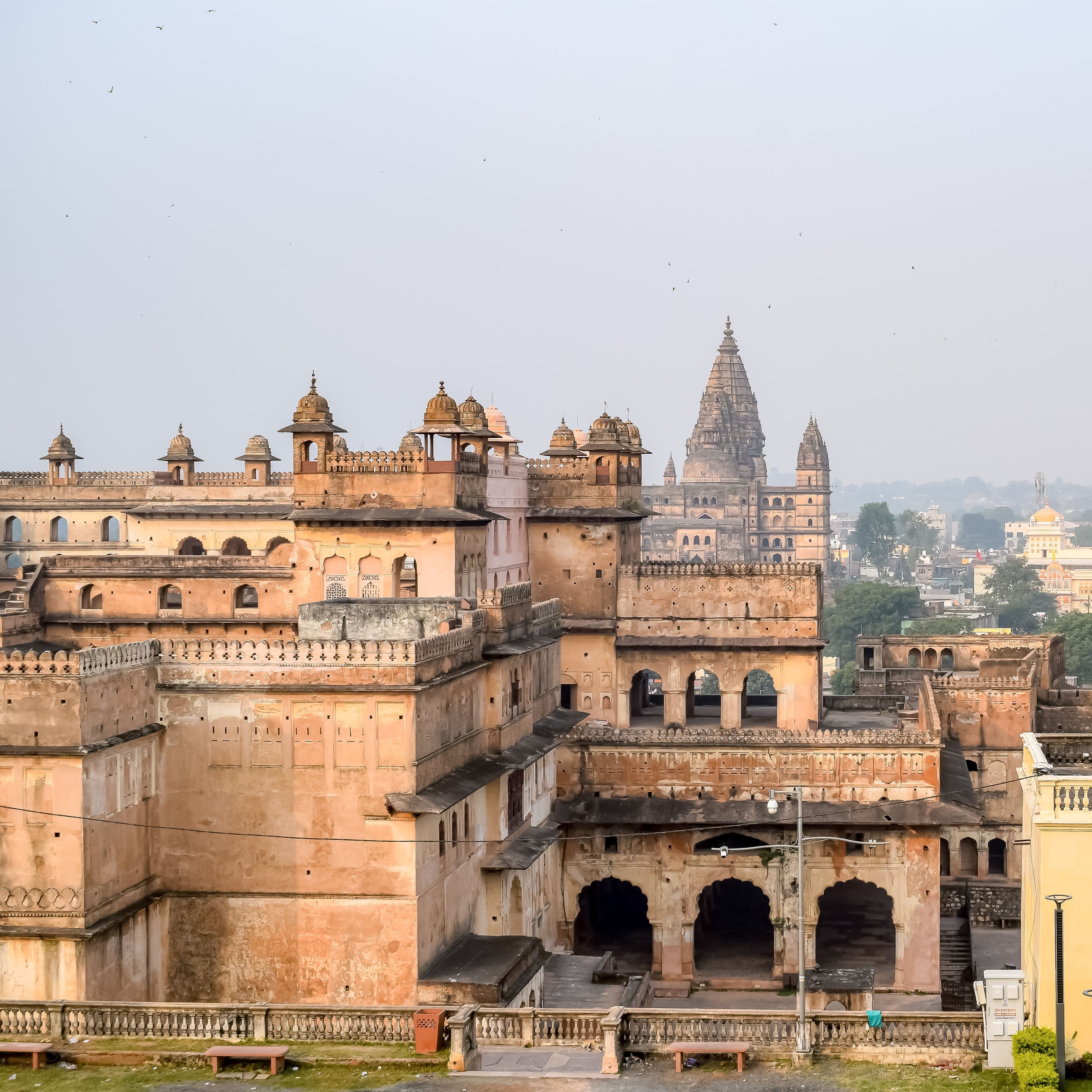
Orchha is not a very big city and can be completely covered in a single day through walking. There are around twelve thousand people residing in the city surrounded by the magnificent structure of the Chaturbhuj Temple. There are cows seen walking in front of 500 years old cenotaphs, cycle rickshaws can be seen more than cars and the loud noise heard every morning would be the temple bells ringing.
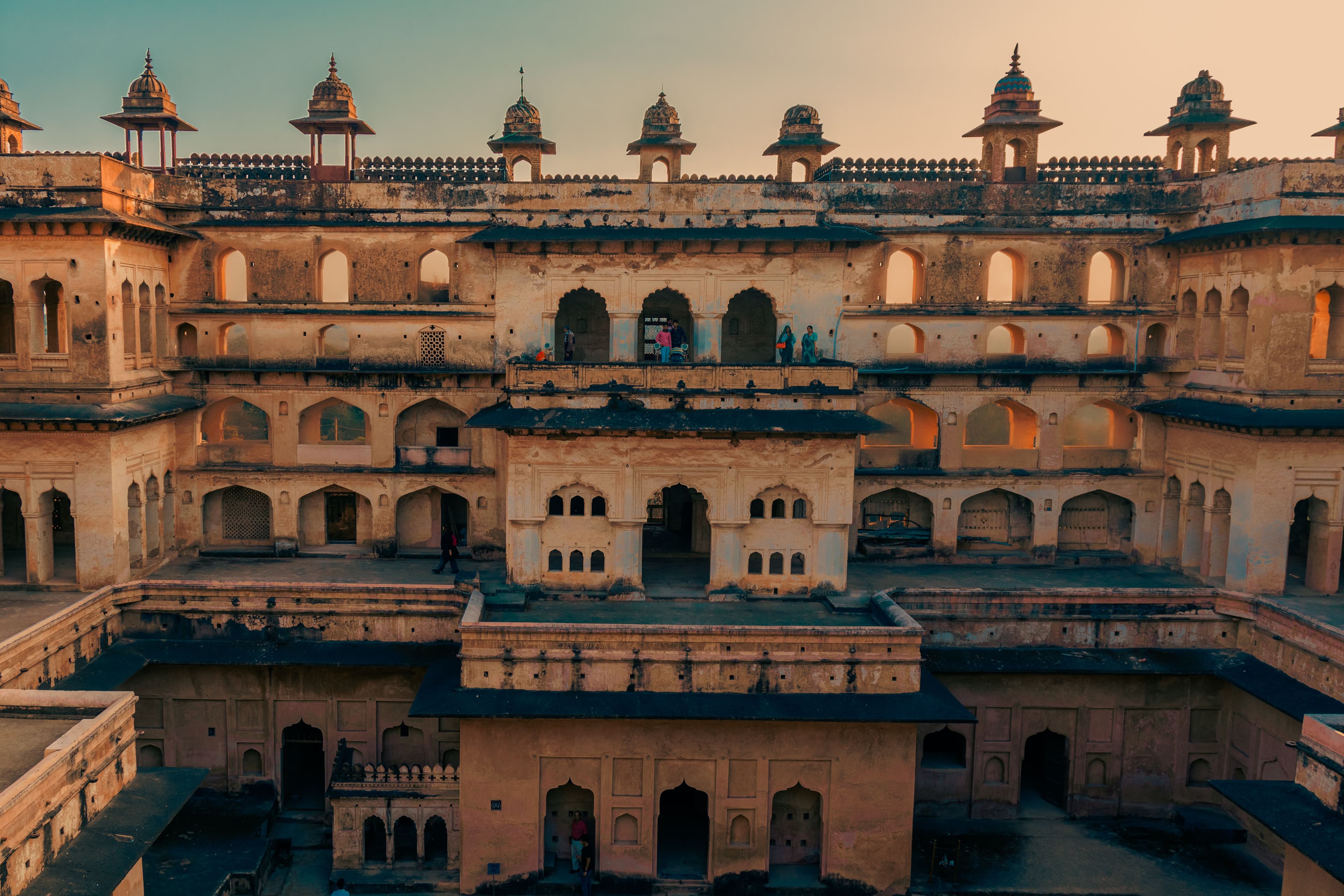
via pexels
History: The Rise and Fall of the Bundela Capital
The historical background of Orchha can be traced back to the year 1501 AD, when Rudra Pratap Singh, the ruler of the Bundela Rajputs, laid down the foundation for this fort on this particular island. Unfortunately, he did not live long to complete this task and the same was left to be completed by his son Bharatichand. Hence, it is here that the capital city of this place known as Bundelkhand came into existence.
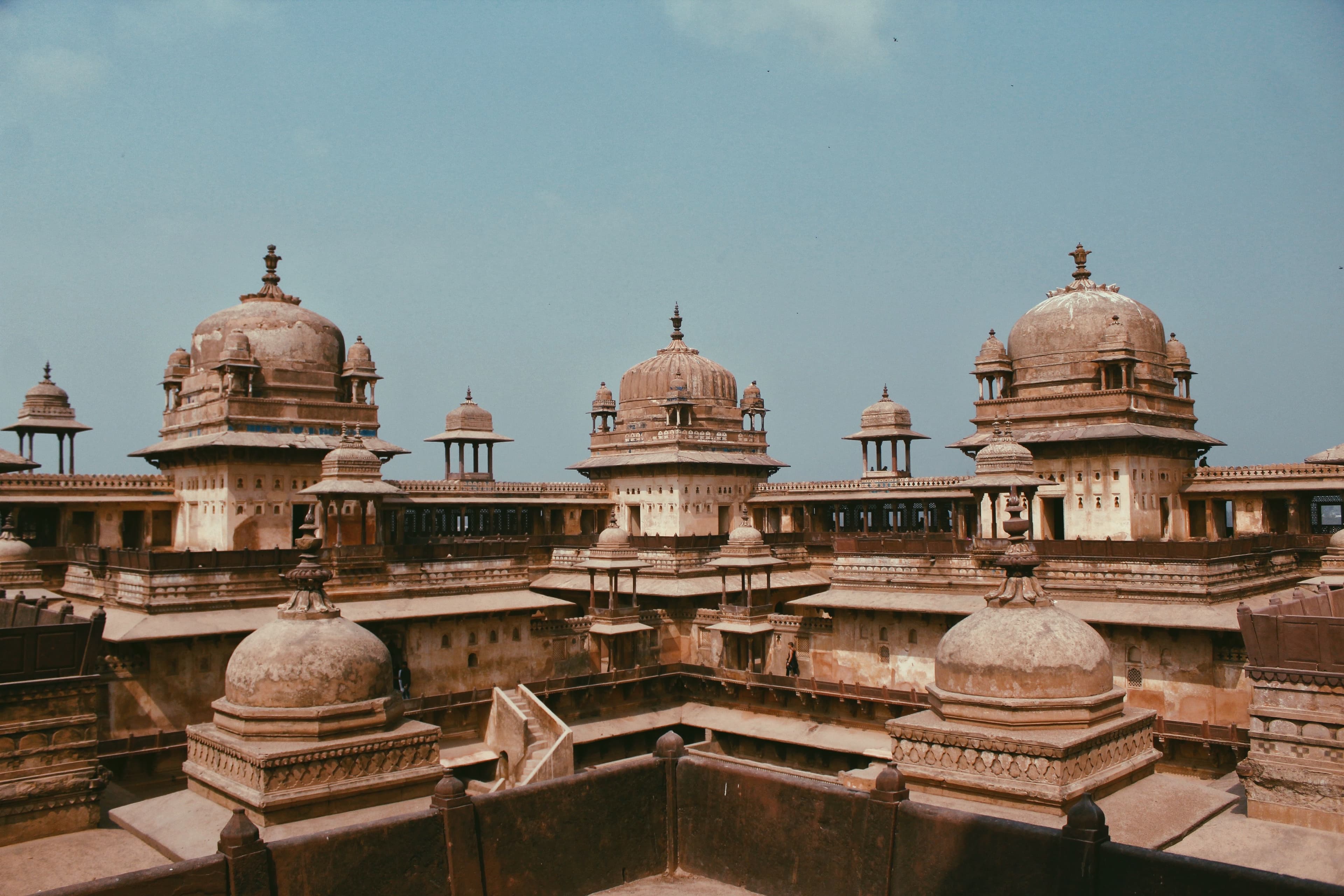
Madhukar Shah was the ruler who ruled over the place from the years 1554 to 1592. It must be noted that Madhukar Shah was a devotee of Lord Krishna while his queen Ganesh Kunwari was devoted to Lord Rama; it is believed that this gave rise to the popular legend regarding the temples of Orchha (refer below). The golden age of Orchha was that of the rule of Bir Singh Deo during the seventeenth century. This intelligent friend of the Mughal prince Salim (future Emperor Jahangir) made full use of this to construct many grand structures which included the Jahangir Mahal, the Chaturbhuj Temple and many river banks.
via pexels
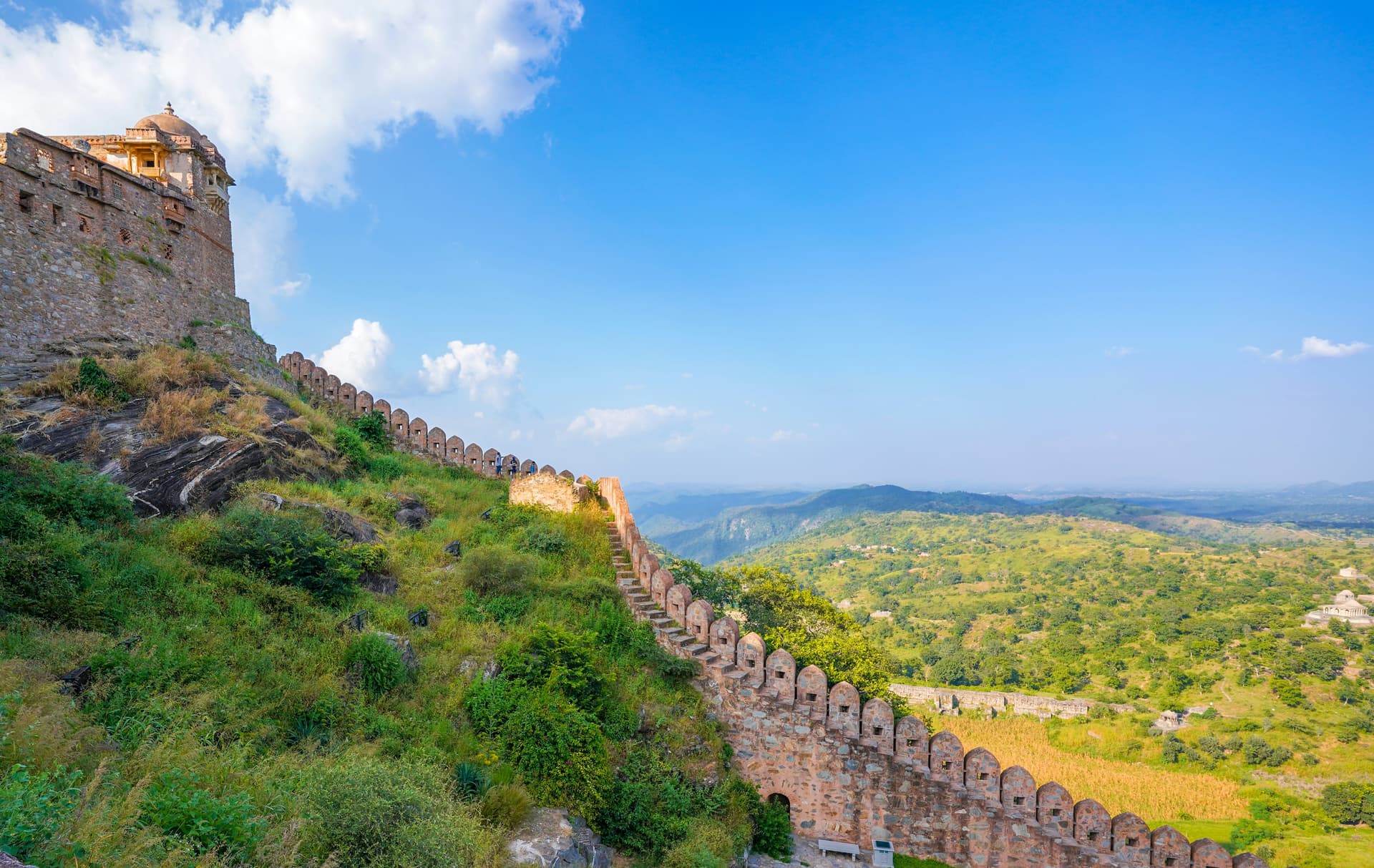
The relation of the city with the Mughals was at times both advantageous as well as disadvantageous. As the Prince Aurangzeb launched an attack on the state of Orchha in 1635 and planted the Mughal flag on the topmost tier of the Jahangir Mahal. The capital of the Bundela state could never recapture its old glory and by the eighteenth century, the entire royal family shifted to Tikamgarh. But it was due to this very decline that Orchha survived. There was nothing being built and Orchha has remained preserved since the days of the decline of its royalty.
Architecture: Where Rajput Strength Meets Mughal Ornament
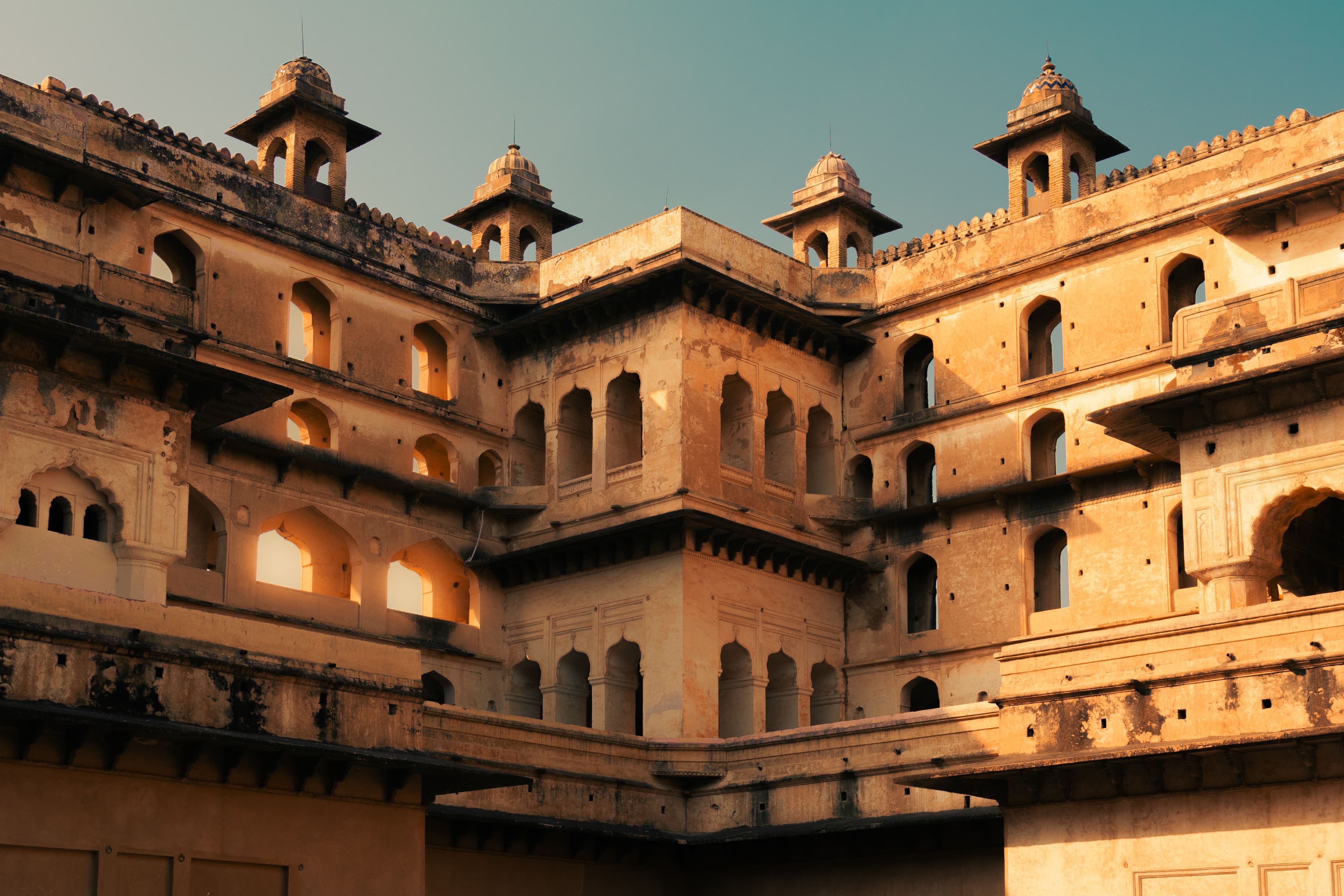
The architecture of Orchha is an excellent representation of Rajput-Mughal fusion style, developed due to interactions and conflicts between Rajput tribes and the Mughals court during the sixteenth and seventeenth centuries. The framework of the structures in Orchha is clearly Rajput – massive sandstone constructions, gatehouses, and plain defensive terraces. But the decorations of the buildings show clearly the influence of Mughal architecture: bulging domes, ornamental stone jali screens, chhatri pavilions and rich interior paintings.
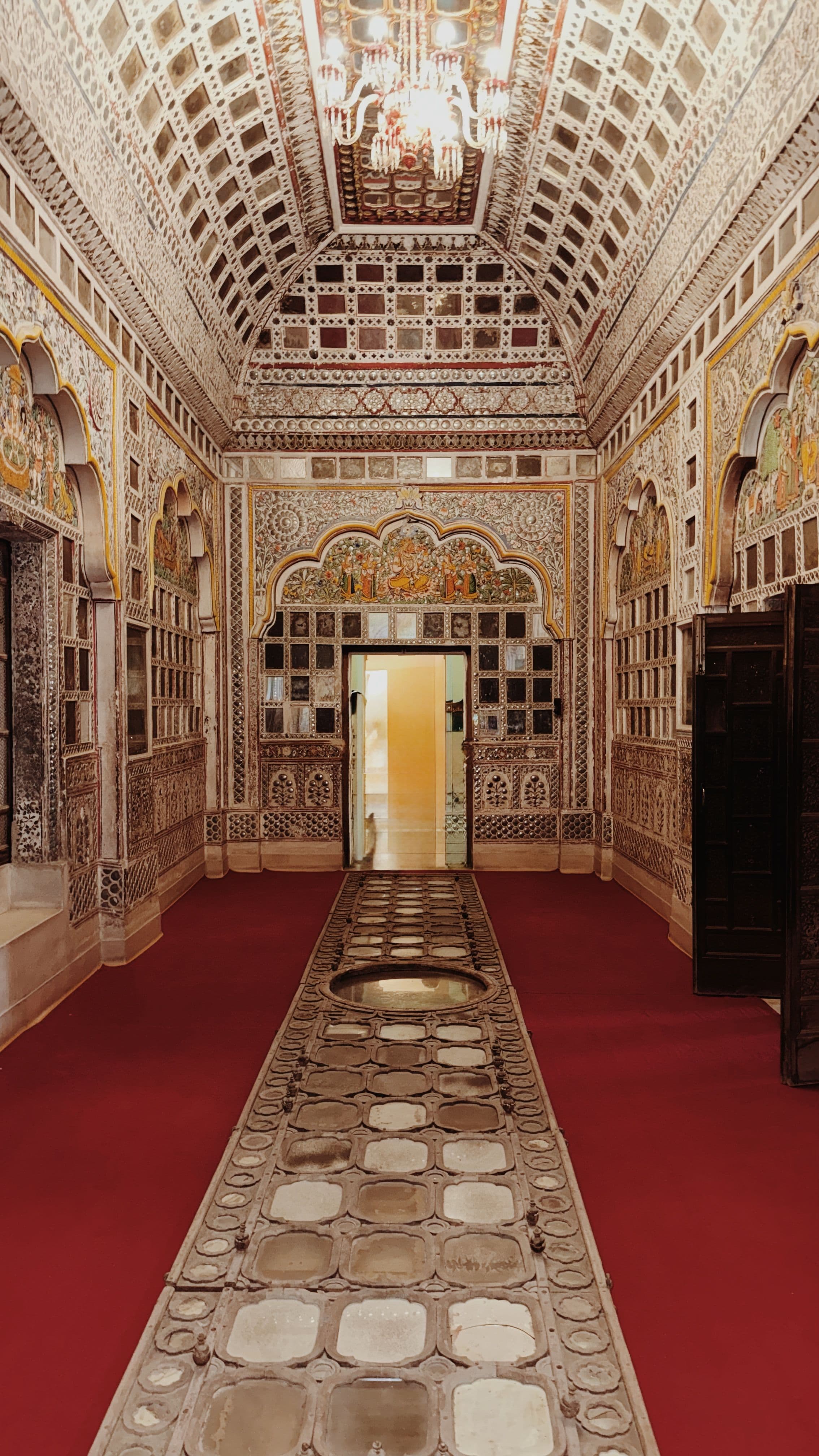
One may notice the use of the colour code among local guides – the green colour for Mughals and the blue one for Bundelas – but this is purely folk interpretation rather than solid art history. What is evident for sure is the quality of the construction: the balconies designed in such a way as to capture the wind coming from the river, decorated with mirror inlays the ceilings of Sheesh Mahal and, finally, some of the best frescoes of the region representing episodes of the Ramayana and the life of Krishna preserved for four centuries inside the Raja Mahal.
via pexels
Cultural and Spiritual Significance: The King Who Is a God
There is something unique about Orchha which can be said about no other place in India. Here Rama is revered not just as a god but also as a reigning king. This legend relates back to the times of Queen Ganesh Kunwari who made a pilgrimage to Ayodhya to retrieve the idol of Lord Rama and commission a temple – the Chaturbhuj – in his honor. On her return when the temple was being constructed, she temporarily housed the idol in her palace – the Rani Mahal not knowing that according to ancient custom the idol cannot be removed once it has been placed in a temple.
However when the construction of Chaturbhuj Temple was completed, the idol did not move from the queen’s palace. Instead of trying to remove it, the Bundela royal family took it as divine will and thus the palace became a temple known as the Ram Raja Temple where Rama is worshipped to this day as a reigning monarch of Orchha – he is greeted daily in the evening with an armed escort. And the Chaturbhuj Temple, built for Rama who didn’t come, ended up being used for housing the four-armed idol of Lord Vishnu.
Major Attractions in Orchha
Orchha Fort Complex
via wikipedia
Orchha Fort Complex
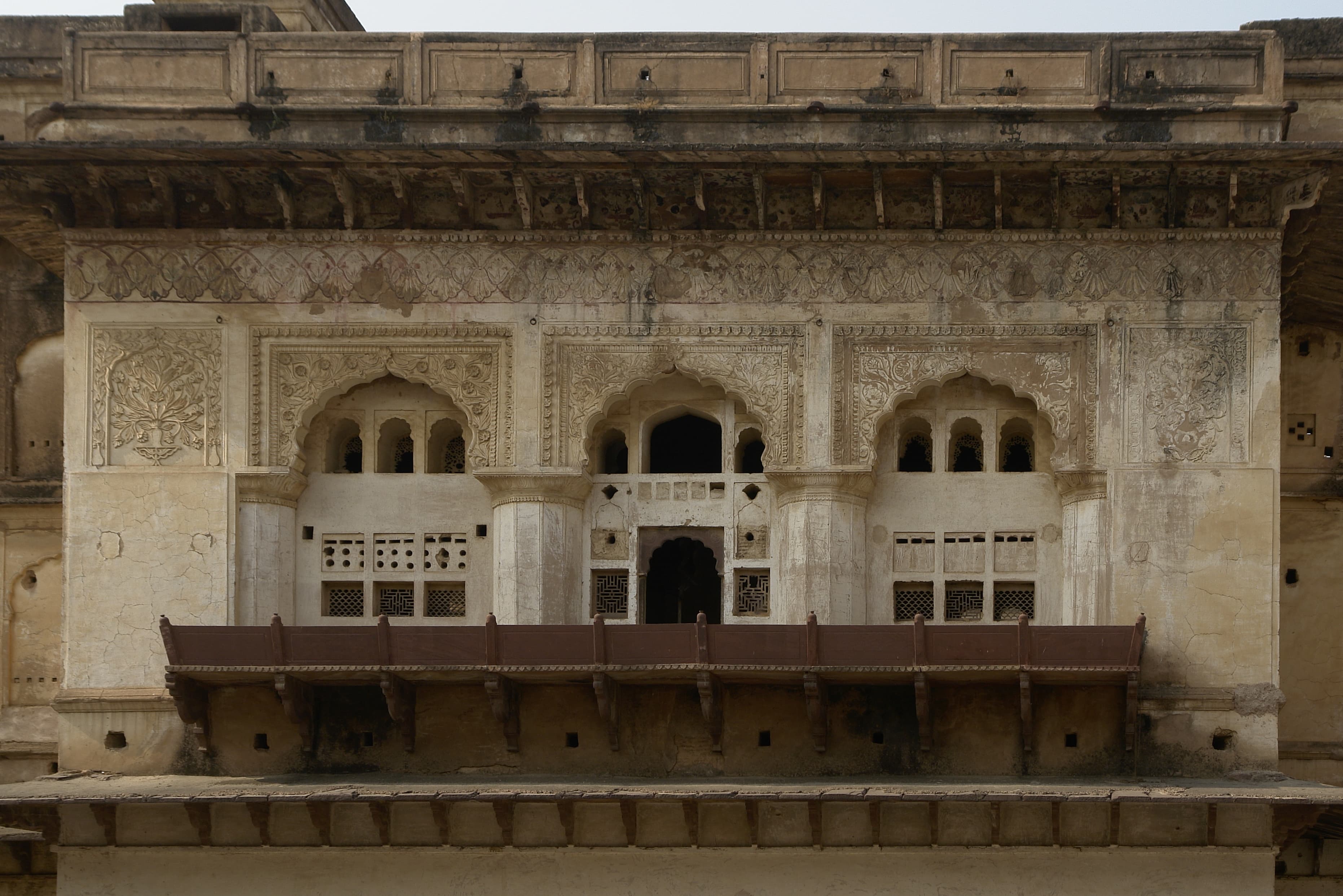
The fort is the centerpiece of your visit - a quadrangle on a river island housing Raja Mahal, Jahangir Mahal, Sheesh Mahal, and Rai Praveen Mahal. The admission fee covers entry to all these palaces, plus an evening light and sound show narrating Bundela stories against the illuminated walls.
Jahangir Mahal
via wikipedia
Jahangir Mahal
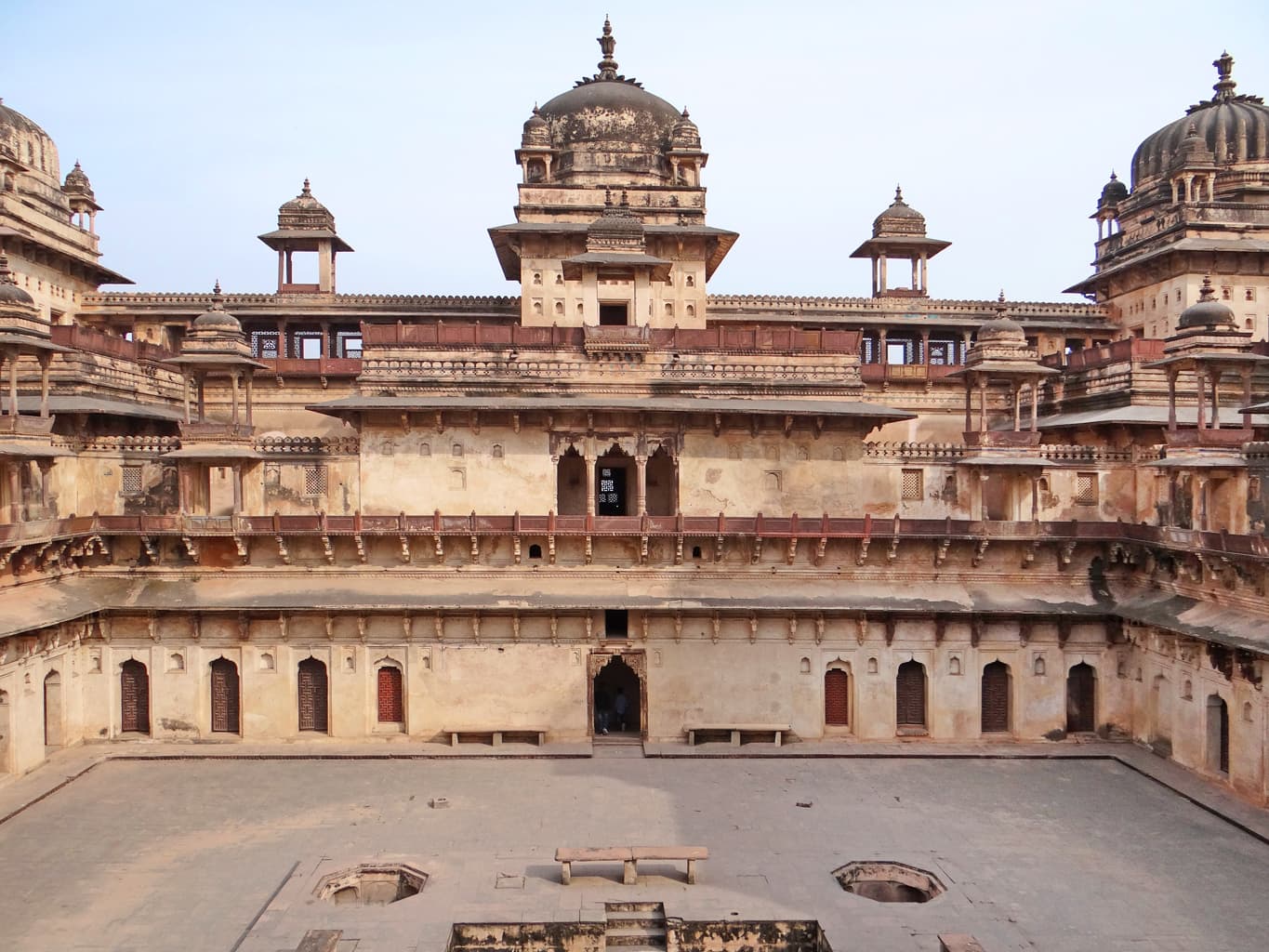
Built by Bir Singh Deo and completed around the 17th century, this four-storey palace is a masterpiece of Orchha architecture eight domes, carved stonework, and stairs leading to a top view of the Betwa River and surrounding forest. Legend says it was built in a single night to honour Emperor Jahangir's visit, though it actually took years to complete.
Raja Mahal
via wikipedia
Raja Mahal
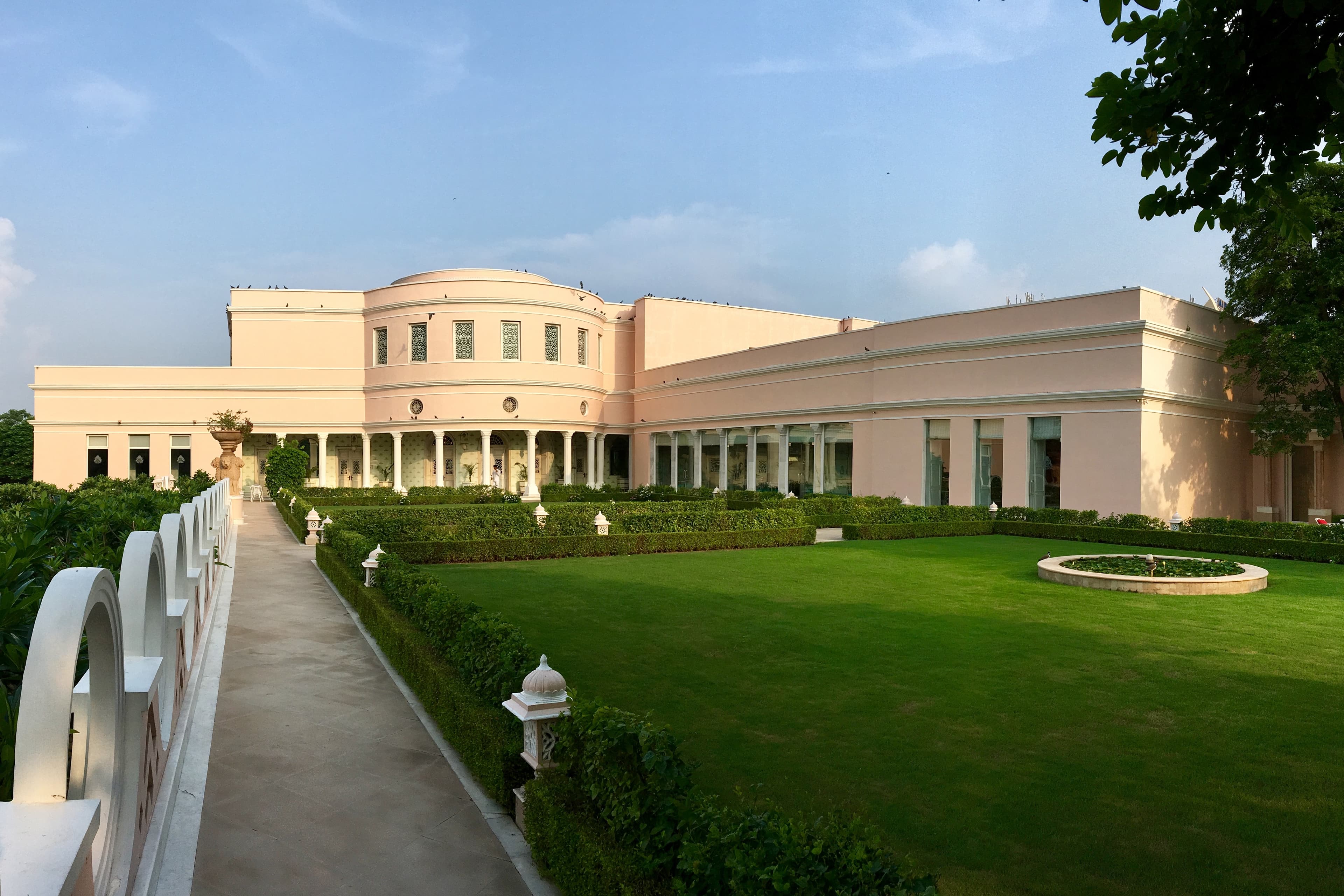
The more ancient and solemn of the two major palaces, distinguished by its interior murals – one of the best-preserved frescoes in this region of India, painted on various religious and royal themes in bright and legible colours.
Rai Praveen Mahal
via wikipedia
Rai Praveen Mahal
Built in 1618 by Raja Indramani for Rai Praveen, a celebrated poet, singer and dancer of the court, this small one-storey structure sits in the Anand Mahal gardens. It remains one of Orchha's most poetic details a palace built not for wars or gods, but for the arts.
Chaturbhuj Temple
via wikipedia
Chaturbhuj Temple
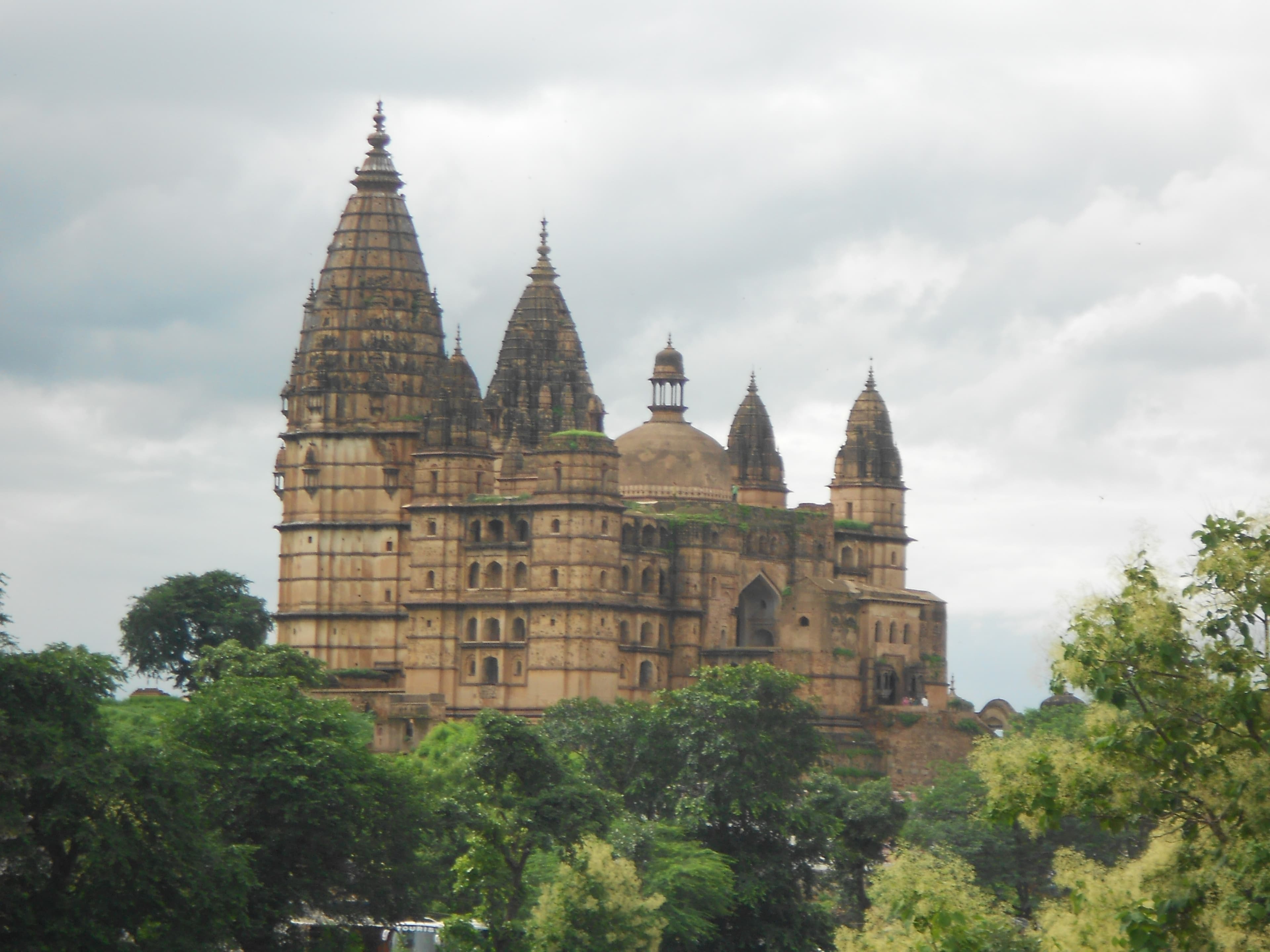
Standing tall above Orchha's skyline, Chaturbhuj Temple offers unforgettable views of the Ram Raja Temple, Betwa River and old town rooftops - especially stunning at sunset. Under the Archaeological Survey of India, it ranks among the tallest temples in the area.
Ram Raja Temple
via wikipedia
Ram Raja Temple
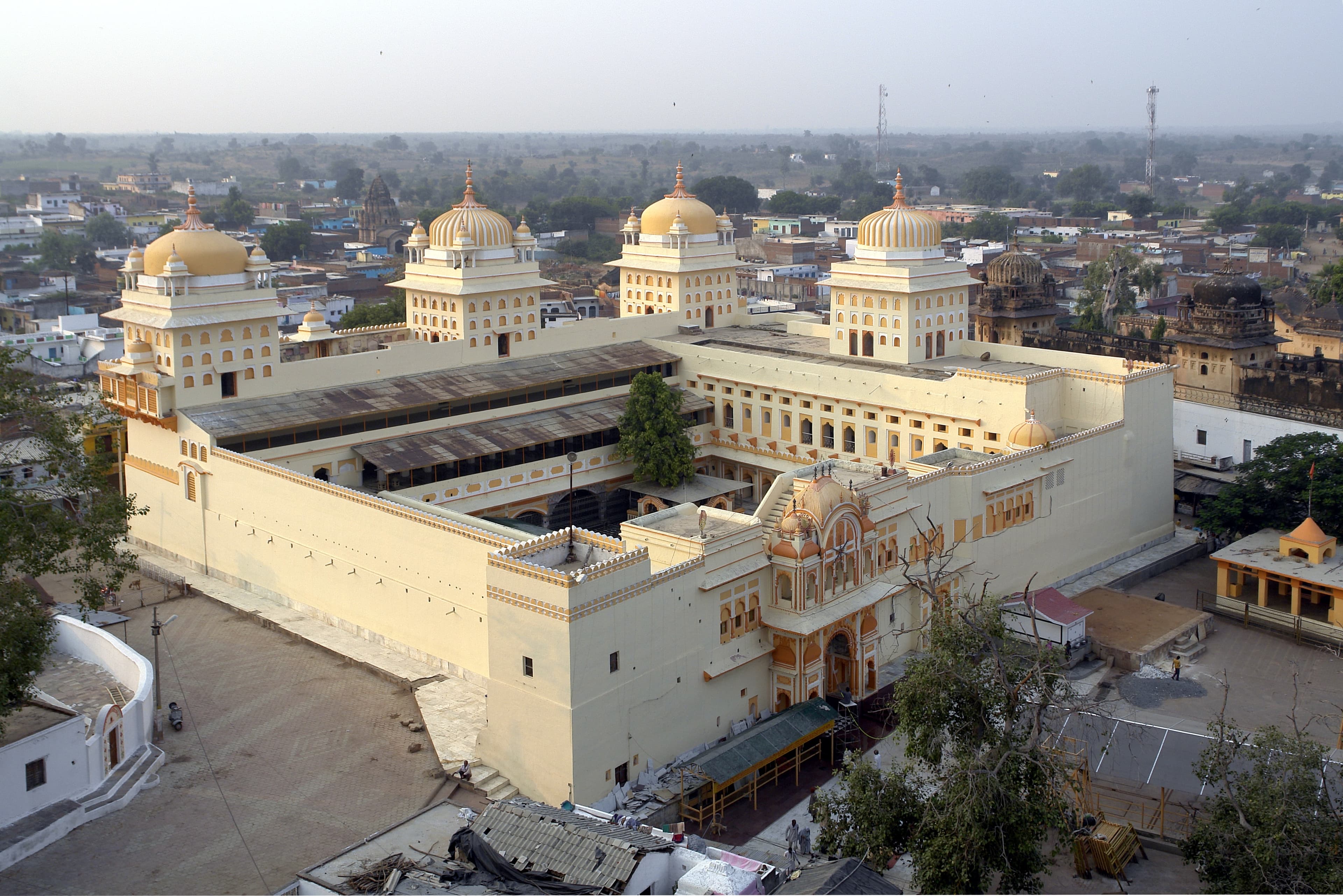
Unlike a typical temple, Ram Raja Temple is built like a palace with domed structures instead of traditional temple architecture. Open from early morning till late night, its evening aarti followed by a gun salute is one of India's most unique religious ceremonies.
Orchha Cenotaphs (Chhatris)
via wikipedia
Orchha Cenotaphs (Chhatris)
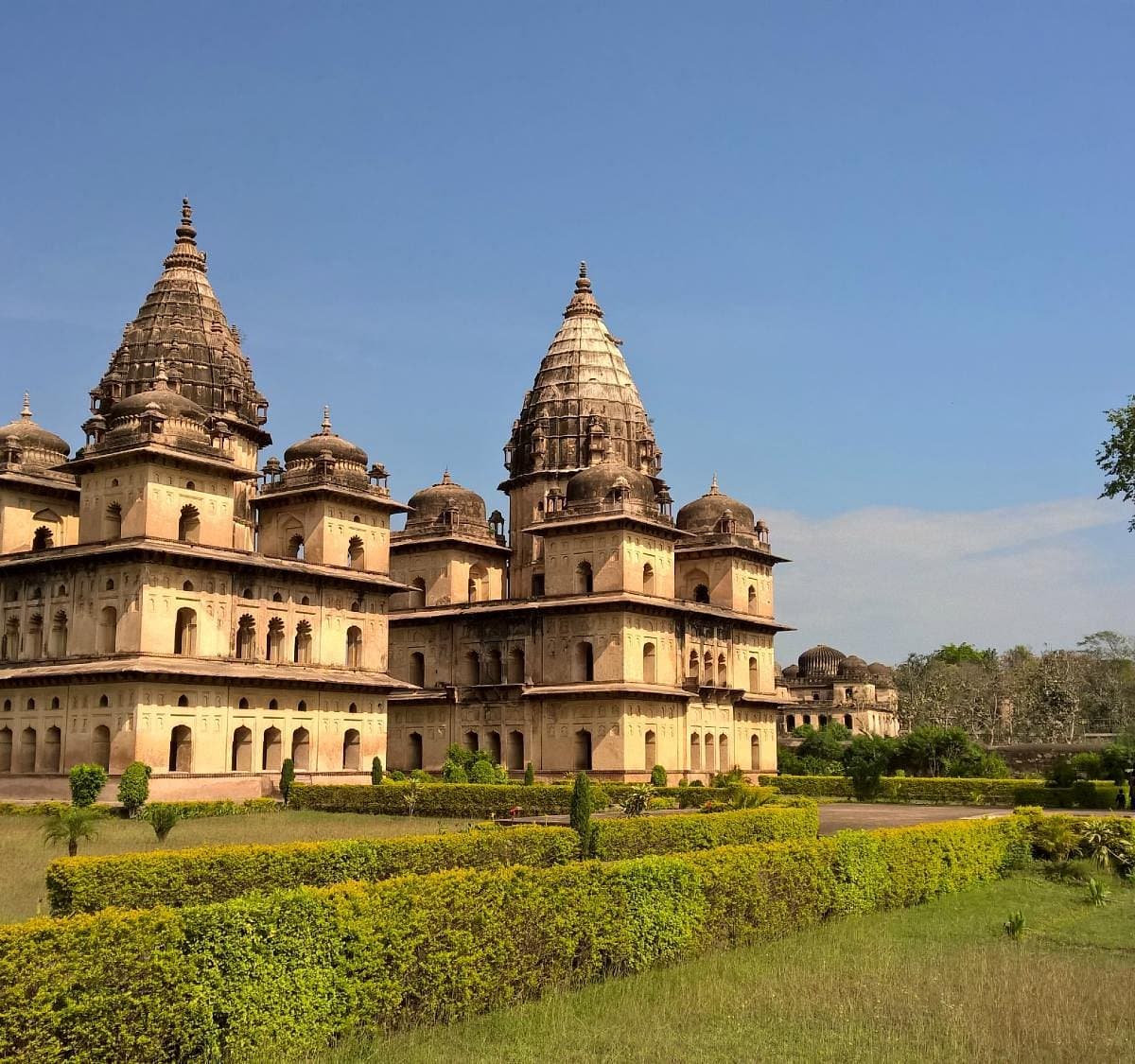
About fourteen cenotaphs of Orchha's rulers stand at Kanchan Ghat on the southern bank of the Betwa, with Bir Singh Deo's chhatri featuring the most ornate Mughal-influenced dome. The view from the bridge - cenotaphs on one side, river on the other - is among Orchha's most stunning, especially at sunrise or sunset.
Betwa River and Ghats
via wikipedia
Betwa River and Ghats
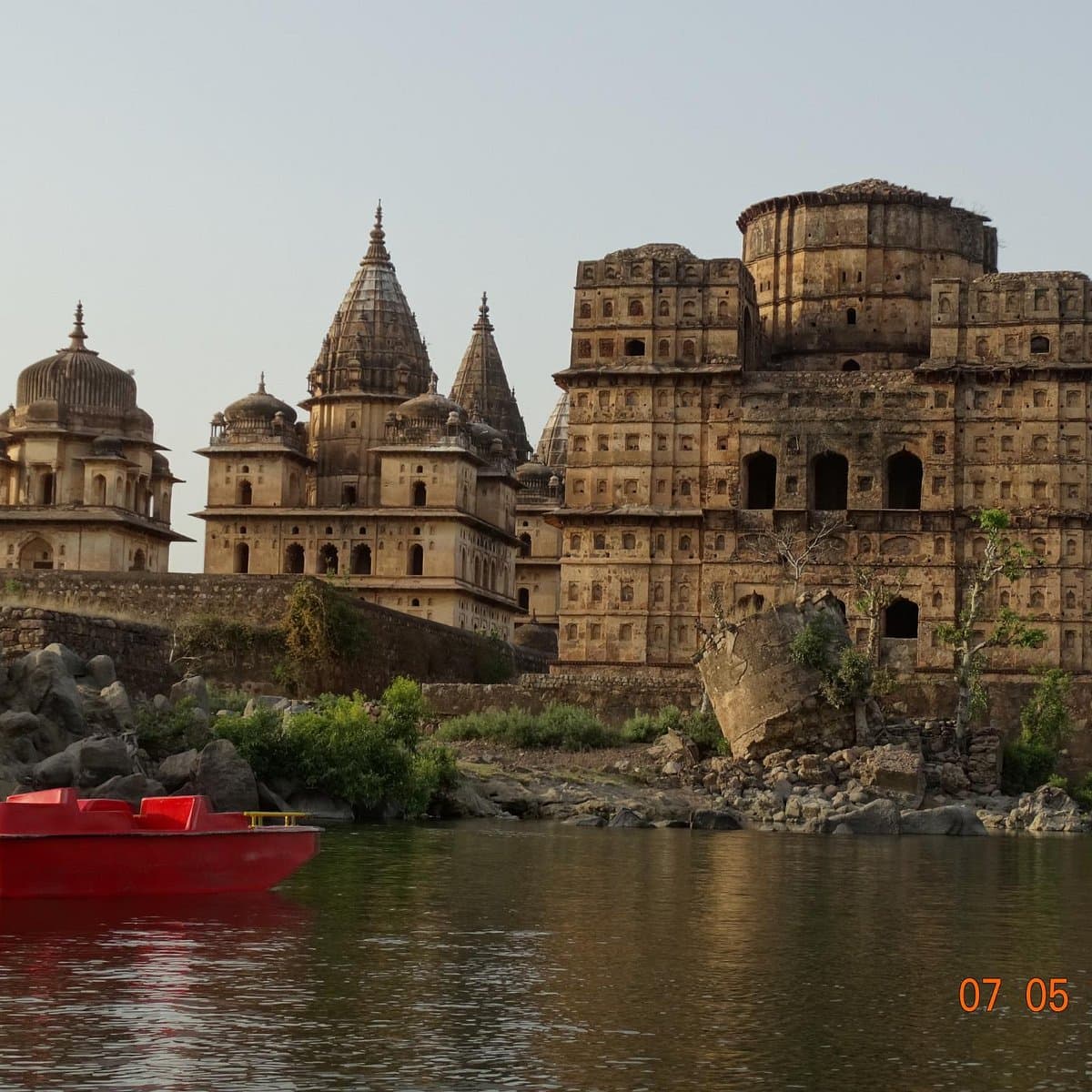
The Betwa splits into several arms as it passes Orchha, with ghats on both banks where daily life unfolds laundry, washing, walking, and boats drifting past the cenotaphs and fort walls. An evening boat ride, as the sun sets behind the fort's silhouette, is among the cheapest yet most fascinating experiences here.
Hidden Gems Most Visitors Miss
- • Lakshmi Narayan Temple: a hybrid fort/temple complex near the main complex, decorated with ceiling paintings depicting scenes from Krishna Leela and the 1857 revolt, shown in one of the galleries — not very crowded and easily your private spot.
- • Phool Bagh: a pleasure garden in imperial style, equipped with an air-conditioning system – a tower and tunnel bringing fresh underground water through it and providing relief from hot Orchha summers.
- • Orchha Wildlife Sanctuary: located across a narrow one car at a time bridge over the Betwa River and providing great chances to bird watch, as well as being close to temples but without visitors.
- • Cenotaphs at dawn: be at Kanchan Ghat when the first rays of the sun appear, prior to arrival of tourist buses full of people coming from Khajuraho and Jhansi, and really discover Orchha.
- • Walk in the narrow streets of the old town, where you will find stepped houses, temples and local life right next to some of the world’s greatest monuments.
Best Experiences in Orchha
- • An evening sunset cruise on the river Betwa with cenotaphs in the background.
- • Evening light and sound show at the Orchha Fort Complex.
- • The evening aarti at the Ram Raja Temple with its ceremonial gun salute.
- • Guided walking tour with a historian who will be able to decipher the legends hidden in the murals.
- • Sunset photography session at the chhatris, when the lighting is perfect and ghats almost empty.
- • Bicycle tour of the old town at a much slower pace than any guided tour offers.
Food and Local Cuisine in Orchha
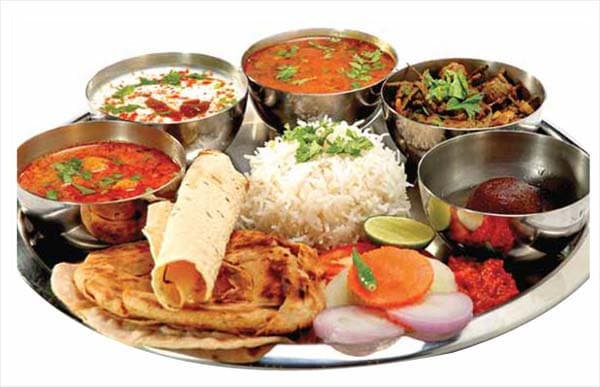
Orchha is located in the middle of Bundelkhand, an area renowned for its simple and healthy food cooked at home using ingredients such as wheat and dal, as opposed to gourmet restaurant food. The food here includes thalis comprising of dal, seasonal vegetables, and rotis or bafla breads, which are usually dipped in ghee and lentils.
Some riverside hotels and boutique hotels have started preparing these homestyle foods in a refined manner, which can be enjoyed in their terrace restaurants offering views of either the fort or the Betwa River. If you want to eat something other than Indian cuisine, then you can enjoy some rooftop cafeterias that offer continental and Israeli inspired food menus.
via mptourandtravels
Orchha Heritage Hotels: Where to Sleep in a Forgotten Kingdom
Up until recently, Orchha remained a day destination, visited by people as a part of their travel between Khajuraho and Jhansi in a bus ride. Things have changed. With a handful of Orchha heritage hotels emerging, travellers can experience what used to be the privilege of the royals, staying at the Orchha Heritage Hotels, spending time within Orchha rather than travelling through it.
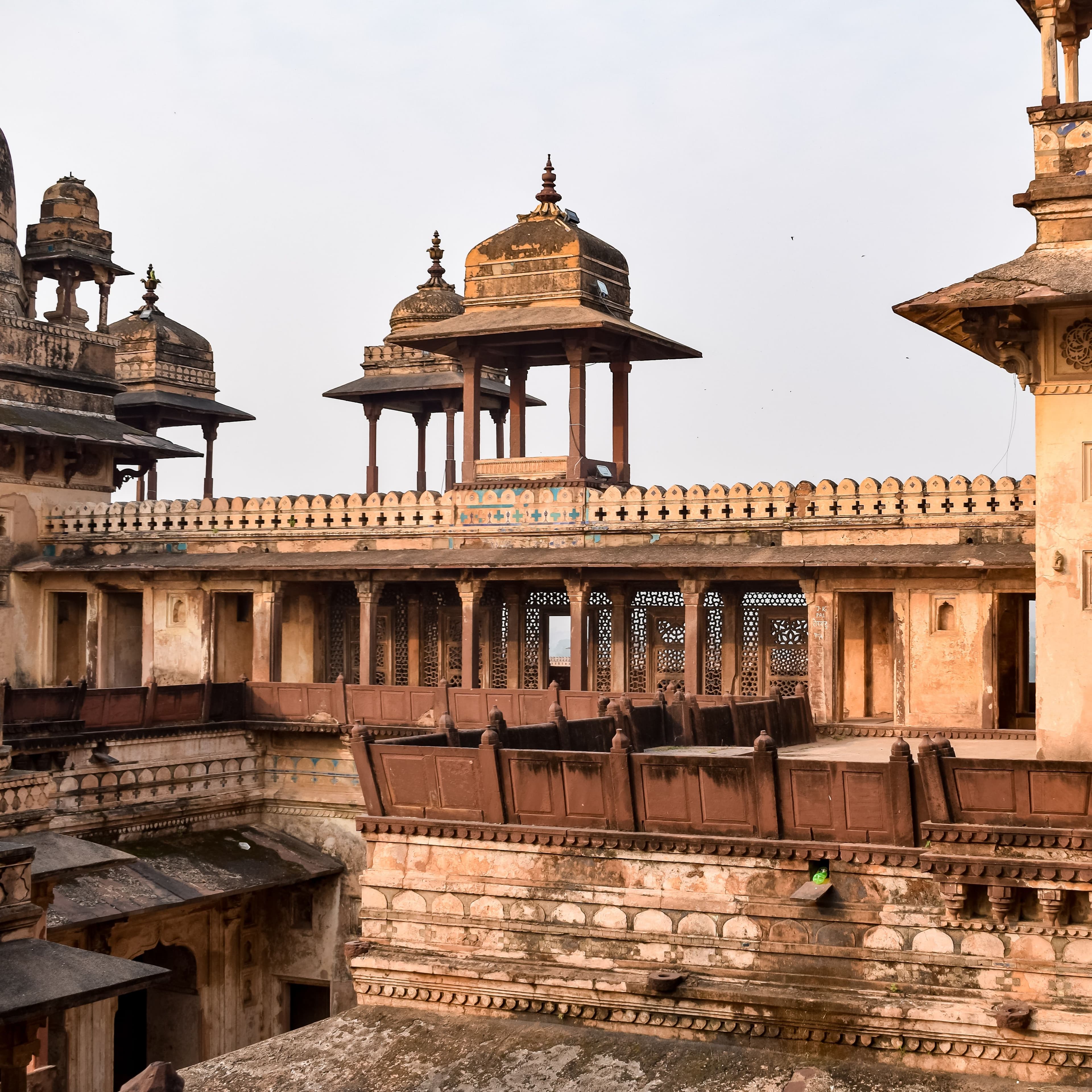
MPT Sheesh Mahal is the top-notch Orchha heritage hotel, located on the premises of the Orchha Fort Complex – the only Indian opportunity to sleep inside a functioning Bundela palace with an access to the Jahangir Mahal and Raja Mahal through the courtyard of the hotel. Nearby are riverside Orchha heritage resorts, such as MPT Betwa Retreat, offering comfortable accommodation and a view at the Betwa River along with easy access to the fort complex and other historical sites.
via pexels
Luxury Travel Tips
via pexels
Luxury Travel Tips
Book six to eight weeks ahead for the October–March season to secure an Orchha-facing suite, as these are limited and fill up fast with weddings. Arrange a private off-hours palace tour through your hotel, and choose a chauffeur-driven circuit covering Orchha, Khajuraho and Gwalior instead of a group tour.
Family Travel Tips
via pexels
Family Travel Tips
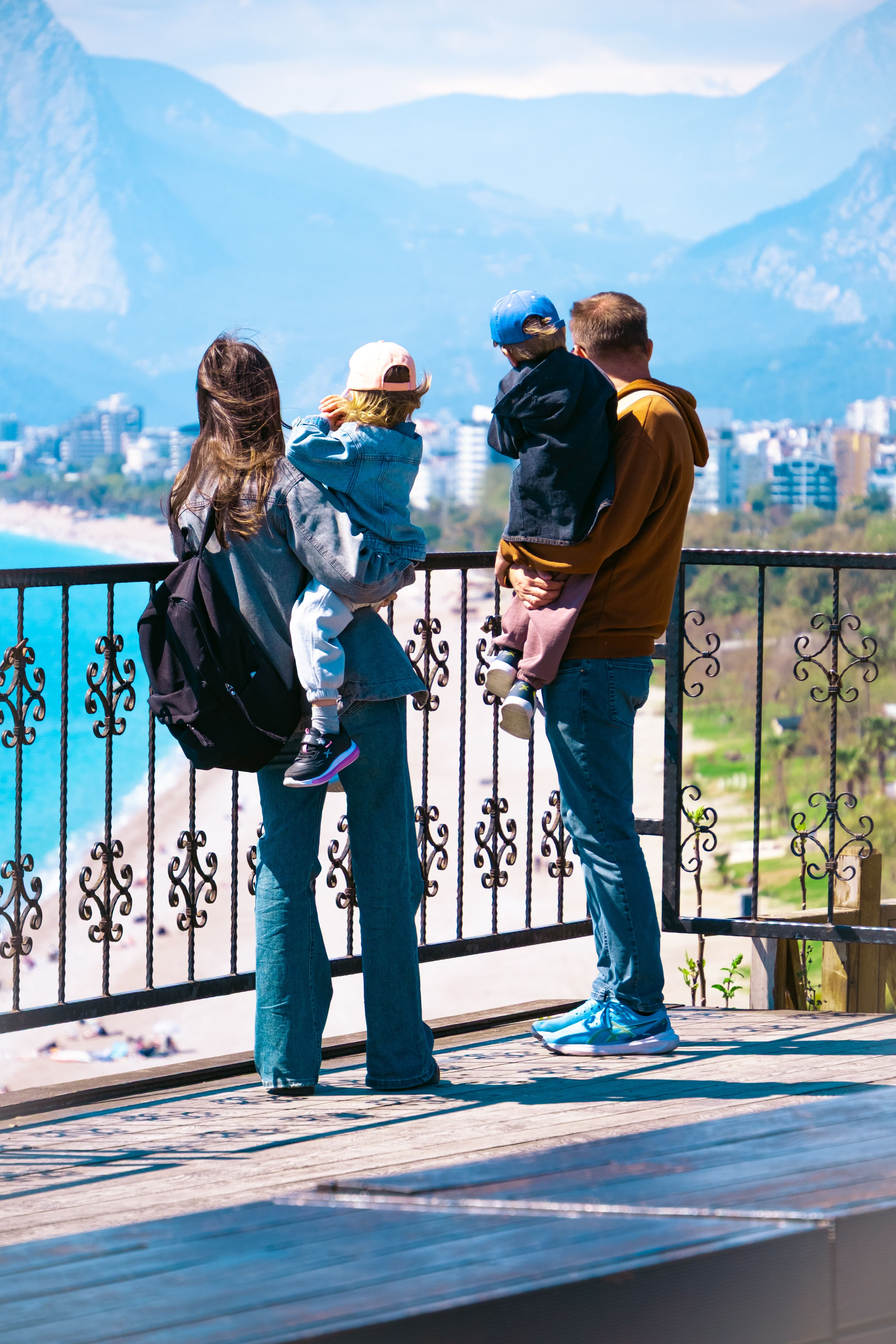
Budget at least three to four hours for the fort complex, but keep an eye on children near unrailed staircases and dark corridors. A wildlife sanctuary visit and sunset boat ride work better for kids than monuments all day, while a riverside heritage hotel with a pool is ideal for unwinding between outings.

Solo Female Traveler Tips
via pexels
Solo Female Traveler Tips
Orchha is a compact, traveller-friendly town where most visitors, including solo women, feel safe during the day. At night, stick to well-lit main streets and use hotel-organised transport, not unmarked vehicles India Heritage Travel offers safe heritage stays and English-speaking guides for solo women and women's groups.
Practical Travel Guide
Best Time to Visit Orchha
October to March is undoubtedly the best time, when the cool and comfortable climate during the day will allow you to walk through the fort complex. You should avoid visiting during May and June because the climate of Bundelkhand becomes quite hot during those months. However, July to September is an extremely green period.
How to Reach Orchha
- • By Road: From Jhansi - 35 to 45 minutes by car; from Gwalior - around 2.5 hours; from Bhopal - close to 4 hours.
- • By Air: Nearest airport is Gwalior, 120 km away; Khajuraho airport connects directly with Delhi and other major Indian cities.
- • By Rail: Nearest station is Jhansi, 16 to 18 km away, lying on the Delhi–Chennai and Delhi–Bhopal lines; timings vary depending on your travel preference.
Entry and Ticket Details
Most composite tickets will include entry into the buildings of the fort complex such as the Raja Mahal, Jahangir Mahal, and Rai Praveen Mahal, and these tickets are normally valid for the day and allow entry to multiple sites, while the cenotaphs along the riverbanks will be covered separately. Additional charges may be required for cameras and videos at certain places, and the tickets vary in cost for Indian and foreigners.
Budget Estimates
It is possible to spend an entire day in Orchha as a budget traveler with all expenses paid in terms of admission charges, food, and transport in a modest cost that is by no means high when compared internationally; while mid-range travelers have to budget mainly on their accommodation costs depending on seasonal and other variations of the prices at the heritage and riverside hotels.
Suggested Itinerary
Half-Day Itinerary
- • Orchha Fort Complex (Raja Mahal, Jahangir Mahal, Rai Praveen Mahal): Either morning or afternoon – 2.5 to 3 hours
- • Stopover at Chaturbhuj Temple and Ram Raja Temple – 45 minutes to 1 hour
One-Day Itinerary
- • View of sunrise at the cenotaphs at Kanchan Ghat
- • Orchha Fort Complex including the museum in Jahangir Mahal
- • Lunch at a riverside or heritage hotel restaurant
- • Chaturbhuj Temple, Ram Raja Temple and Lakshmi Narayan Temple in the afternoon
- • Boat cruise at sunset on the Betwa River and light & sound show at the fort.
Two-Day Itinerary
- • Day 1: follow the one-day itinerary above, overnighting at an Orchha heritage hotel.
- • Day 2 morning: a slower, guided heritage walk through the old town and Phool Bagh gardens.
- • Day 2 afternoon: Orchha Wildlife Sanctuary or a village walk, followed by a leisurely departure toward Khajuraho or Jhansi.
Nearby Attractions
- • There are some spots worth looking at from Orchha if you have time. Jhansi fort sits really close, maybe 16 km, and it goes back to the 17th century. It ties into Rani Laxmibai and that whole 1857 mutiny period.
- • Datia palace feels similar in a way, about 40 km out, with its seven stories and Bundela style that matches what you see around Orchha. I think that part stands out if you like architecture. Gwalior is farther at 120 km but has the fort plus some heritage places from the Scindia time.
- • Khajuraho comes up a lot too at roughly 175 km with those temple sculptures and the UNESCO status. It seems like it could fit into a bigger Madhya Pradesh trip since it combines easily with Orchha. Some people see it as a must while others skip it depending on how much driving they want.
Why Choose India Heritage Travel
Orchha rewards travellers who see it properly - on foot, at sunrise, with someone who knows where to stand when light hits the domes. That's what India Heritage Travel is built for. We offer private chauffeur-conducted heritage tours across Madhya Pradesh, paced around light, crowds and your comfort rather than a fixed group schedule. Itineraries are fully tailored - Orchha, Khajuraho, Gwalior and beyond - with curated luxury and heritage boutique stays, fort- facing or riverside. Our expert local guides share insider stories no guidebook can, with exclusive arrangements for women travellers. All-inclusive service from start to finish - the only choice left is which palace to photograph first.
Frequently Asked Questions
Orchha served as the Bundela dynasty's capital from 1501 until the court shifted to Tikamgarh in the 18th century. With no major construction afterward, its palaces, temples and cenotaphs survived largely untouched - frozen at the moment its power faded, earning it the name forgotten kingdom.
Orchha's heritage stays range from MPT Sheesh Mahal, set within a wing of the fort itself, to riverside options like MPT Betwa Retreat and boutique heritage havelis in the old town. India Heritage Travel can match you to the right category based on budget, privacy and whether you prefer fort views or riverside settings.
According to local legend, an idol of Rama brought from Ayodhya by Queen Ganesh Kunwari refused to move once placed in her palace - even after the Chaturbhuj Temple was built for it. The palace thus became the Ram Raja Temple, making Orchha the only place in India where Rama is worshipped as a reigning monarch, complete with a daily guard of honour.
One full day covers the major monuments comfortably. Two days, including an overnight stay, allows time for a sunrise visit to the cenotaphs, a sunset boat ride, and a slower walk through the old town and nearby wildlife sanctuary.
The nearest major railhead is Jhansi, about 16–18 km away on the Delhi–Bhopal line, with Orchha reachable by taxi or auto-rickshaw in 30–45 minutes. Gwalior and Khajuraho offer the closest airports, with Khajuraho also linked to Orchha by road as part of a typical Madhya Pradesh heritage circuit.
October to March offers the most comfortable weather for exploring the fort and old town. May and June bring severe heat and are best avoided, while the monsoon adds lush greenery at the cost of higher humidity.
Planning an Orchha Heritage Stay?
India Heritage Travel crafts private Madhya Pradesh itineraries featuring Orchha's Bundela palaces, cenotaphs, and Betwa riverfront combined with Khajuraho, Gwalior, and Varanasi.
Plan My Orchha Heritage Stay