Devgarh Travel Guide: Palace Living in Rural Rajasthan
This Devgarh travel guide is for travelers who have already seen Rajasthan's postcard version and want the one underneath it. Devgarh is a small hill town in southern Rajasthan, built around a seventeenth-century palace - Deogarh Mahal - still owned by the family that built it. No queues, no touts, no traffic - just a sandstone fort catching the morning light over the Aravalli hills, and a stillness that Jaipur and Jodhpur can no longer offer. For those who want to understand how royal Rajasthan actually lived - not just performed for visitors - Devgarh is where that story is still being told.
Overview: Where Is Devgarh and Why Visit
Devgarh sits about 120 kilometres northeast of Udaipur, tucked into some fold of the Aravalli range where Mewar, Marwar, and Merwara kinda historically met. It’s not like just one monument, no, it’s a working town really: tight lanes, a hilltop palace, farmland, small water tanks lakes, and villages that still run on agriculture, weaving and pottery rather than the usual tourism rhythm. Most Rajasthan itineraries zip along-city palace, fort, bazaar, then on to the next city- but Devgarh sort of insists you slow down, for a night or two, and just be there in rural Rajasthan.
What makes it feel different is the contrast. You sleep inside a real Rajput palace, with carved stone jharokhas and mirrored rooms, then the next morning you’re on a jeep trail between mustard fields, or on horseback past a village well. Not many places in India let you switch between these kinds of mornings so easily, and even fewer let you do it without seeing another tour bus somewhere, just sitting, idling.
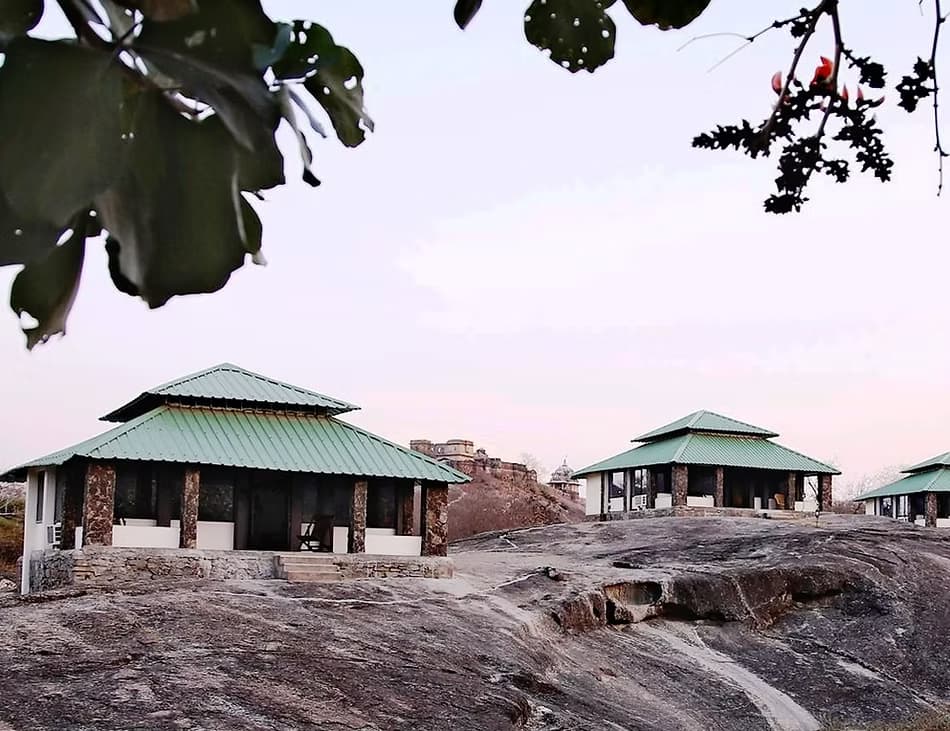
via deogarhmahal.com
The History of Devgarh and Its Palace
Devgarh’s story is kind of more about Mewar’s landed aristocracy than its actual kings, you know. Here the local rulers carried the title Rawat, more or less like a feudal baron, and their estate- called a thikana in Rajasthani- even at its biggest was among the largest in the whole region. We’re talking several hundred villages, spread out across the Aravalli foothills, all held in faithful service to the Maharana of Udaipur. Devgarh is often described as the fourth-largest thikana across all of Rajasthan, so this is maybe why the palace feels far grander than “village fort” would suggest.
Deogarh Mahal was built in the 1670s by Rawat Dwarka Dasji as a family dwelling with enough fortification to serve as a defensive stronghold. Over the next two centuries, successive Rawats added courtyards, living suites, and ornamental touches. Unlike many similar palaces, Devgarh remained well-kept; later descendants restored it and opened it as a heritage hotel in the late twentieth century.
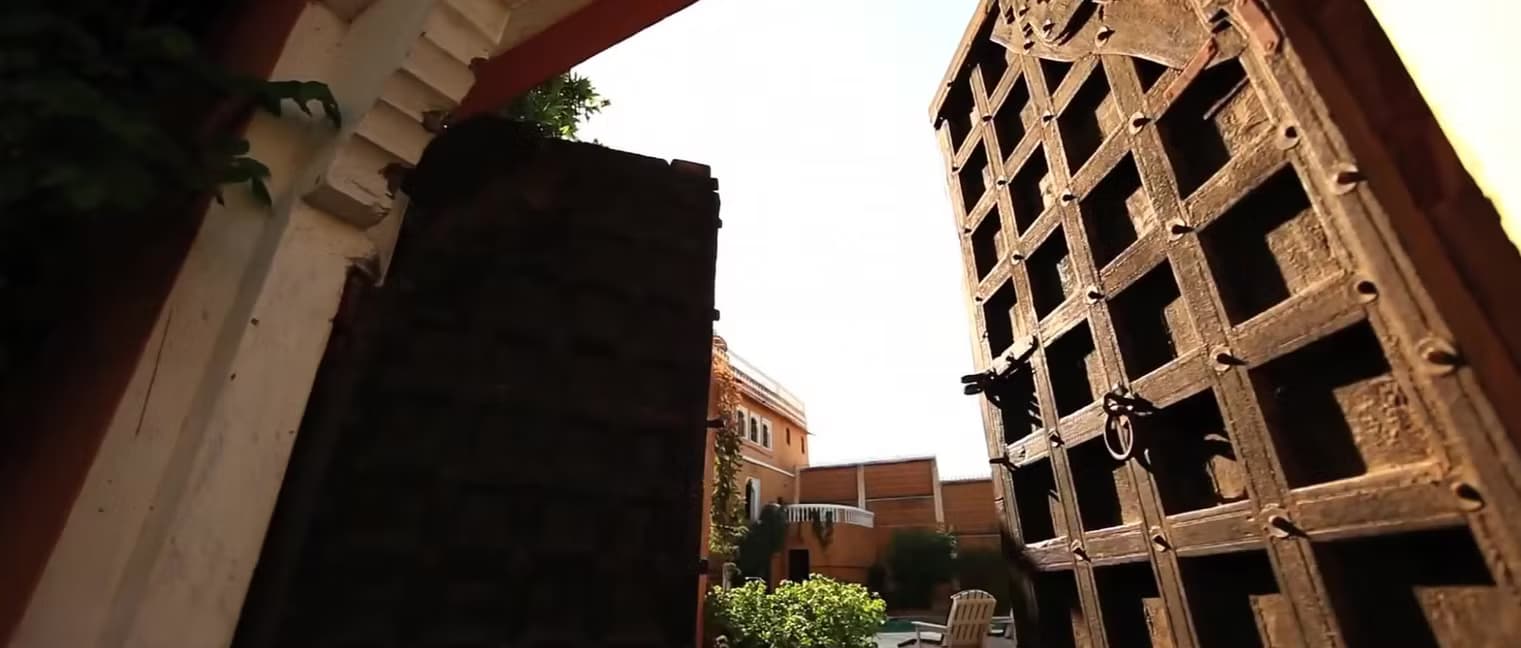
via deogarhmahal.com
Architecture of Deogarh Mahal
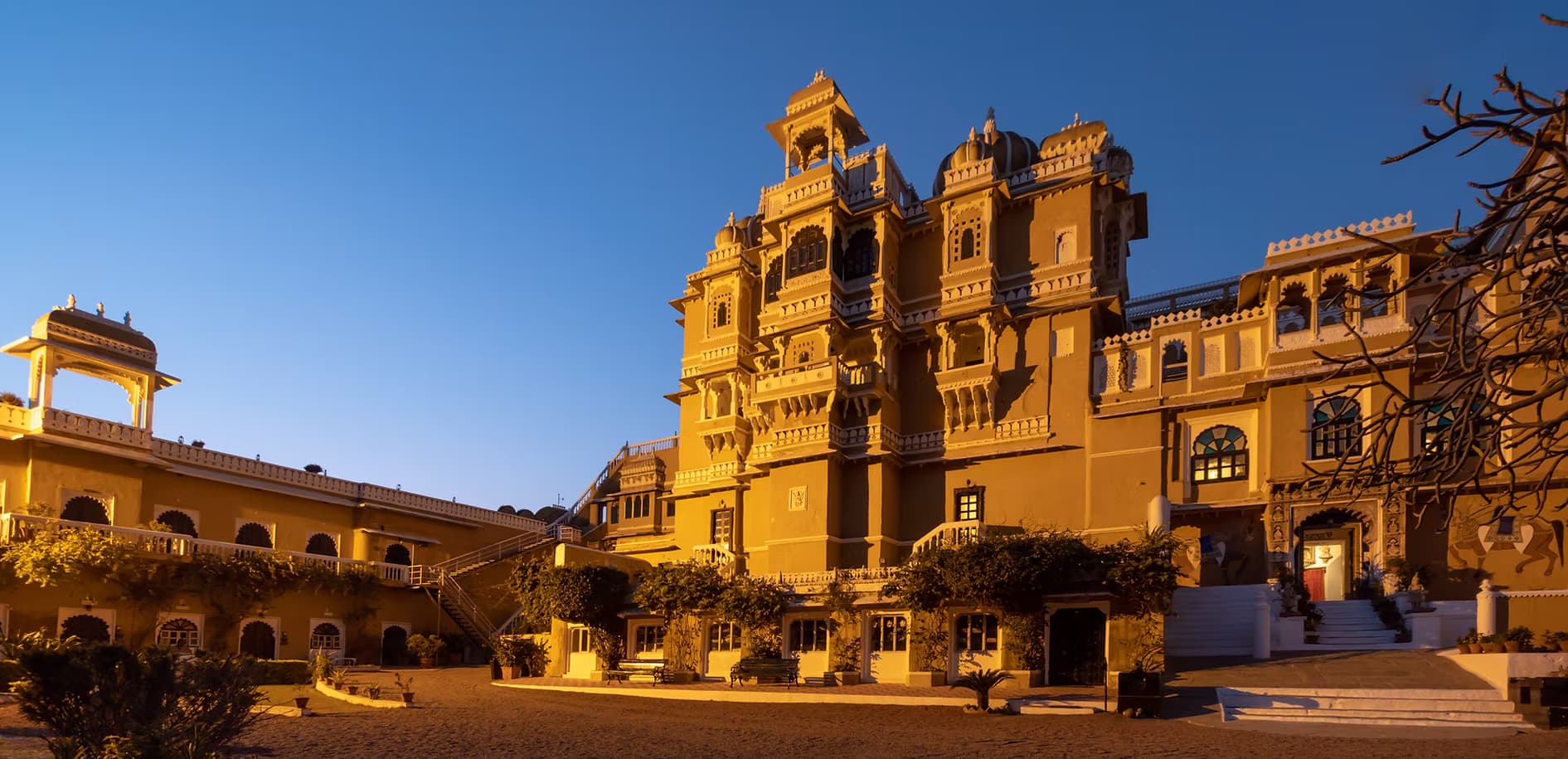
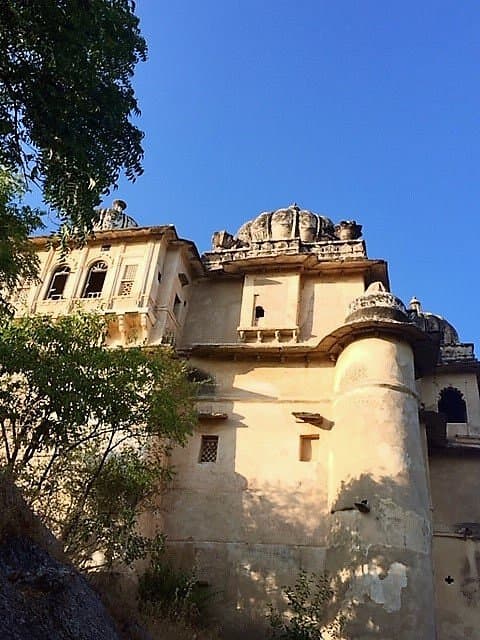
Deogarh Mahal kind of rises on a ridge over the town, those grey battlements and domes, even the gun enclosures, you can spot them way before you actually reach the base of the hill. When you get nearer the whole feel changes a bit, like the architecture softens, jharokha balconies project out from the stone facade, and the courtyards are deep enough that light and air can circulate through the building the way it was meant to be used, a century earlier when air-conditioning was not even a thing. And the gateways, well, they’re sized for elephants and processions, not for cars.
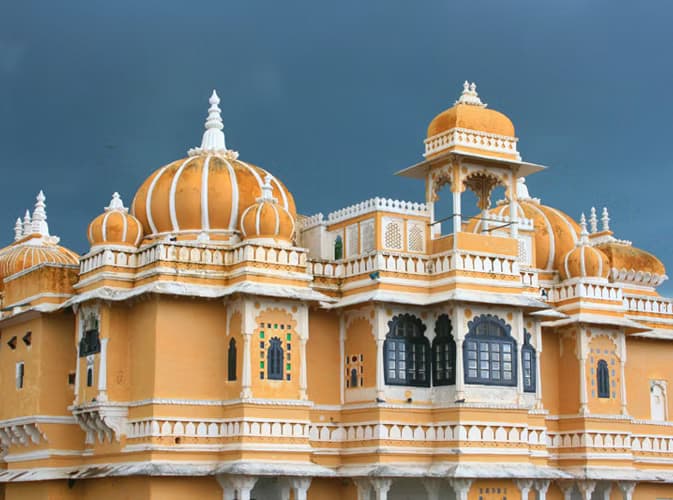
via deogarhmahal.com
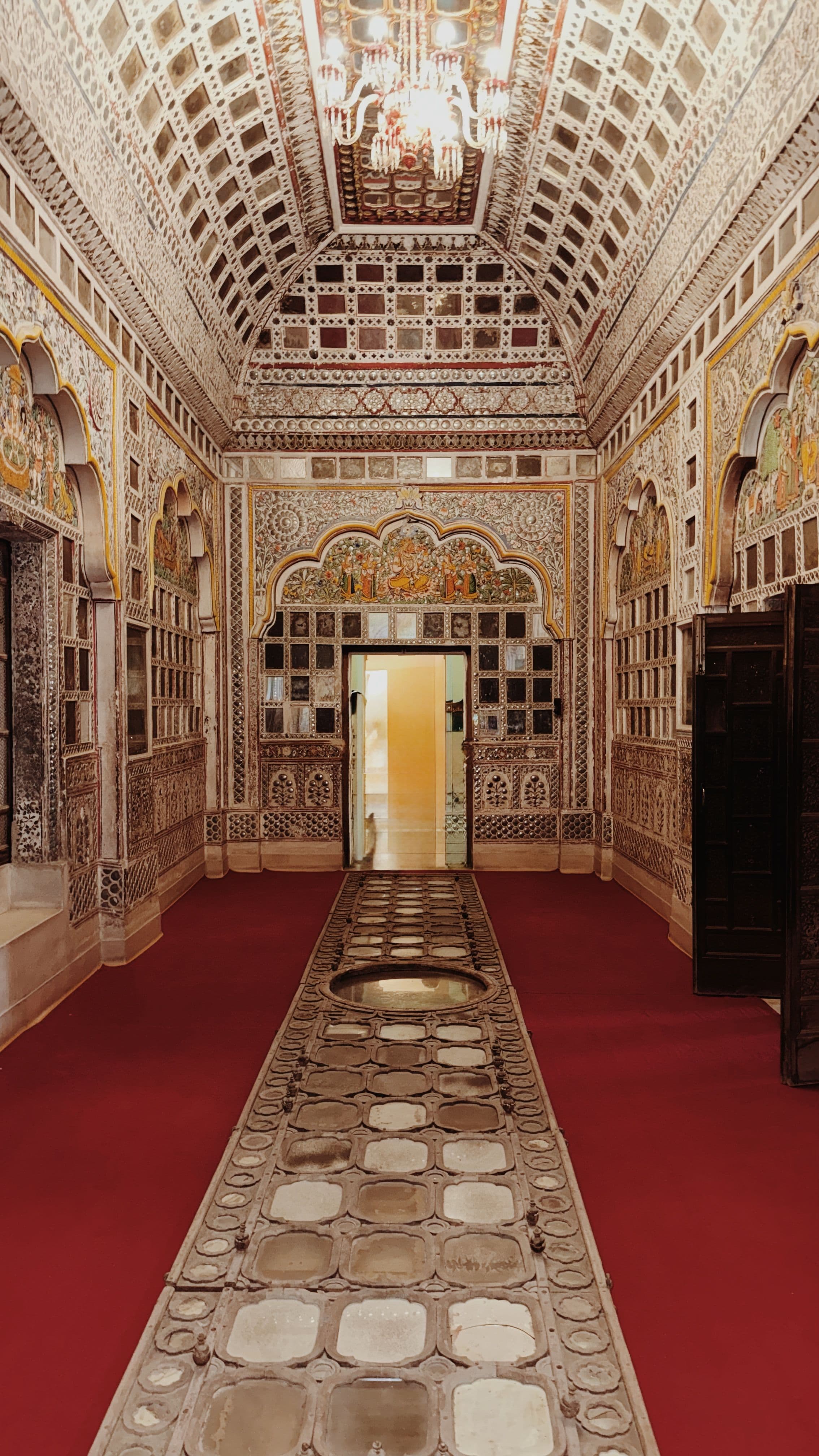
The main highlight is the Sheesh Mahal - a chamber with hundreds of small mirrors and coloured glass, still remarkably intact. Rooms are named and decorated to reflect family history, with a genealogical chart tracing the lineage back over a thousand years. Restoration kept modern additions like plumbing and the pool secondary, so the original stone and lime plasterwork remains the main focus.
Cultural Significance of a Living Thikana
What makes Devgarh culturally distinct is that it remains a living family home - not a government- managed monument. Guests often meet a family member in the evening, hearing firsthand stories of Mewari history and seeing how a noble household actually worked - not as a museum piece, but as a practiced pattern of hospitality, land care, and rural stewardship stretching back to the Rajput era.
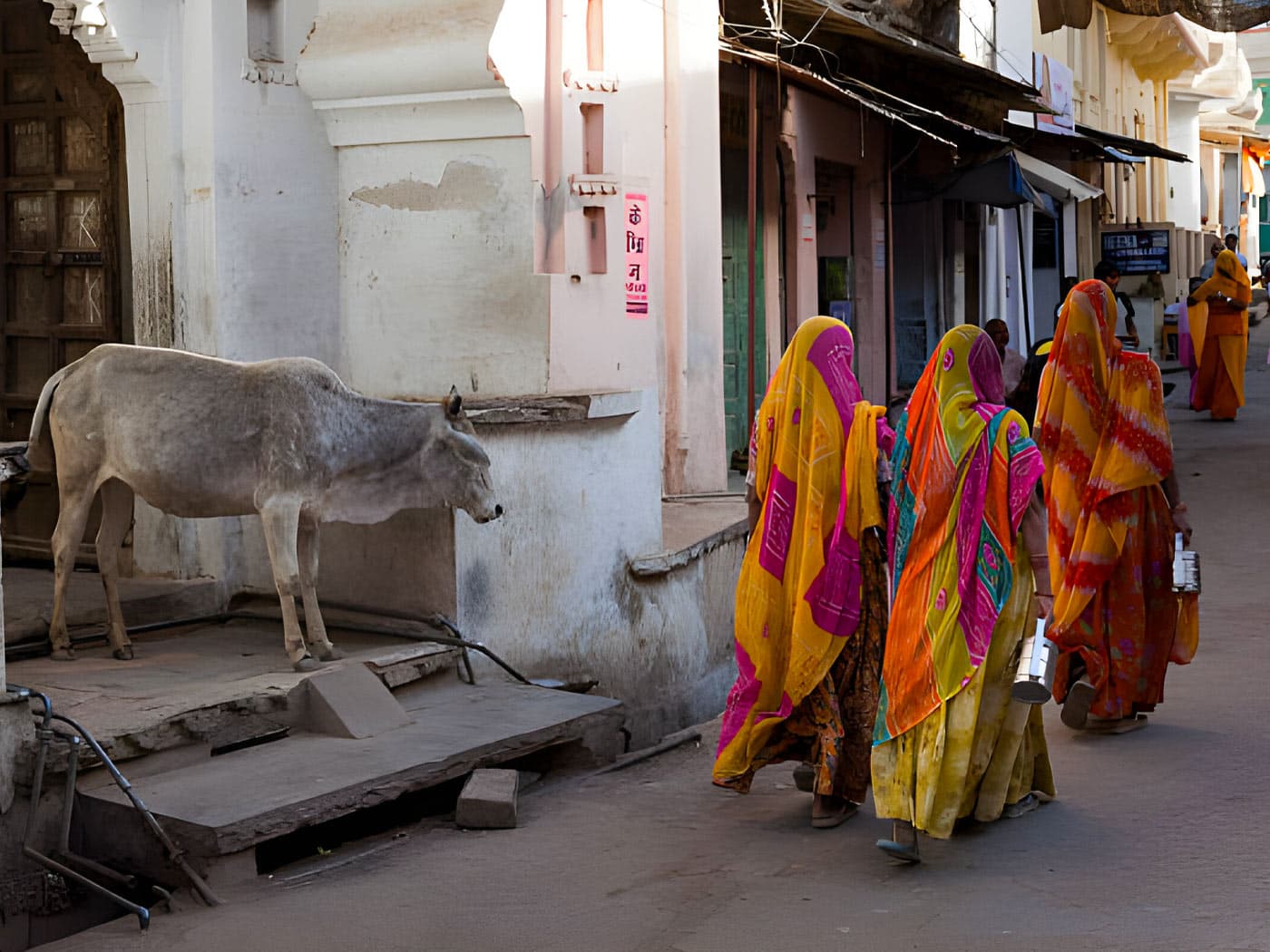
via boutindia
The neighbouring villages hold their own cultural weight - Devgarh lies in a Mewar region known for weaving, pottery, and miniature painting, along with rural festivals and local deities that still shape daily life. With a local guide who can translate the surrounding context, not just the language, you'll discover the real cultural depth of this Devgarh travel guide.
Major Attractions in and Around Devgarh
Deogarh Mahal Complex
Deogarh Mahal Complex
Deogarh Mahal's courtyards, Sheesh Mahal, rooftop terraces, and family museum are worth a guided walk - even if you're not staying. But an overnight stay is what makes the experience feel complete.
Anjna Fort and Seengh Sagar
Anjna Fort and Seengh Sagar
A short drive from Devgarh, Anjna Fort offers wide Aravalli views, while Seengh Sagar Lake attracts local farmers and migratory birds. Lakeside picnics and boat outings are a favourite half-day activity for guests staying at Devgarh's heritage hotels.
The Village Bazaar
The Village Bazaar
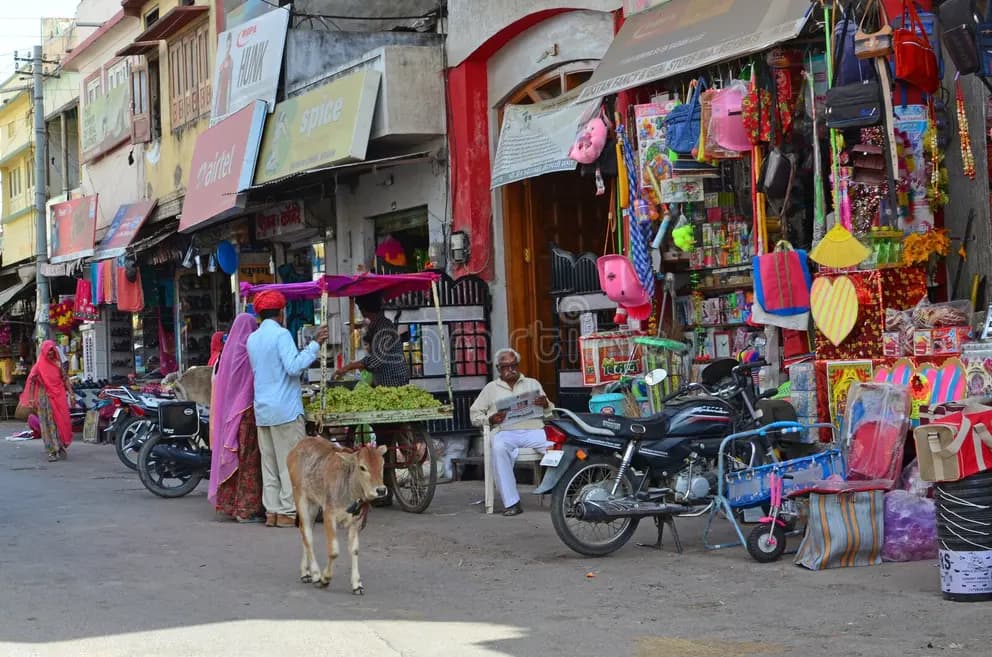
Devgarh's market streets - narrow, arcaded, and largely untouched by mass tourism - are worth an unhurried walk. Look for spice stalls, working artisans, and quick tea stops - the everyday Rajasthani street life that has mostly faded from larger heritage cities.
Best Experiences: Safaris, Trains, and Village Life
Jeep and Horse Safaris
Going out on open-jeep safaris across the hills and farmland around Devgarh is still one of the most popular ways to catch the bigger view, you know, with viewpoints, smaller forts, and village life along the route. Horse safaris pretty much follow the same general path, but at a calmer tempo, and they are a good match for travelers who like a quiet, more inside-you kind of journey through the Aravalli foothills. Devgarh’s own ground and horse traditions make it an especially solid base in Rajasthan for this sort of outing
The Aravalli Train Ride
Another uncommon experience tied to Devgarh is a brief train ride on the local line, it runs through the Aravalli hills, and guests often call it a standout because it feels so unlike a normal road itinerary. Realistically, train schedules are limited so it’s worth lining it up before you arrive, talk to your host or your travel operator and lock it in
Village Walks and Rural Life
If you join guided walks around Devgarh, you get to chat with farmers, potters, and weavers, plus you see rural Rajasthani homes and day to day routines that don’t really show up on a typical tour. These walks also pair well with a farm visit or a countryside stop, and honestly, winter is a nice time since the harvest season is in full swing
Birdwatching
The local lakes around Devgarh, such as Seengh Sagar, bring in a decent mix of birds, including both the residents and winter visitors. Early morning birdwatching can be a simple, low-effort add on to your stay from about November to February, and it’s usually a quiet kind of reward
Local Arts and Crafts
In this section of Mewar there’s been a long background of miniature painting, block printing, and pottery. A visit to a working artisan’s home, or a small studio-set up through your host- tends to feel more sincere than buying from a city market. It also channels support directly back into the local economy, which is, well, always a good thing
Nearby Attractions Worth the Detour
- • Devgarh sits inside Rajsamand district, so a handful of major Mewar places feel like a very comfortable day trip, more or less.
- • Like, Kumbhalgarh Fort it’s UNESCO-listed, part of the “Hill Forts of Rajasthan” World Heritage label, and it’s known for that big perimeter wall, about 36 kilometres around
- • Then there are Ranakpur Jain Temples, a marble temple complex with delicate carvings, and it’s often seen as among the best examples of Jain design in India. Next up is Rajsamand Lake , a large 17th-century man made lake with marble embankments (the “Nauchoki Pal”), which is a fairly short drive away from Devgarh.
- • If you keep going, Nathdwara is there too, and it’s where the revered Shrinathji temple is located , one of the region’s most important Krishna pilgrimage spots.
- • And after Devgarh, Udaipur , the “City of Lakes” works really well as an easy end point, you can fold it neatly into a wider Mewar circuit without too much hassle.
Practical Travel Guide
Best Time to Visit Devgarh
From October to March, that’s the usual sweet spot, since day temperatures stay pleasant enough for safaris and long walks, and by evening it gets cool, so you can actually enjoy the Mahal courtyards without feeling tired. Summers (April–June) are pretty hot and, honestly, better left for indoor plans or very early starts; monsoon (July–September) makes the Aravalli countryside greener, almost more dramatic, but rains can also slow down, road access to certain remote villages.
How to Reach Devgarh
Getting to Devgarh is probably best done by private car from Udaipur, and yes it’s a sort of direct run about 2.5–3 hours, roughly 120 km, through pretty Aravalli scenery. If you’re coming by air, the closest major airport is Udaipur’s Maharana Pratap Airport at Dabok, with the usual domestic routes and connections. Devgarh also has a rail station on the line via Mavli Junction, and there are state-run buses that link it to Udaipur, but honestly a chauffeur driven car still feels the coziest, and also the most adaptable, especially if you want to blend Devgarh with Kumbhalgarh and Ranakpur along the route.
Entry and Ticket Details
Devgarh itself doesn’t really have a standard public “entry ticket”, because it’s a town not a single monument. Deogarh Mahal and other heritage places usually accept day visitors for a small fee, or you might be able to enter as part of a meal booking, but if you’re staying overnight you naturally get broader access to the palace courtyards, little museum nooks, and the full grounds. For nearby attractions like Kumbhalgarh Fort, there are normal entry charges, which you can pay on-site, or keep it simple by asking your tour operator to arrange it beforehand.
Suggested Duration
One night is enough to experience palace living and a single safari or village walk; two nights allow time for the Aravalli train ride, birdwatching, a full village walk, and a more relaxed pace overall.
Budget Estimates
It’s a destination which will suit all kinds of travelers, ranging from budget heritage hotels to luxury palace hotels. The mid-range hotels like boutique havelis will give great value for money, especially since they give views of the fort. The street food and the thalis are cheap, while the rooftop dining is expensive because of the view.
Packing Tips
Lightweight, breathable, modest clothing works best year-round, with a warm layer for winter evenings when desert temperatures can drop sharply after sunset. Comfortable walking shoes are essential for the fort's uneven stone stairways, and a scarf or shawl is useful both for sun protection and for visiting temples and cenotaphs.
Suggested Devgarh Itineraries
Half-Day Visit (En Route Between Udaipur and Jodhpur)
- • Arrive late morning, a bit of walking tour around Deogarh Mahal courtyards and the Sheesh Mahal.
- • Lunch at the palace, home-grown produce and Mewari classics, honestly.
- • Quick look at Anjna Fort viewpoint before you continue ,with the journey.
One-Day Devgarh Experience
- • Morning: arrive, check into your heritage stay , then kind a wander around the palace grounds.
- • Midday: jeep safari across the neighboring hills and farmland , also a small pause at Seengh Sagar lake
- • Afternoon: village stroll, to bump into local artisans and watch the day to day rural life quietly.
- • Evening: rooftop dinner and if it’s available folk songs around the Mahal .
Two-Day Rural Rajasthan Immersion
- • Day 1: arrival, palace tour, afternoon horse safari ,then some free time.
- • Day 2 morning: Aravalli train ride (depending on the schedule) and birdwatching near the lake.
- • Day 2 afternoon: excursion to Kumbhalgarh Fort or Ranakpur Jain Temples ,before departure.
Luxury Travel Tips
via pexels
Luxury Travel Tips
Book premium palace suites early, especially for December–February. Opt for private car transfers and request a private jeep or horse safari in advance. Confirm evening cultural performances ahead - they're usually arranged on request, not fixed.
Family Travel Tips
via pexels
Family Travel Tips
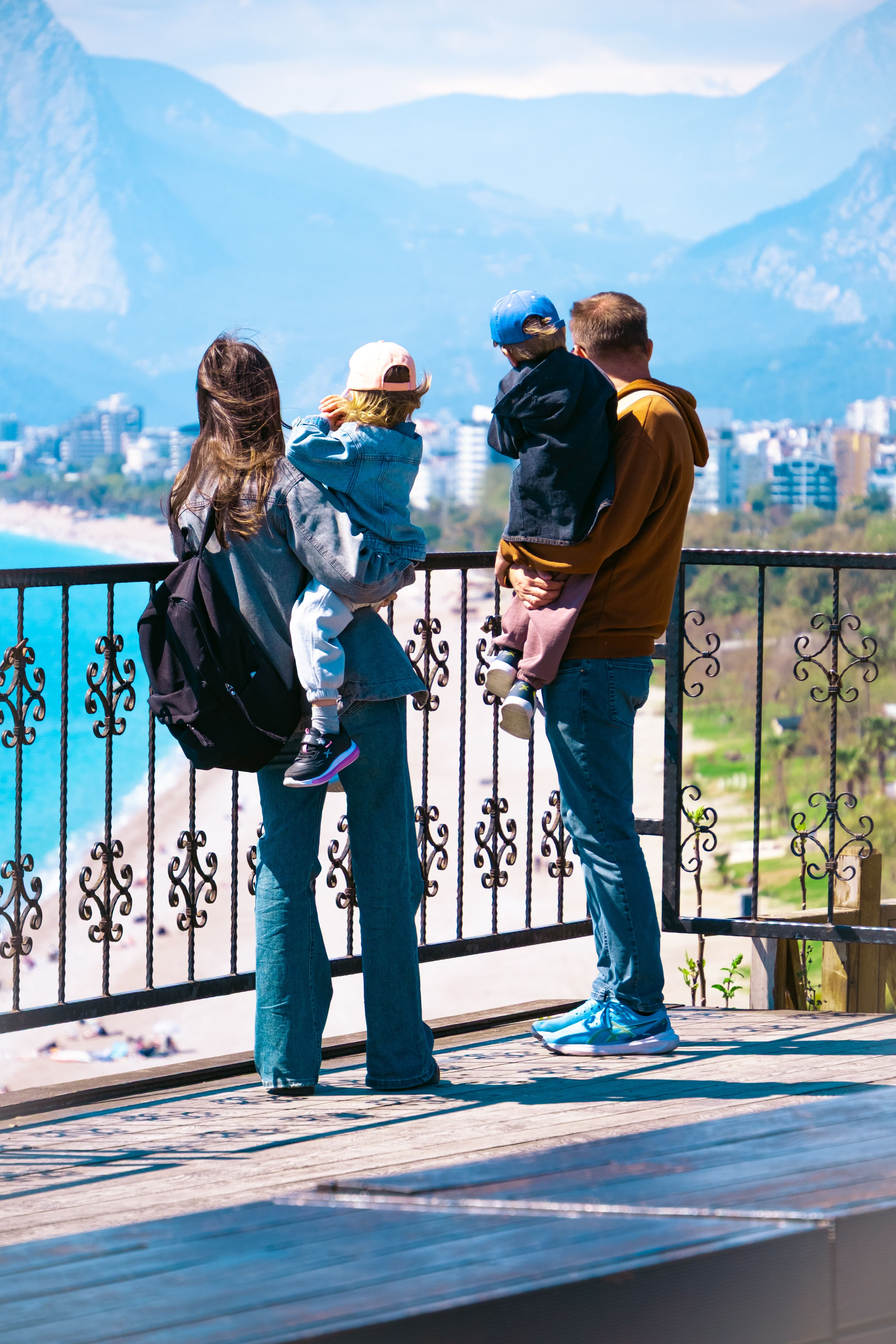
Devgarh is great for families - open grounds, pools, and safaris that appeal to kids and adults alike. Horse and jeep safaris can be shortened for younger travellers, and palace courtyards offer safe roaming space.
Solo Female Traveler Tips
via pexels
Solo Female Traveler Tips
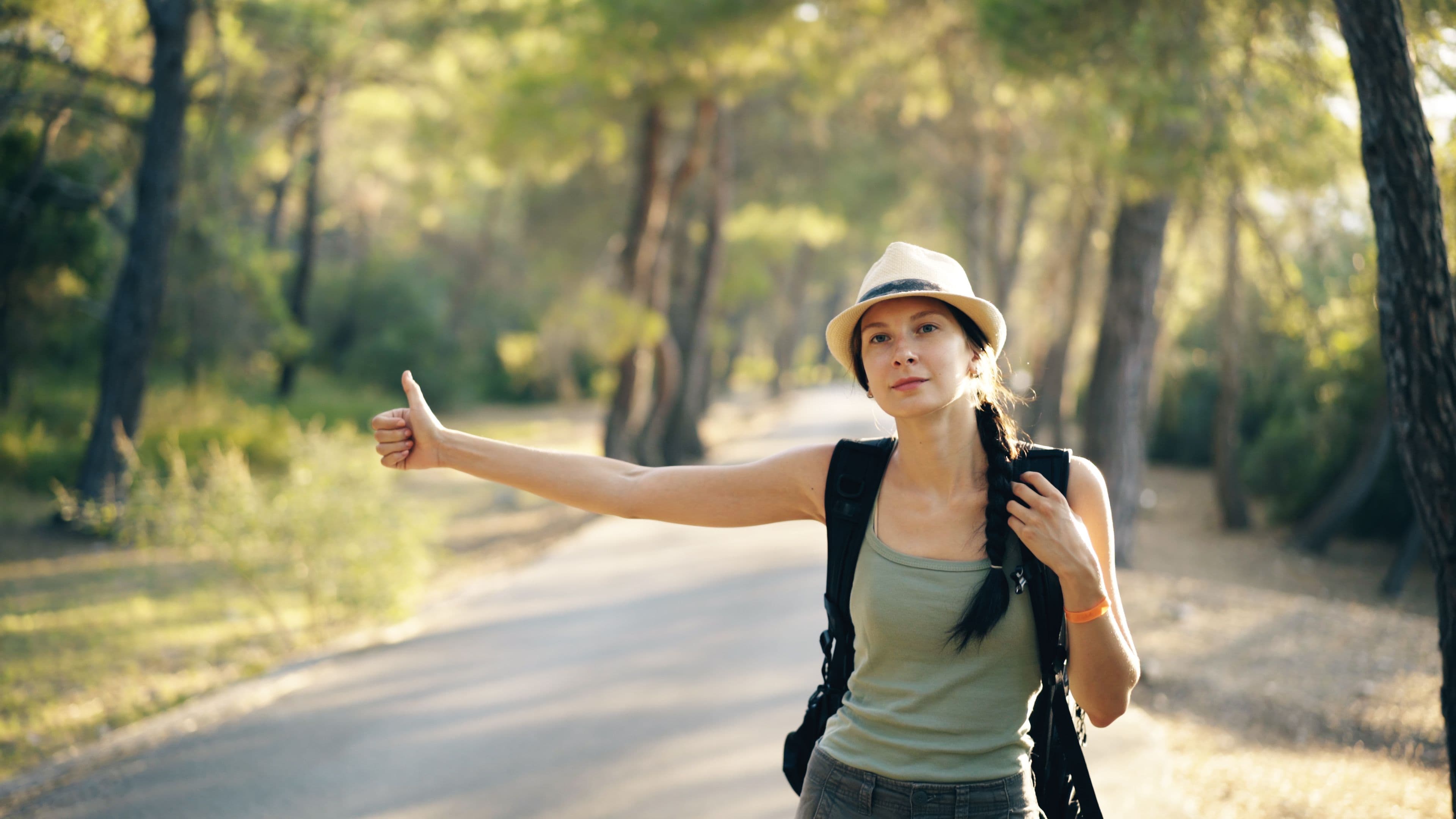
Devgarh's family-run stays are solo-friendly with personal oversight. Solo women should use pre-arranged transport, travel in daylight, and hire trusted guides. India Heritage Travel offers women-safe itineraries with private vehicles and vetted stays.
Why Choose India Heritage Travel
A destination as rural as Devgarh is where a good operator makes the biggest difference - knowing which palace suite to book, which guide has village relationships, and how to time a safari around the light. India Heritage Travel builds every Devgarh itinerary around private chauffeur-driven transport, customised pacing, curated luxury stays, expert local guides, and women-safe travel planning. From airport pickup to rooftop dinners, it's premium end-to-end service. If this guide has you imagining a night in a genuine Rajput palace and a morning in the Aravalli villages, our team can create that plan around your dates, speed, and interests.
Frequently Asked Questions
Devgarh (also spelled Deogarh) is a town in the Rajsamand district of southern Rajasthan, in the Aravalli hills roughly 120 km northeast of Udaipur.
No. Devgarh (Deogarh) in Rajsamand district is a separate town from Devigarh village near Delwara, closer to Udaipur - both have well-known heritage palace hotels, but they are different destinations with different histories.
It's approximately 120 km, about a 2.5- to 3-hour drive. Private car is the most convenient option; Devgarh also has its own railway station and bus connections to Udaipur.
October through March offers the most comfortable weather for safaris, village walks, and exploring the palace grounds. Summers are hot; monsoon months bring lush scenery but occasional access limitations.
One night covers the essentials - palace tour and one safari or village walk. Two nights allow time for the Aravalli train ride, birdwatching, and a nearby excursion to Kumbhalgarh or Ranakpur.
Planning a Devgarh Palace Stay?
India Heritage Travel crafts offbeat Rajasthan journeys - Devgarh's Deogarh Mahal and villages, with Udaipur, Kumbhalgarh, and Ranakpur.
Plan My Devgarh Palace Stay