Jaisalmer Travel Guide: The Golden City
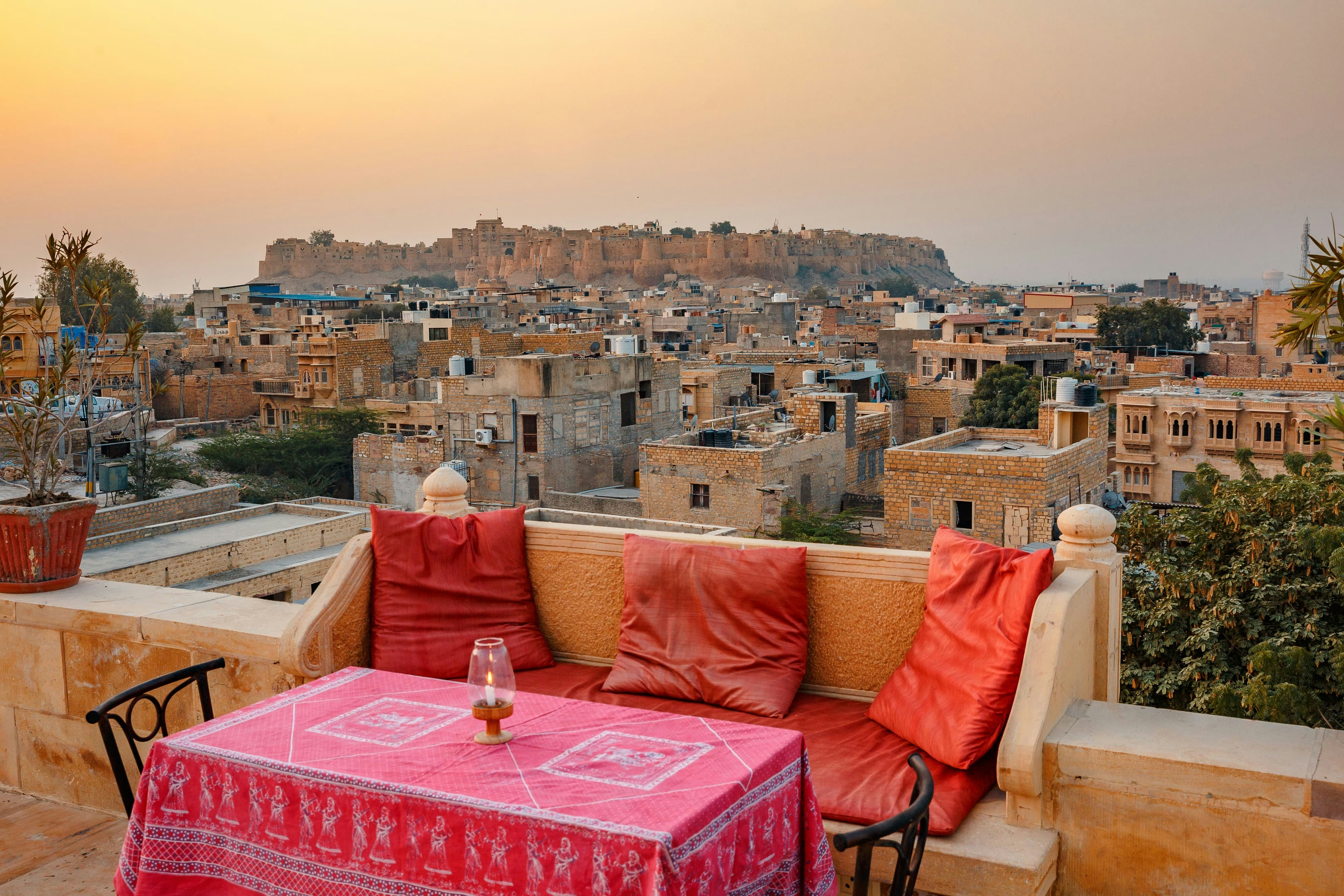
There is a particular hour in Jaisalmer-just after four in the afternoon, when the desert light turns kind of thick and low - and for a moment the whole fort looks like it changes its skin colour. The honey-yellow sandstone that has held this city together for nearly nine hundred years starts to glow, then blaze, then finally calms down into that deep amber tone that gives Jaisalmer its nickname: the Golden City. Anyone scrolling for the “right” Jaisalmer travel guide before a trip is usually trying to find exactly that, the practical details, sure, but also a sort of true feeling for what it is like to stand inside those walls, in person.
This guide is made for that kind of traveler. Whether you are planning a private honeymoon, a solo journey through Rajasthan, or an actually fully customized luxury itinerary, you will find… well, everything here. Like the history behind the golden stone , the forts and havelis that are genuinely worth your time, and those desert moments that make Jaisalmer stand apart, unlike anywhere else in India. You also get a practical framework so you can turn all of it into one good trip that moves smoothly from the moment you land, even if you somehow don’t know where to start.
via unsplash
Overview: Why Jaisalmer Is Called the Golden City
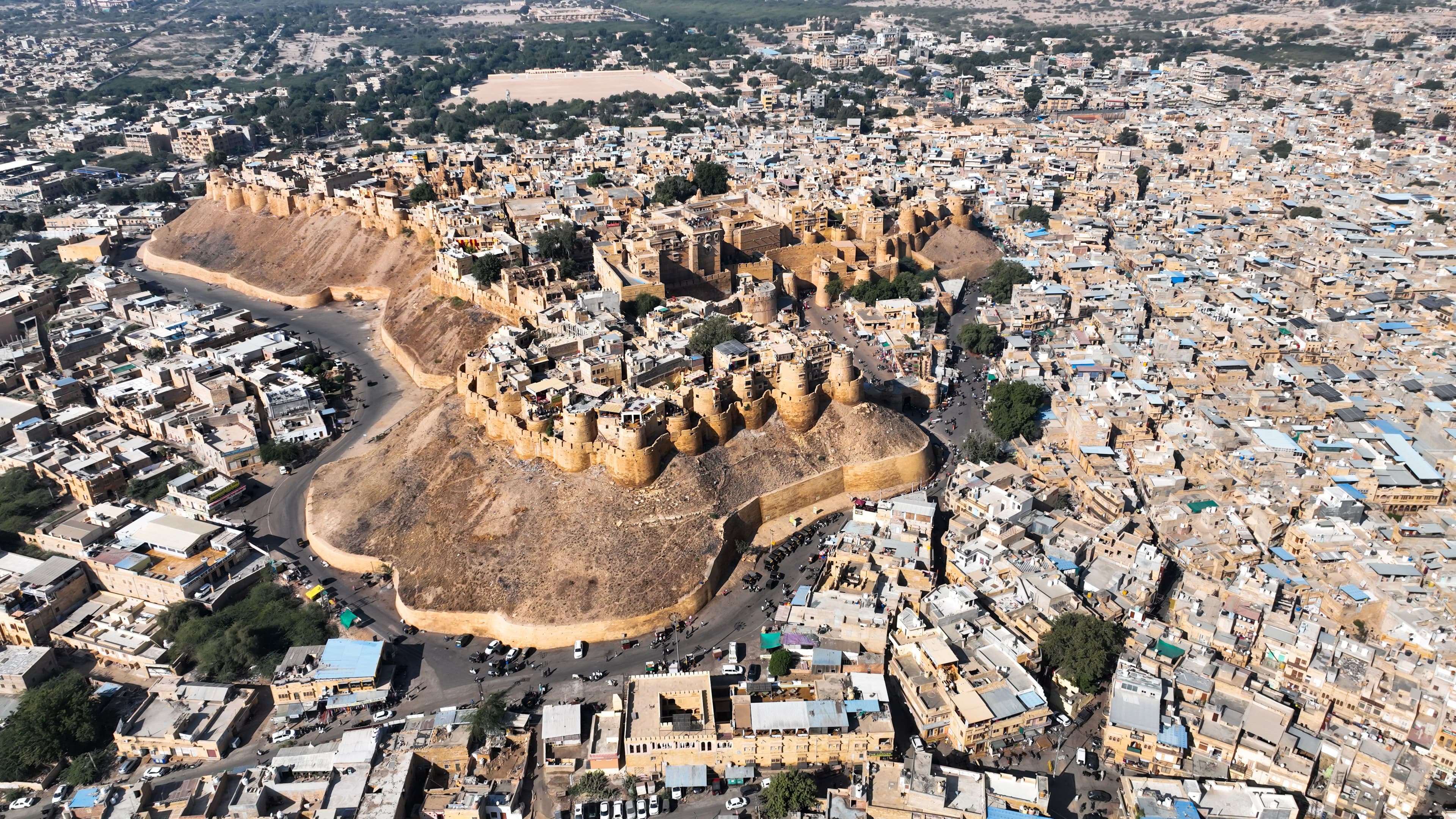
Jaisalmer is way out on the western edge of Rajasthan, a lot nearer to the Pakistan border than to any big Indian metropolis, and it feels almost tucked deep inside the Thar Desert. It’s one of the last spots in India where a whole old town- fort, havelis , temples, bazaars - still hangs together, mostly intact. Even better, most of it was built using a single material: a soft yellow sandstone quarried nearby, so the entire place seems like somebody carved the town out of one block of gold.
Unlike Jaipur’s “Pink City” image, which is mostly just paint, Jaisalmer’s gold is more structural, you know. Every wall, every carved jharokha (that overhanging balcony), every bastion of the fort all share the same warm sandstone, so the tone shifts on its own with the sun rather than going dull like a thin layer of wash. That’s why photographers, filmmakers, and heritage travelers keep coming back, the place really looks changed at 7 a.m. , at noon, and also near sunset.
via pexels
History of Jaisalmer: Rajput Legacy on the Silk Route
Jaisalmer’s story begins in 1156 CE, when Rawal Jaisal, a ruler of the Bhati Rajput clan, founded the city and its hilltop fort on Trikuta Hill, replacing the older Bhati capital of Lodhruva nearby. For centuries afterward, Jaisalmer thrived as a staging post on the trade routes linking India with Persia, Arabia, and Central Asia - merchant caravans carrying silk, spices, and opium passed through the city, and the wealth they generated built the elaborate havelis that still line its lanes today.
Jaisalmer’s story kind of starts 1156 CE , when Rawal Jaisal a ruler from the Bhati Rajput clan, founded the city and that hilltop fort on Trikuta Hill, while also replacing the earlier Bhati capital of Lodhruva close by. For the next few centuries, Jaisalmer seemed to keep going strong, acting as a stopping place on the trade routes that connected India with Persia, Arabia and Central Asia, basically. Merchant caravans rolled through, bringing along silk, spices, and opium, and all that profit turned into ornate havelis which still stand along its narrow lanes now.
via pexels
Architecture & Cultural Significance
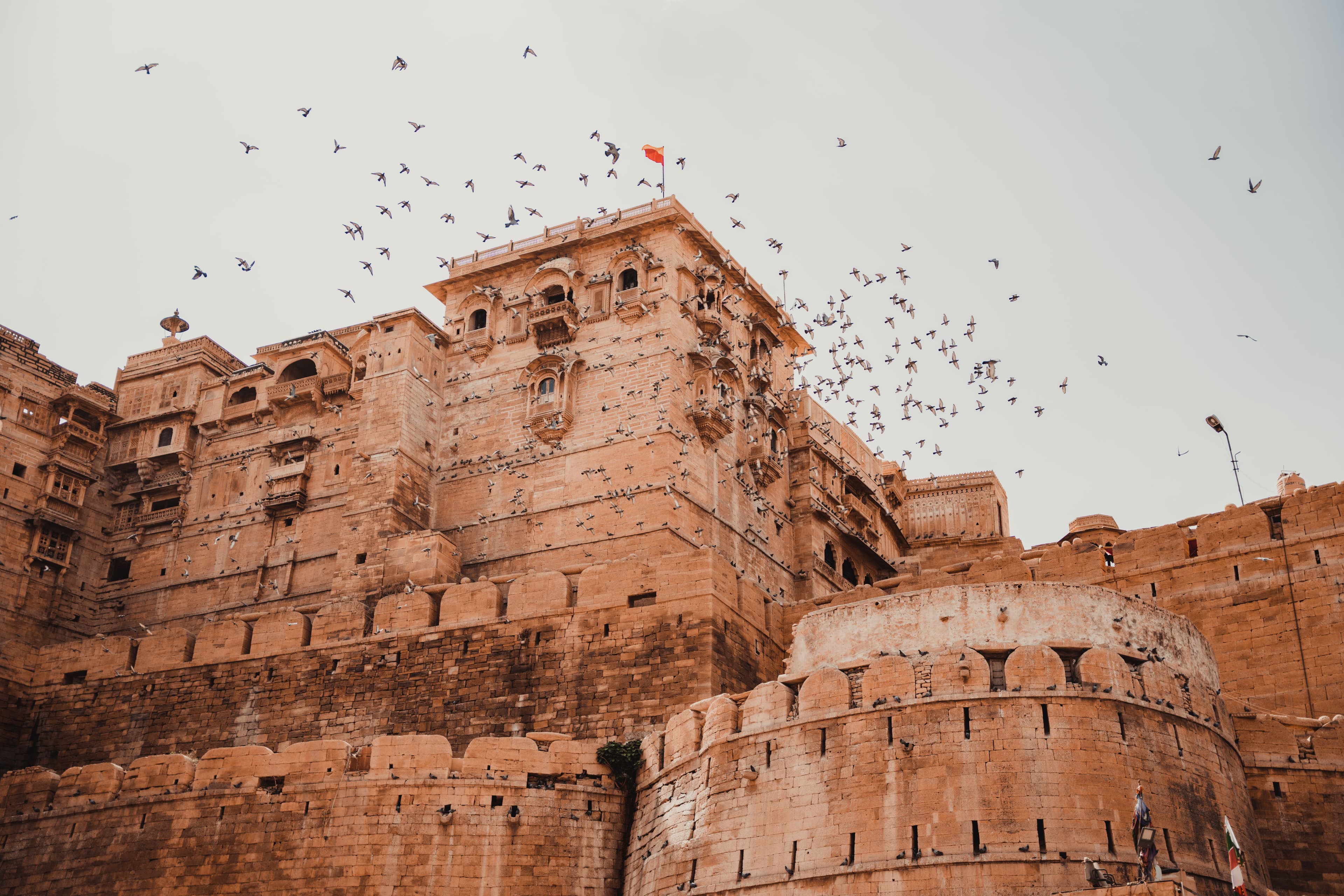
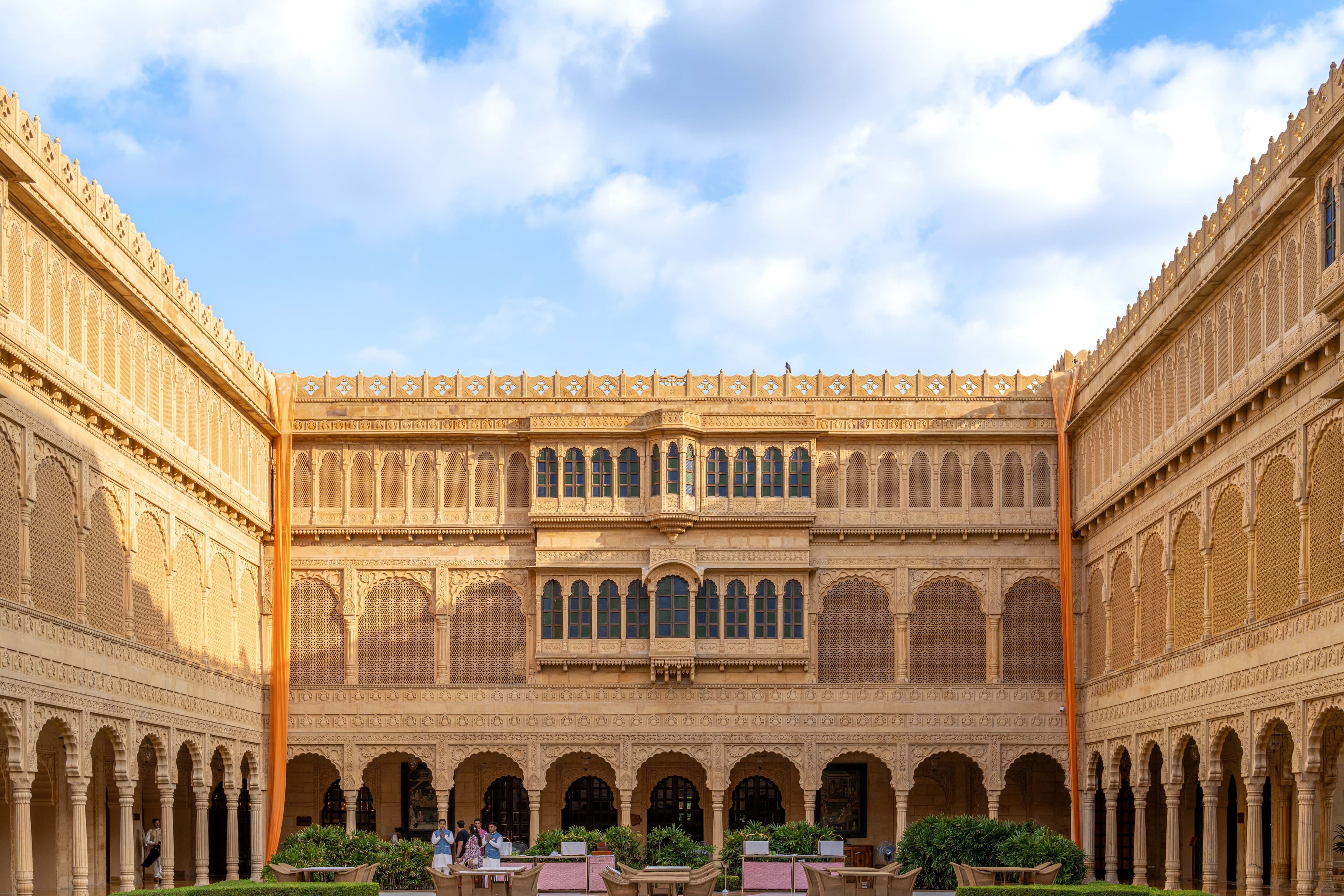
Jaisalmer is architecturally distinct because somehow there’s this marriage of Rajput military design with very delicate stone carving, not like normal fortifications you just see and leave. The fort itself feels engineered for defense- a wall around 30 feet high, almost a hundred bastions, plus tight internal lanes that turn and turn, kinda deliberately wound so any invading force would slow down , even war elephants . But then, strangely, inside those same defensive walls , and also in the merchant havelis right outside, the artisans transform sandstone into lace-like screens, floral friezes, and those jharokha balconies that are so intricate they look more like carved wood than hard stone.
via pexels
Jaisalmer Fort: The Heart of the Golden City
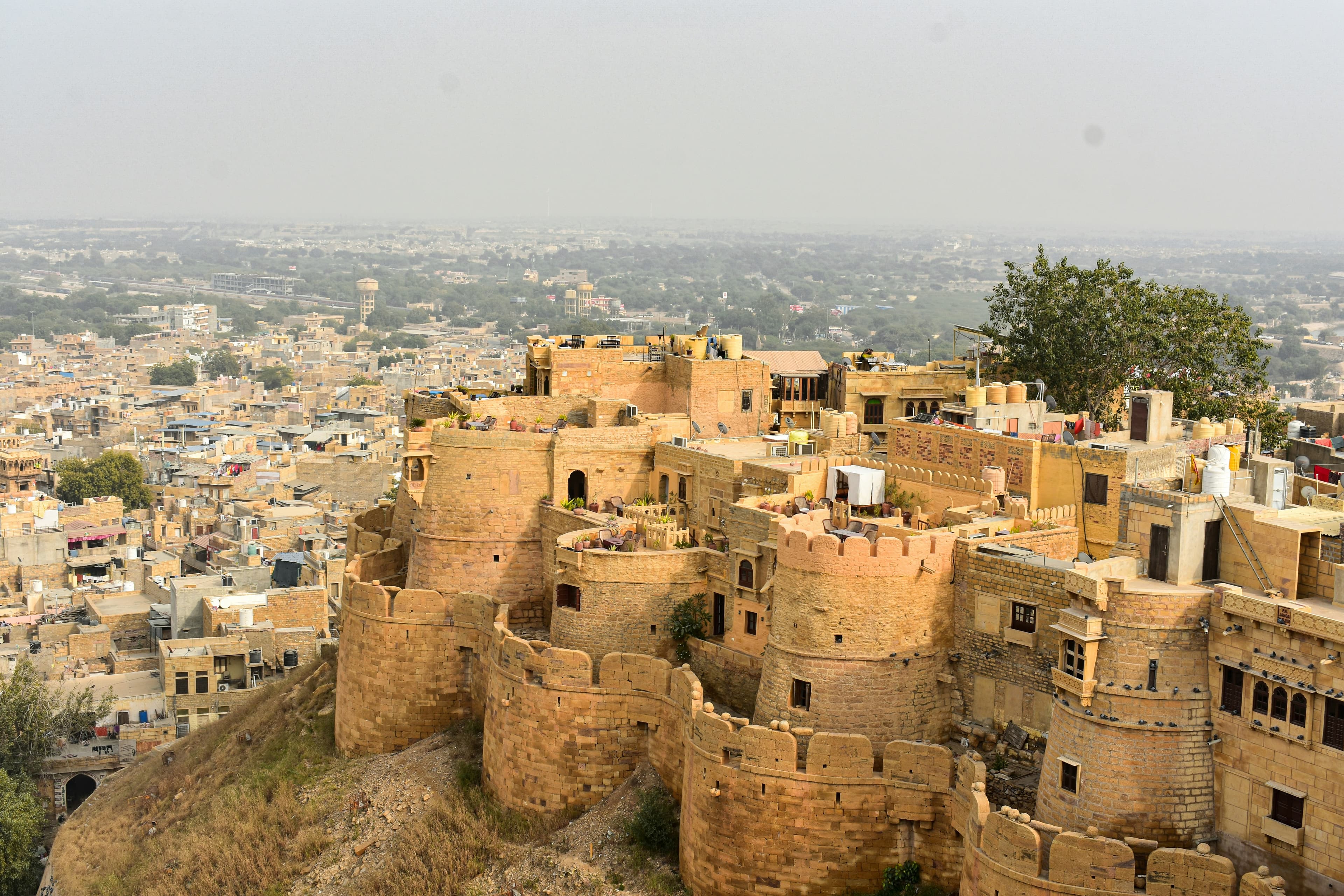
Jaisalmer Fort - people often say Sonar Quila, like the “Golden Fort” - is kinda the main reason most travelers show up in this slice of Rajasthan, and it really needs time without rushing. It sits up on Trikuta Hill, and it is one of those rare fortresses in the world that is still inhabited, not just kept behind railings. About a quarter of the old city’s population lives within its walls, in homes that get carried on for generations, from parents to kids, and then on. That kind of living vibe is what makes Jaisalmer different from almost every other fort in India. You aren’t really pacing around in some tidy preserved shell, it feels more like an active neighborhood where shops, cafés, temples, and even school runs move around you, every day.
You’ve got four imposing gateways made from Indian rosewood, and they sort of reach around 60 feet, leading you into this fort’s tangle of lanes. Once you’re in, don’t skip the cluster of Jain temples near the centre, they’re well known for ceiling carvings arranged in concentric rings of figures. Also, the old royal palace complex is worth lingering around, because it gives some of the best rooftop panoramas across the city and out toward the desert beyond. Honestly, early morning, and late afternoon are by far the best times to be inside the fort, both for the light and for that relatively calm moment before the day’s tour groups start arriving.
via pexels
The Havelis of Jaisalmer
Patwon Ki Haveli
via unsplash
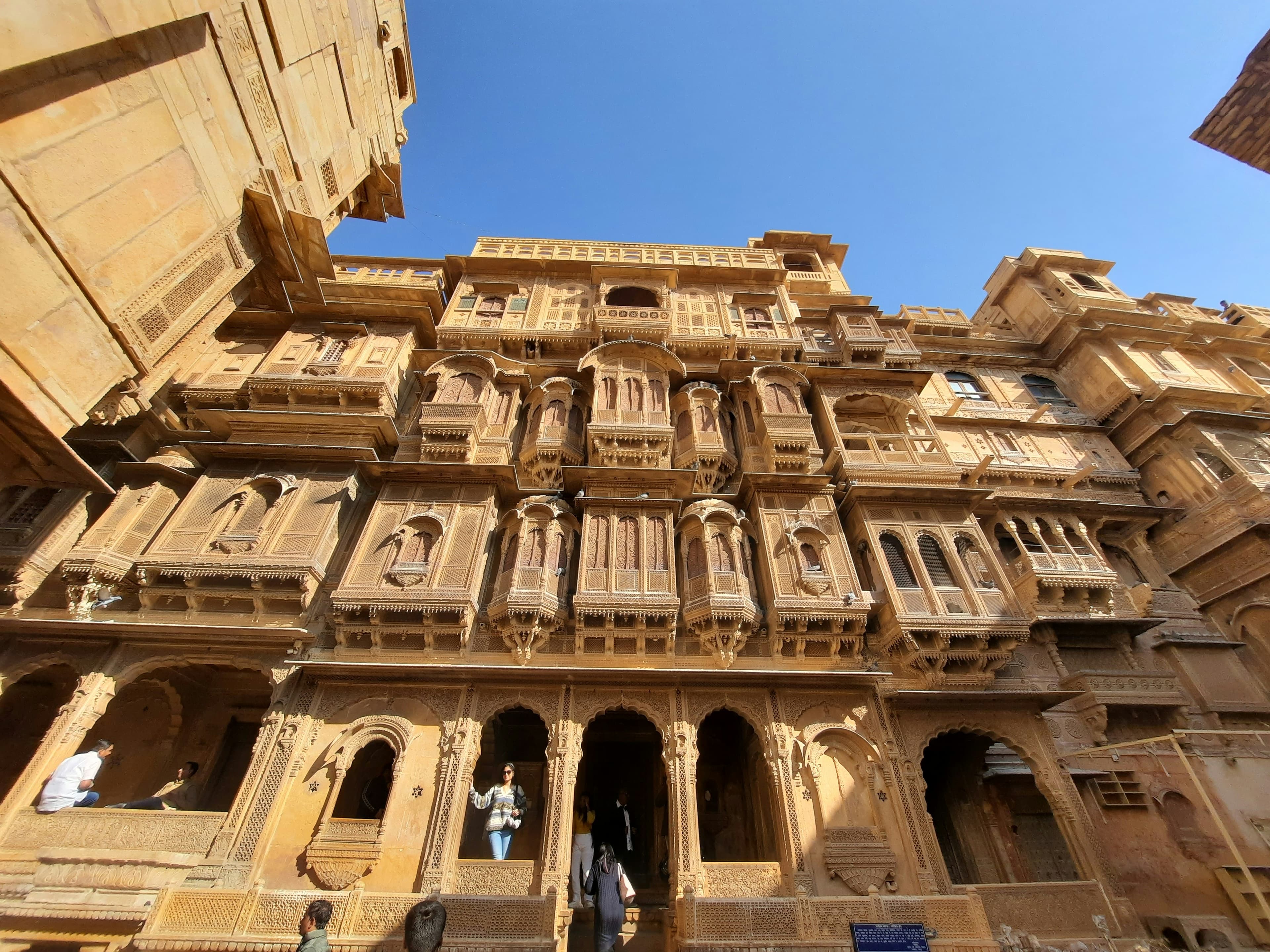
Patwon Ki Haveli
Patwon Ki Haveli - a five-mansion complex built over decades - showcases elaborate archways, mirror work, and delicate painted interiors. Today it serves as a museum, revealing the life of a prosperous merchant family.
Salim Singh Ki Haveli
via unsplash
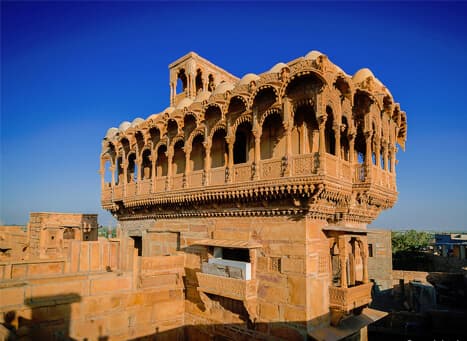
Salim Singh Ki Haveli
Salim Singh Ki Haveli - built in the early 19th century for a Jaisalmer court prime minister - features a distinctive curved peacock-shaped roof and a top row of balconies designed to match the maharaja's palace height
Nathmal Ki Haveli
via unsplash
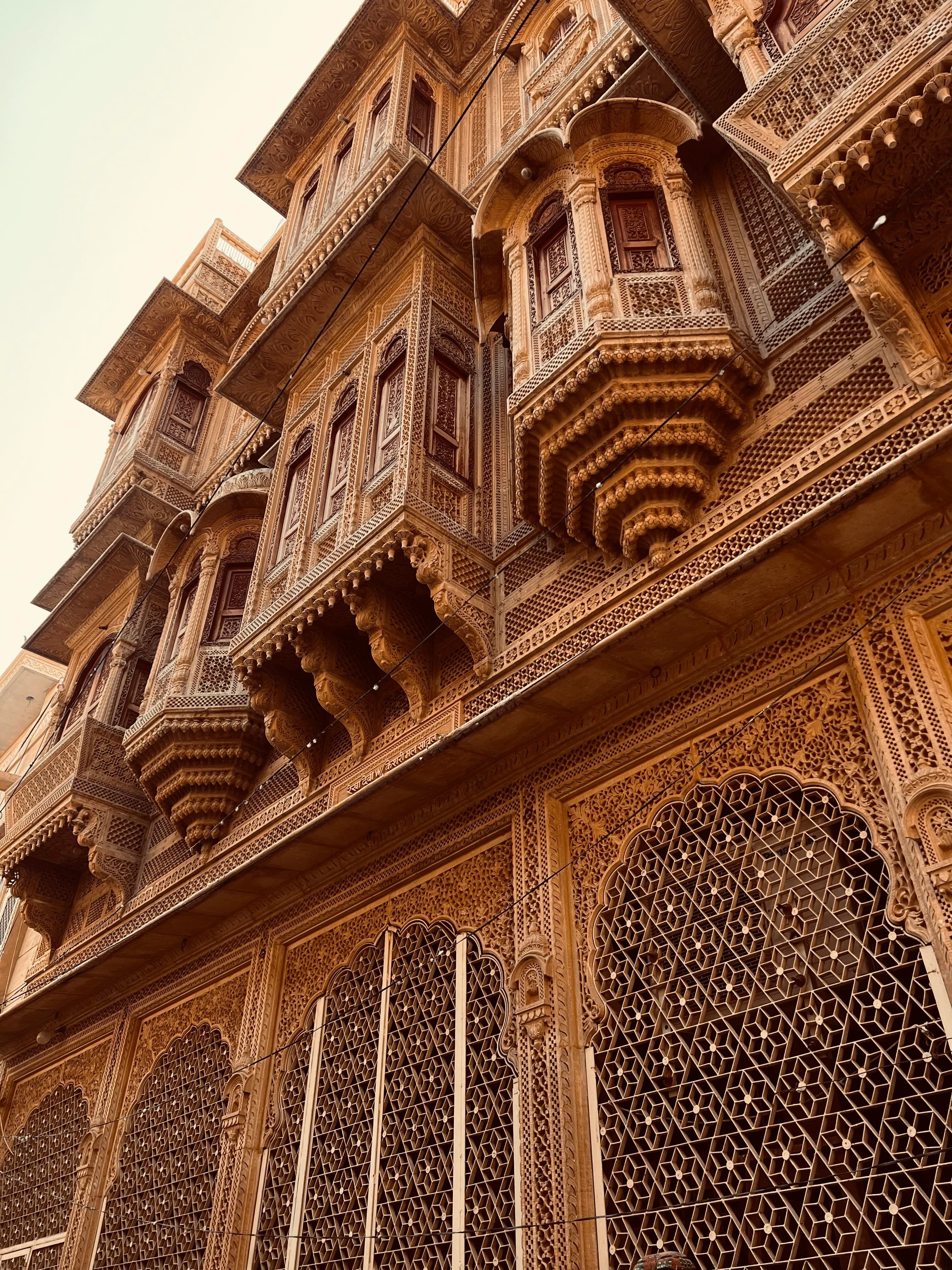
Nathmal Ki Haveli
Nathmal Ki Haveli - built in the 1880s for a court official - has a unique charm: it was constructed by two brothers working on opposite wings simultaneously. The two halves are similar but not identical.
Gadisar Lake
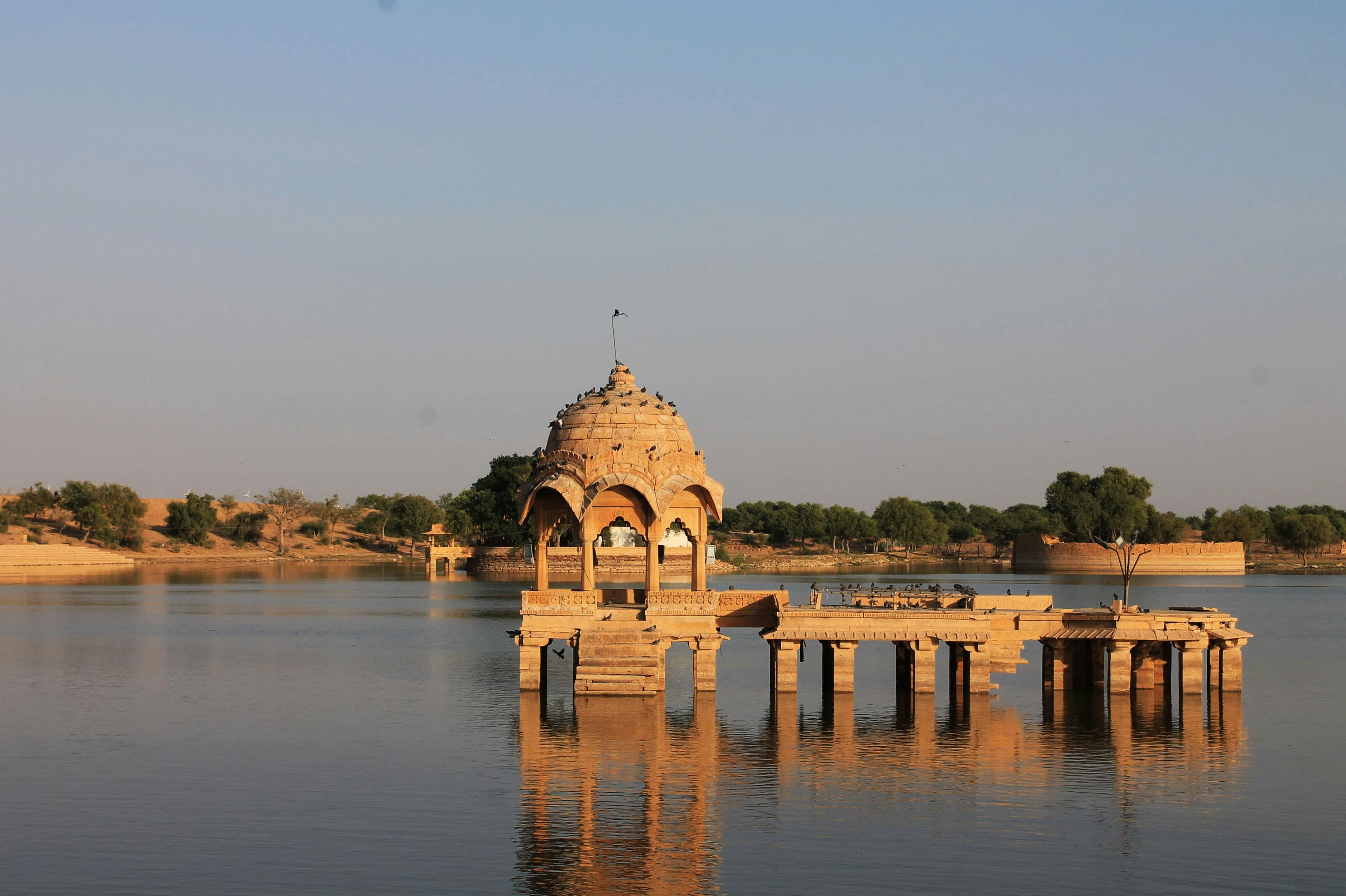
A short walk or auto-rickshaw ride from the fort, Gadisar Lake was built as a reservoir to support the growing desert city. Now one of Jaisalmer's most photogenic spots, its shoreline is lined with small temples, shrines, and chhatris - all entered through the carved sandstone archway of Tilon-ki-Pol.
A slow paddle-boat ride at sunset, with the fort visible in the distance, offers one of Jaisalmer's quieter and more romantic moments - a calming balance to the busy fort lanes.
via unsplash
Sam Sand Dunes & the Thar Desert Experience
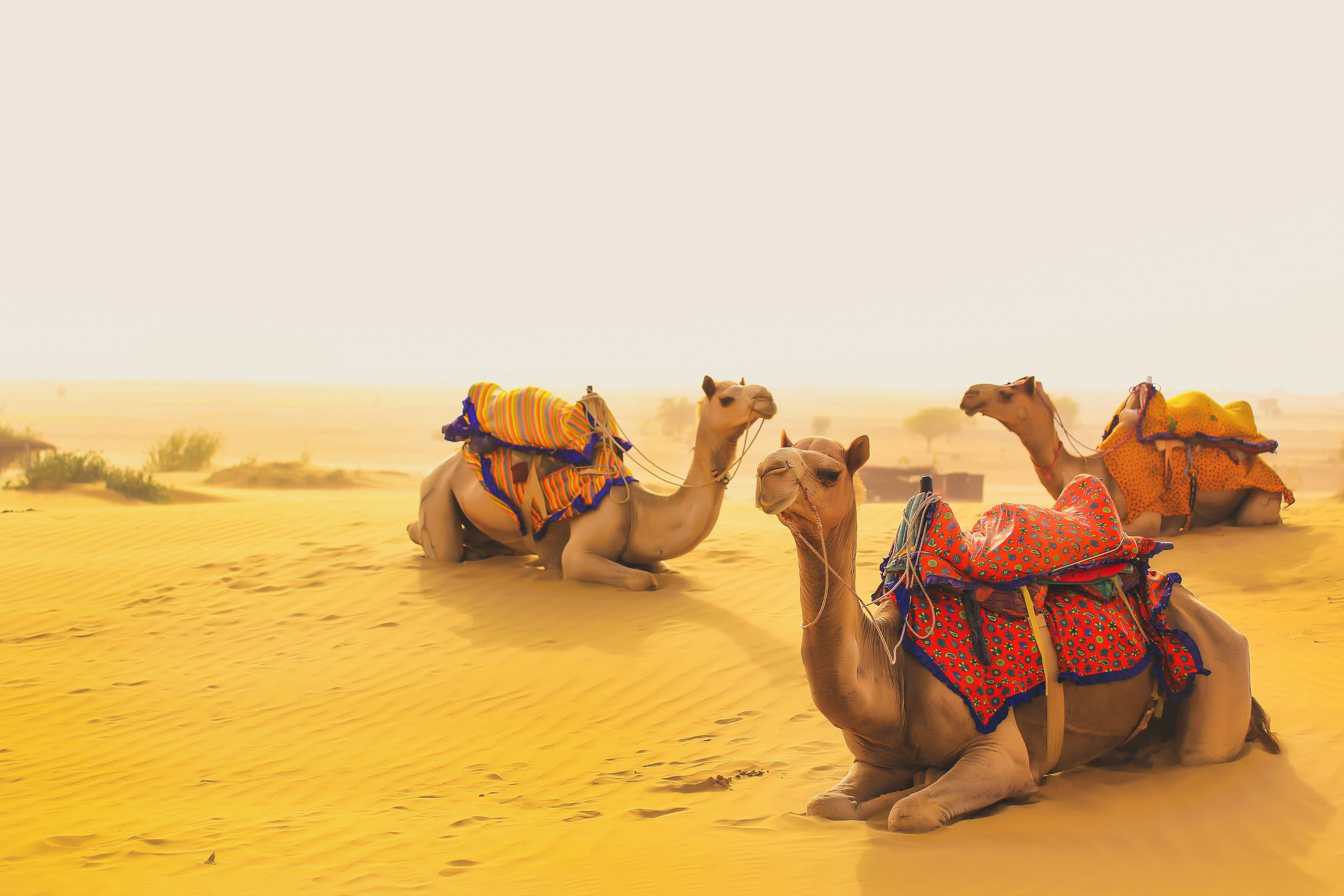
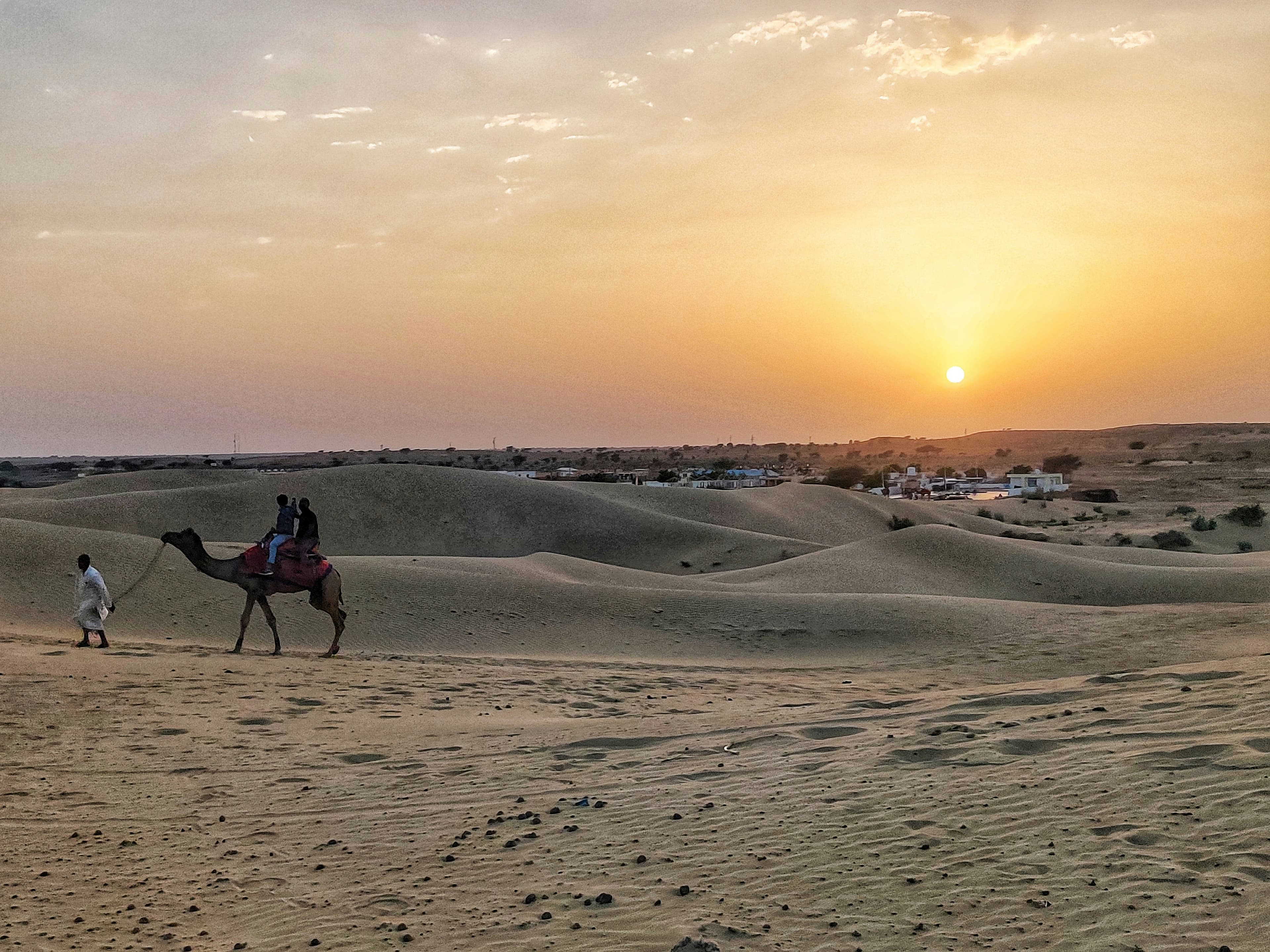
No Jaisalmer trip is really complete without spending some actual time out in the desert itself, and Sam Sand Dunes- about 40 km from the city, give or take 45 to 60 minutes by road- is the usual, classic place people go. This part of the Thar Desert, right at the border of Desert National Park, is where the sand starts to feel more real, rolling into those huge wind-sculpted dunes you see in your head when Rajasthan comes up.
A desert safari at sunset, followed by a camp stay, is the classic experience. Jeep and ATV rides offer a faster alternative. Evenings bring folk music and dance around a bonfire, with an incredible starry sky overhead.
via unsplash
Best Experiences in Jaisalmer
- • Kuldhara Village : this abandoned settlement outside the city, wrapped in local legend about why the residents just vanished overnight in the early 19th century. It feels very atmospheric, especially near sunset, and it’s kind of a favourite spot for photographers, you know.
- • Bada Bagh : a garden complex a few kilometres from town, scattered with domed royal cenotaphs (chhatris) set against wide open desert views. It’s calmer than the fort, and honestly it’s pretty excellent for sunrise, too.
- • Desert Cultural Centre & Museum : a small-ish but thoughtfully put together museum near Gadisar Lake, it covers Rajasthani textiles puppetry and everyday desert life, which is handy context before you actually head into the dunes.
- • Tazia Tower : a five tiered tower inside the fort complex. It was built in the style of a Muslim tazia, and it’s a solid example of how the city has layered cultural influences, over time.
- • Akal Wood Fossil Park : an unusual stop if you’re the type of traveller who likes the desert’s deeper geological past. It has fossilised wood, estimated at roughly 180 million years old, so yeah it’s a lot more than just a quick photo break.
Food & Shopping in the Golden City
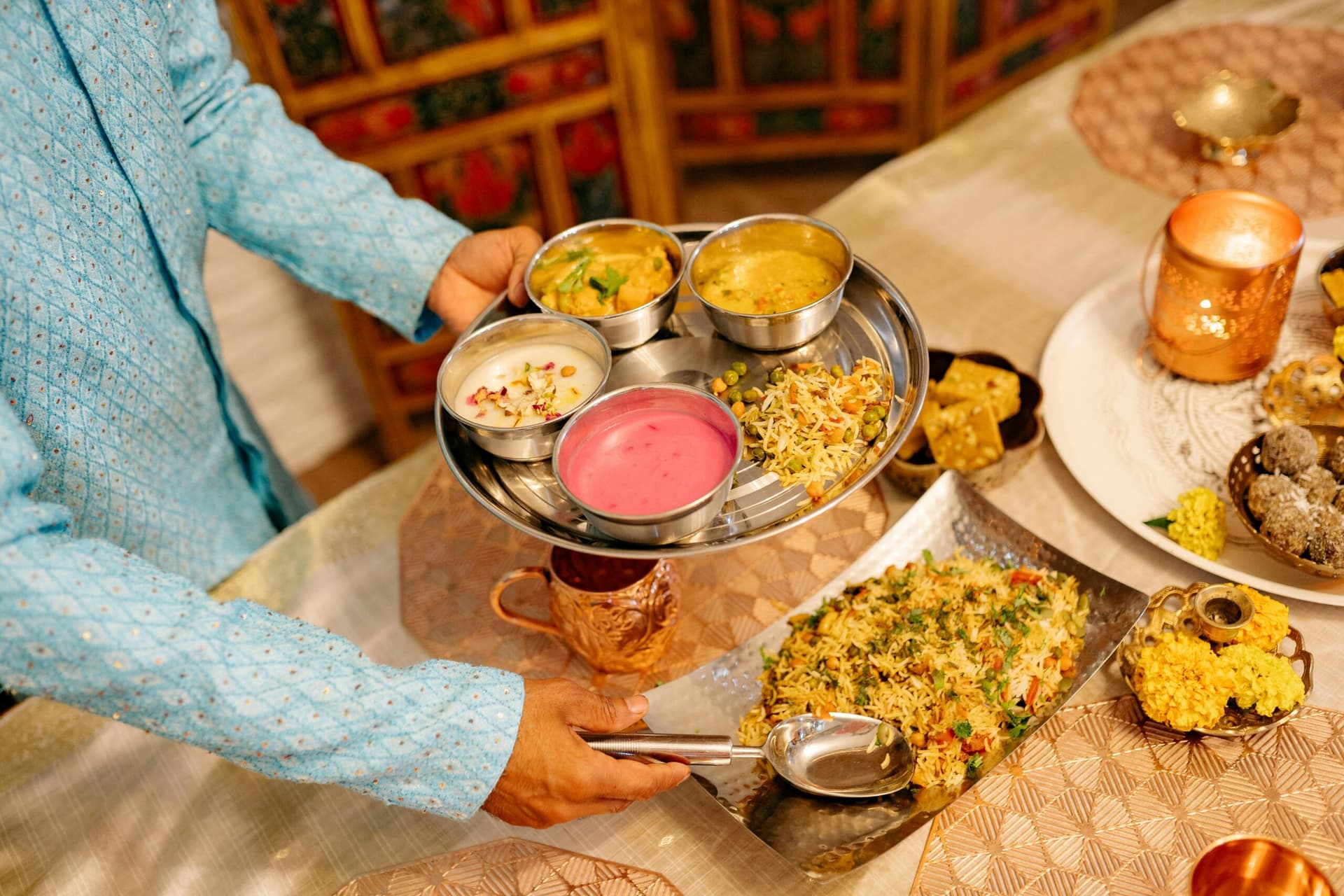
Jaisalmer cuisine kind of matches its desert location , like it’s tough hardy and spiced , made so travelers can keep moving even during the long dry days. Dal baati churma , basically wheat dumplings served with lentils and that sweet crushed wheat thing , feels like the region’s main dish. Then there’s gatte ki sabzi, gram-flour dumplings in a spiced yogurt gravy , which is also very Rajasthani and worth trying. And don’t skip ker sangri , it’s this special desert-bean preparation , you won’t see it that often beyond here. For dinner , rooftop restaurants looking over the fort are usually the best move , the meals can be pretty straightforward , but honestly the scenery does a lot of the heavy lifting.
Luxury Desert Camps & Heritage Hotels
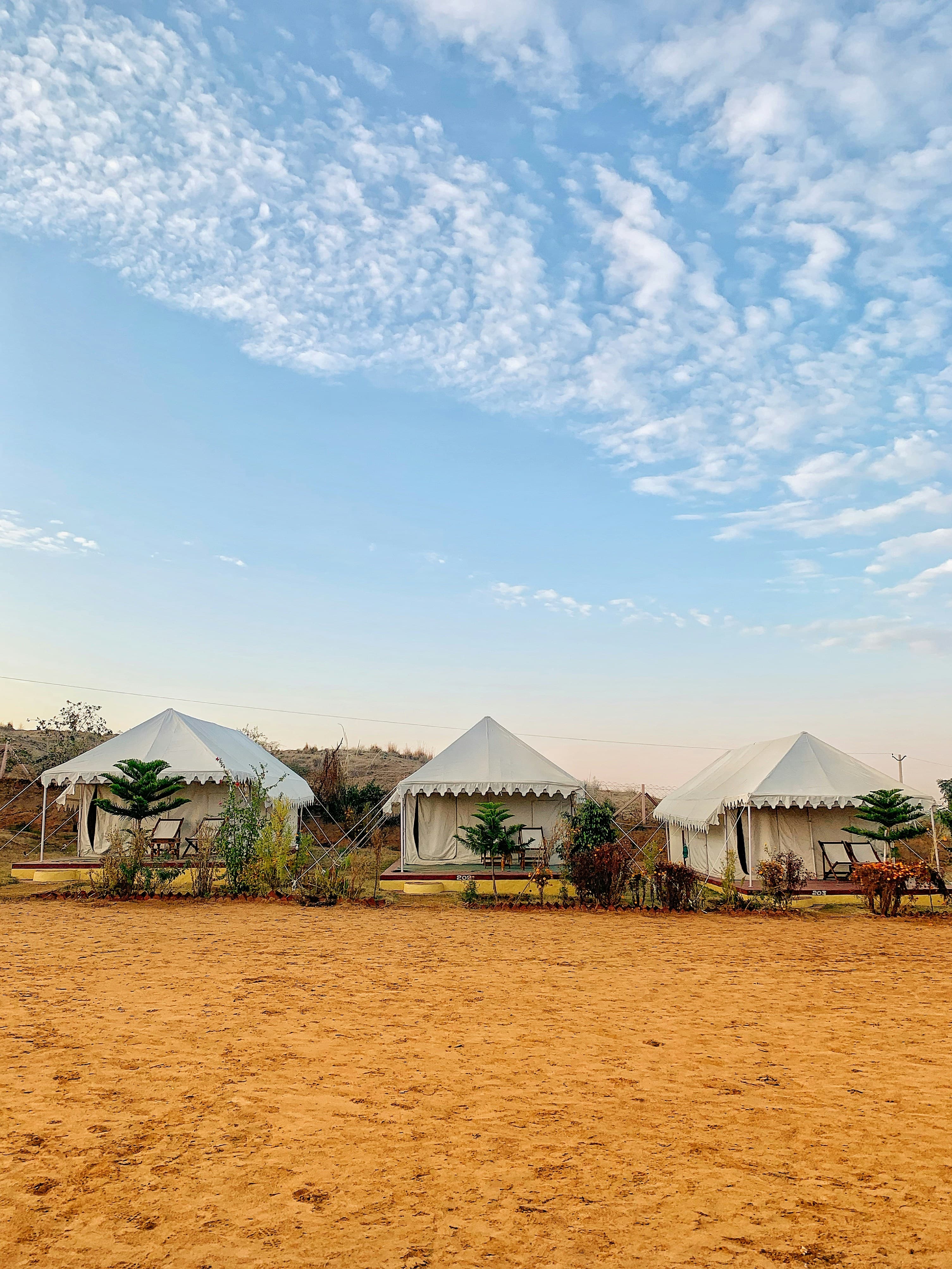
Jaisalmer offers two distinct luxury stays: heritage hotels inside restored fort havelis with carved stone interiors and modern comforts, or desert camps at Sam or Khuri with private tented suites, en-suite bathrooms, butler service, and sweeping dune views.
Couples and honeymooners often blend a heritage haveli night for ambience with a luxury desert camp night for a private dune dinner under the stars. Families and groups tend to prefer desert camps for more space and adaptable dining.
via unsplash
Nearby Attractions
- • Lodhruva: The old Bhati capital that predates Jaisalmer, featuring a beautifully carved Jain temple.
- • Khaba Fort & Fossil Park: A ruined hilltop fort combined with a geological surprise — fossilised remains in the desert.
- • Desert National Park: One of India's largest protected areas, known for the endangered Great Indian Bustard and other desert wildlife.
Suggested Jaisalmer Itinerary
Half-Day Itinerary (for a short stopover)
- • Morning: Head straight to Jaisalmer Fort — enter through its four gateways, take your time exploring the Jain temple complex and the old royal palace.
- • Late Afternoon: Catch sunset from a rooftop café overlooking the fort ramparts — the classic view.
- • Optional: If time permits, stop at Gadisar Lake on the way back for a few photos.
One-Day Itinerary
- • Morning : Jaisalmer Fort, try arriving as early as possible , so you can dodge the heat and also the crowds (kinda the best move).
- • Midday : Patwon Ki Haveli, Salim Singh Ki Haveli , and Nathmal Ki Haveli, pretty much all together in the old city so it’s easy going between them.
- • Afternoon : Gadisar Lake for a slow boat ride , and then pictures at Tilon-ki-Pol
- • Evening : a drive out to Sam Sand Dunes for a sunset camel safari, plus dinner at a desert camp. you can bounce back to the city after, or just stay the night.
Two-Day Itinerary
- • Day 1: ok so, in the morning we go to Jaisalmer Fort, at midday we wander through the havelis, then in the afternoon it’s Gadisar Lake, after that we do a check- in at a heritage haveli hotel for the night
- • Day 2: We keep it easy in the morning at Bada Bagh, or Kuldhara Village, then later we transfer to the Sam Sand Dunes in the afternoon. there we do a camel safari or jeep safari, and evening is for a cultural show at a luxury desert camp. overnight we sleep under the stars, just like that.
Practical Travel Guide
Best Time to Visit Jaisalmer
October to March is the best time to visit Jaisalmer - daytime temperatures range from 10°C to 25°C, perfect for fort walks and desert safaris. Summer (April–June) is harsh, often exceeding 40°C, making sightseeing uncomfortable. The monsoon (July–September) brings little rain but high humidity, dulling the desert's usual golden glow.
How to Reach Jaisalmer
- • By Air: Jaisalmer Airport runs seasonal flights to a bunch of major Indian cities, and honestly it can feel a bit patchy. Jodhpur Airport ,around 285 km away, tends to be a better choice, it operates through out the year and has better connectivity.
- • By Train: Jaisalmer Railway Station usually offers direct service to Delhi, Jaipur, Jodhpur and other big destinations, plus it’s a comfortable overnight idea when you’re coming in from Delhi.
- • By Road: Getting to Jaisalmer is about 4–5 hours by car from Jodhpur, and the highway links are pretty solid for Jaipur and many other towns in Rajasthan. For luxury travelers a private chauffeur transfer is, in practice, the smoothest option.
Entry & Ticket Details
Entry to Jaisalmer Fort is free as it's a living settlement, but the royal palace museum and some havelis charge separate fees - often higher for foreign nationals, with extra charges for cameras. Most attractions are open roughly 9 a.m. to 5 p.m., though the fort gates remain accessible 24/7. Check current prices and timings with your tour operator before visiting, as they're revised periodically.
Suggested Duration
About two to three days feels ideal for Jaisalmer, kind of enough time to wander through the fort and the havelis at an easy pace. You can also take in at least one night out in the desert, not like in a hurry. And then, you can fit in some nearby detour such as Bada Bagh or Kuldhara, so it doesn’t feel rushed, even a little.
Budget Estimates
About two to three days feels ideal for Jaisalmer, kind of enough time to wander through the fort and the havelis at an easy pace. You can also take in at least one night out in the desert, not like in a hurry. And then, you can fit in some nearby detour such as Bada Bagh or Kuldhara, so it doesn’t feel rushed, even a little.
Packing Tips
- • Layers: Pack light, breathable layers for daytime heat, plus a warm layer for surprisingly cold desert nights (especially in winter).
- • Footwear: Comfortable closed-toe walking shoes are essential for the fort's uneven stone lanes.
- • Modest Clothing: Wear respectful, modest clothing for temple visits inside the fort.
- • Sun Protection: A good hat, sunglasses, and sunscreen are non-negotiable — the desert sun is intense.
Luxury, Family & Solo Traveler Tips
- • For luxury travelers : take the route with a private, chauffeur-led itinerary instead of group transport, lock in a heritage haveli hotel for at least 1 night just for the vibe, and for the Sam Sand Dunes stretch pick a top-tier desert camp that has private tented suites , not the kind with shared-camp setup.
- • For families: desert camps with dedicated family tents are often easier than in-fort heritage hotels with narrow stairs and cramped spaces. Build in breathing room between the fort, havelis, and desert transfer - so kids aren't running a nonstop schedule in the heat.
- • For solo female travellers: Jaisalmer is comfortable and welcoming when arranged through a trusted operator with vetted drivers, women-only tour options, and private vehicles. India Heritage Travel includes this as standard in its women-only and private tour itineraries.
Why Choose India Heritage Travel
Most of the safety advice in this guide, is already baked in to the way India Heritage Travel puts together each itinerary: private, vetted chauffeur transport for the whole duration of every trip, plus fully customised days that are built around your personal comfort level and the kind of things you like to see. We also choose curated luxury and heritage stays, each one hand-inspected for safety and service, and we make sure you have expert local guides on the ground ,including female guides for women-only and solo female itineraries. There s also a dedicated women-safe travel planning approach, from the route logistics to evenings and activities, not just a general plan.
Frequently Asked Questions
Two to three days is ideal - enough time for the fort, the havelis, and at least one night at Sam Sand Dunes without rushing.
October to March, when daytime temperatures typically range between 10°C and 25°C, making fort walks and desert safaris comfortable.
Yes, general entry into the fort is free since it’s a living residential area, though the royal palace museum and some haveli sections charge separate tickets.
By overnight train direct to Jaisalmer, by seasonal flight (or via Jodhpur Airport), or by private chauffeur-driven road transfer, which is the most comfortable option for luxury travelers.
Yes, particularly when arranged through a specialist operator offering vetted drivers, women-only tour options, and private (rather than shared) transport.
Planning a Jaisalmer Journey?
India Heritage Travel crafts private Rajasthan itineraries - from Jaisalmer's desert forts and dunes to Jodhpur and Udaipur - with expert local guides.
Plan My Jaisalmer Tour